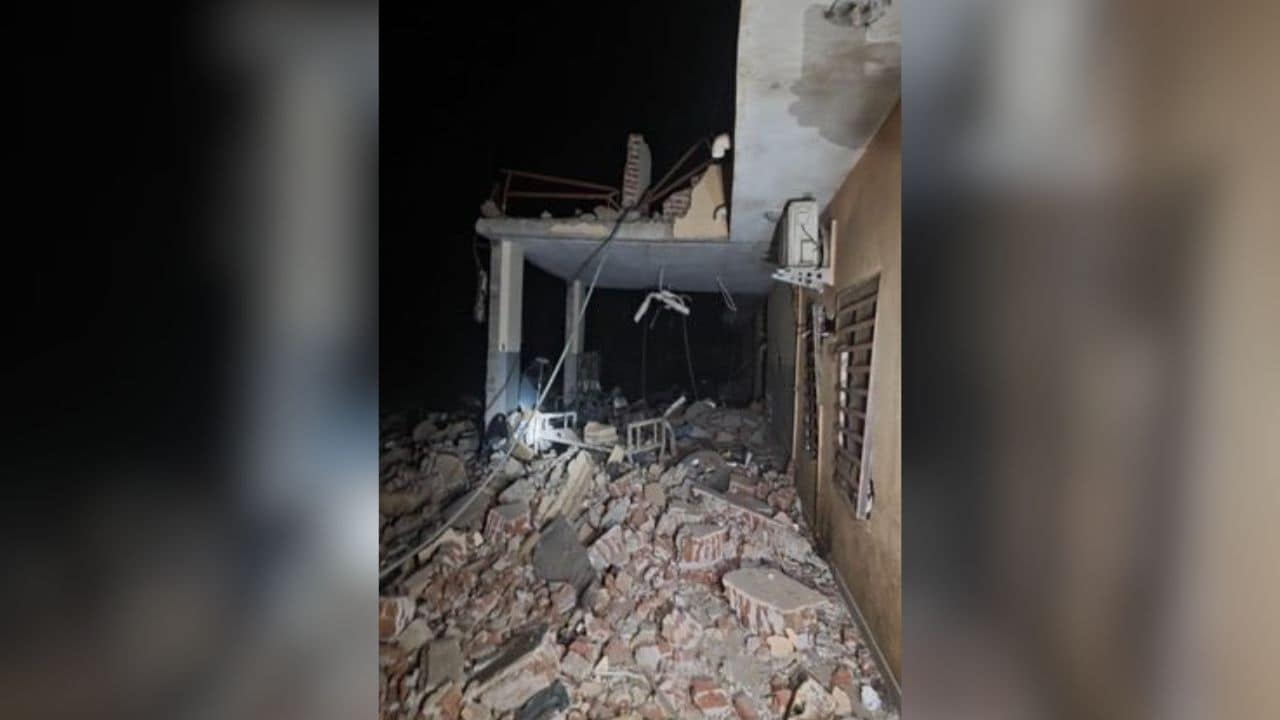
The 48-hour ultimatum issued to Iran regarding the Strait of Hormuz represents a shift from traditional diplomatic attrition to a high-velocity escalation model. This maneuver is not merely a political statement; it is a stress test of global energy supply chains and the functional limits of naval power projection in a chokepoint economy. To understand the implications of this 48-hour window, one must analyze the intersection of maritime insurance premiums, the tactical reality of swarming drone tactics, and the rigid physics of global oil flow.
The Triad of Maritime Vulnerability
The Strait of Hormuz serves as the world's most critical energy artery, facilitating the passage of approximately 21 million barrels of oil per day. An ultimatum of this nature triggers an immediate structural shift in three specific domains:
- The Insurance Risk Ceiling: Within hours of such a declaration, "War Risk" premiums for tankers transiting the Persian Gulf undergo a non-linear spike. Lloyd’s Market Association Joint War Committee (JWC) typically reassesses the "Listed Areas" for hull and machinery insurance. A 48-hour deadline forces shipowners to decide between absorbing massive surcharges or rerouting vessels, the latter of which adds 10 to 15 days to transit times via the Cape of Good Hope.
- The Tactical OODA Loop: For the Iranian Revolutionary Guard Corps Navy (IRGCN), the ultimatum collapses their decision-making cycle. The IRGCN utilizes a decentralized "swarm" doctrine involving fast inshore attack craft (FIAC) and midget submarines. A short-fuse ultimatum forces these assets out of hardened coastal shelters into detectable staging areas, creating a "use it or lose it" dilemma for their tactical commanders.
- The Strategic Petroleum Reserve (SPR) Liquidity: Markets react not to the current supply, but to the perceived delta in future supply. A 48-hour window is insufficient for the global supply chain to increase production elsewhere, meaning the only immediate counter-lever is the release of SPR stocks by IEA member nations.
The Physics of a Chokepoint Closure
The Strait of Hormuz is roughly 21 miles wide at its narrowest point, but the actual shipping lanes—consisting of two-mile-wide channels for inbound and outbound traffic, separated by a two-mile buffer zone—are much tighter. This geography dictates the kinetic possibilities.
Unlike the Suez Canal, where a single grounded vessel can cause a physical blockage, "closing" the Strait of Hormuz is a function of risk-aversion rather than physical obstruction. Iran’s capability relies on "Area Denial" through a layered defense system. This includes long-range anti-ship cruise missiles (ASCMs) such as the Noor and Gader, which have ranges exceeding 200 kilometers. These batteries are often mobile and integrated into the rugged terrain of the northern coastline, making them difficult to neutralize via preemptive air strikes within a 48-hour window.
The second layer involves bottom-tethered and rising mines. Modern naval mine warfare is a slow, methodical process. While an ultimatum demands speed, the clearance of a mined waterway is a process of weeks, not days. This mismatch between the political timeline (48 hours) and the operational timeline (14+ days for mine sweeping) creates a period of "Economic Dead Air" where global markets must price in a total cessation of Gulf exports.
Measuring the Cost Function of Escalation
The economic impact of a Hormuz disruption is often modeled linearly, but the reality is exponential due to the "just-in-time" nature of global refining.
- Refinery Feedstock Incompatibility: Refineries in Asia, specifically in South Korea, Japan, and India, are calibrated for the specific sulfur content and API gravity of Middle Eastern crudes (Arab Light, Basrah Medium). If the Strait closes, these refineries cannot simply switch to US WTI or Brent without significant efficiency losses or physical damage to catalytic crackers.
- The VLCC Bottleneck: There are roughly 800 Very Large Crude Carriers (VLCCs) in the global fleet. A significant portion is effectively "trapped" inside the Gulf or idling outside the Gulf of Oman during an ultimatum. This removes massive amounts of deadweight tonnage (DWT) from the global charter market, driving up shipping rates globally, even for non-Gulf routes.
The Logic of the Ultimatum as a Signaling Mechanism
A 48-hour ultimatum serves a specific function in Game Theory known as "Burning the Bridges." By setting a public, time-bound threshold, the US administration removes its own flexibility. This "pre-commitment" is designed to convince the adversary that the threat is credible because the political cost of backing down after 48 hours would be higher than the cost of military engagement.
This strategy carries the risk of the "Cornered Rat" syndrome. If the Iranian leadership perceives that the ultimatum is a prelude to an inevitable regime-altering strike, their optimal move is a preemptive saturation attack. The goal would be to inflict maximum damage on the global economy—specifically targeting the Abqaiq processing facility or the Ras Tanura terminal—before their own naval assets are neutralized.
Asymmetric Capabilities and the Drone Factor
The technological landscape of 2026 makes this ultimatum fundamentally different from those of the 1980s "Tanker War." The proliferation of Loitering Munitions (LMs) and Unmanned Surface Vessels (USVs) means that Iran can exert pressure without committing its traditional navy.
The IRGCN can deploy hundreds of low-cost, GPS-guided drones from inconspicuous civilian dhows or trucks along the coast. These assets do not require the 48-hour "spin-up" time that a traditional carrier strike group or armored division requires. Consequently, the US and its allies must maintain a state of "Hyper-Readiness" across the entire 1,000-mile length of the Gulf, rather than just focusing on the Strait itself.
The Structural Failure of Diplomatic De-escalation
Traditional diplomacy operates on a "Long Horizon" model. An ultimatum of 48 hours bypasses the bureaucratic layers of the UN Security Council and the E3 (UK, France, Germany). This creates a vacuum where intermediaries lack the time to verify compliance or negotiate "Face-Saving" exits.
The primary bottleneck is the verification of "Non-Aggression." How does an adversary prove they won't do something within 48 hours? In technical terms, this is a problem of "Negative Proof." Without a clear, verifiable action-item (such as the withdrawal of specific missile batteries to a pre-defined inland radius), the ultimatum likely leads to a kinetic outcome regardless of intent.
Operational Realities for Global Logistics
Logistics firms must immediately trigger "Condition Red" protocols. This involves:
- Inventory Drawdown: Accelerating the offloading of any vessels currently in the Gulf of Oman or the Arabian Sea to clear the immediate combat zone.
- Contractual Force Majeure: Preparing legal declarations to suspend contractual obligations due to "Acts of War" or "Interference by Authorities," which protects the firm from litigation regarding non-delivery of crude or LNG.
- Bunker Fuel Hedging: As oil prices spike in the 48-hour lead-up, the cost of marine fuel (VLSFO) will skyrocket. Firms that have not pre-hedged their fuel costs will face immediate insolvency.
The 48-hour window is the "Gray Zone" where the value of information is highest and its reliability is lowest. Strategic planners should ignore political rhetoric and monitor two specific indicators: the movement of the USNS Lewis B. Puller (a mobile sea base) and the "shadow" pricing of Iranian crude in the Chinese independent refinery ("teapots") market. These provide a more accurate gauge of the actual risk of closure than any press release.
The endgame of this ultimatum is not a return to the status quo. It either results in a fundamental restructuring of the security architecture of the Persian Gulf or a localized kinetic conflict that permanently alters the risk-assessment models for global energy transit. The window for a negotiated settlement closes not at the 48-hour mark, but at the moment the first Lloyd’s underwriter refuses to cover a vessel entering the Gulf.
The strategic play is to front-load all maritime transit out of the region within the first 12 hours of the ultimatum. Any asset remaining in the Gulf after the 24-hour mark should be considered "at-risk" and written down in real-time. Failure to move within the first quartile of the ultimatum window results in a catastrophic loss of liquidity as insurance markets freeze and the Strait transitions from a commercial waterway to a theater of active denial.