The ceiling of Ward 4 has exactly two hundred and fourteen acoustic tiles. Michael knows this because he has counted them every afternoon for five months. He knows which ones have water stains shaped like continents, and he knows that if he stares long enough at the seam near the air vent, he can pretend the hum of the industrial ventilation system is actually the sound of traffic on the highway near his house.
His house is four miles away. It features a ramp he built with his brother, a modified kitchen, and a cat that currently eats out of a neighbor’s hand.
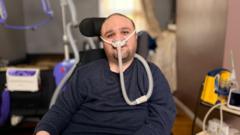
Michael is forty-six, a former logistics manager with a quick wit and a spinal cord injury that requires him to use a wheelchair. He is also, by all medical metrics, completely healthy. His bed sores are healed. His vitals are textbook. The doctors signed his discharge papers nineteen weeks ago.
Yet, every morning, Michael wakes up to the smell of boiled institutional eggs and the squeak of rubber-soled shoes on linoleum. He is trapped in a bureaucratic purgatory known in healthcare circles by a deceptively sterile term: delayed discharge. But Michael calls it what it feels like.
He calls it rotting.
The Cost of a Bed
To understand how a man becomes a permanent fixture in a place meant for emergencies, you have to look past the sterile white walls and into the hidden machinery of modern healthcare.
Hospitals are built for crisis. They are high-velocity engines designed to intake the broken, stabilize them, and move them along. When the engine stutters, the system clogs. A bed occupied by a healthy man is a bed denied to a woman experiencing a stroke, or a teenager mangled in a car wreck. It is a domino effect that stretches all the way to the ambulance bays, where vehicles sit idling because there is nowhere to put the human beings inside them.
Consider the math of a modern medical ward. A single acute care bed costs the system thousands of dollars every single day to maintain. We are not just paying for electricity and sheets; we are paying for the readiness of trauma surgeons, the upkeep of MRI machines, and the immense administrative apparatus required to keep the lights on.
When Michael occupies that bed, the hospital loses money, the public loses a resource, and Michael loses his mind.
Why is he still there? The answer is not a lack of goodwill. The doctors want him out. The nurses, overwhelmed and running on fumes, desperately need his bed for the emergency department backlog. The bottleneck exists in the transition.
For a disabled person to return to the community, a complex web of social care must be spun. A ramp must be approved. A care package—someone to help him transfer from bed to chair for two hours a morning—must be funded and allocated by a completely different government budget.
And so, the medical system and the social care system stand on opposite sides of a canyon, arguing over who owns the bridge, while Michael sits in the middle.
The Slow Erosion of Self
Hospitalization does things to a healthy body. It is an environment designed for dependency.
When you spend months in a ward, your world shrinks to the size of a privacy curtain. You eat when the tray arrives. You sleep when the overhead lights are dimmed. The muscles that aren't paralyzed begin to atrophy anyway, simply from lack of use. The mind, starved of novelty, begins to fixate on the trivial.
Michael tried to maintain his dignity. In the third month, he began asking the cleaning staff for disinfectant wipes. He would roll his chair around his small bedside perimeter, wiping down his own tray table, his own bed rails, his own window sill.
"It was the only thing I could control," he told me, his voice dropping to a whisper so the nurses wouldn't hear. "If I didn't clean that table, I felt like the room was swallowing me. I felt like I was becoming part of the furniture. Just another asset to be depreciated."
The psychological toll of being healthy in a house of sickness is a specific kind of torture. Every day, Michael watches people arrive at their lowest point, suffer, recover, and leave. He watches the elderly pass away behind drawn curtains. He hears the grief of families in the hallway. He lives in a perpetual state of secondary trauma, surrounded by illness while his own body screams for the open air.
He is a ghost haunting a building meant for the living.
The Paperwork Monster
We often think of bureaucracy as an annoying inconvenience—a long line at the DMV, a confusing tax form. But in the world of social care, bureaucracy is a physical force. It can lock a doors tighter than any deadbolt.
To get Michael home, three separate entities must coordinate. The hospital funding team must declare him unfit for acute care, which triggers a funding cessation. Then, the local municipality's social work department must assess his home. Finally, a private care agency, contracted by the government, must find a worker willing to take the shift in Michael’s zip code.
If any one of these gears slips, the entire machine grinds to a halt.
If the social worker calls in sick on Tuesday, the assessment is pushed to next month. If the care agency loses a staff member to a retail job that pays two dollars more an hour, Michael’s package vanishes.
Meanwhile, the meter keeps running. The taxpayer continues to fund an acute hospital bed at exorbitant rates, while the social care package that would free him costs a fraction of the price. It is an economic absurdity wrapped in a human tragedy. We are spending a fortune to keep a man miserable.
Every person who has navigated this system knows the terror of the "funding panel." It is a mythical body of faceless administrators who meet once every two weeks to decide if humans like Michael are worth the investment. They look at spreadsheets, not faces. They see line items, not a man who wants to feed his own cat.
The View from the Window
Yesterday, it rained. Michael watched the drops track down the double-paned glass of Ward 4. From his vantage point on the third floor, he can see a small patch of the staff parking lot and the tops of three oak trees.
He showed me his hands. They are calloused from years of pushing his wheelchair through life, but lately, they have grown soft. The skin is pale.
"I miss the wind," he said. It wasn't a dramatic statement. It was a simple observation of fact. "You don't realize how long it's been since you felt moving air until you've been in a sealed building for half a year. The air in here has been breathed by five hundred different people before it hits my lungs."
The tragedy of Michael is that he is not unique. Across the country, thousands of beds are occupied by people who are ready to go home but have nowhere to go. They are the collateral damage of a fragmented system that views health as a collection of isolated parts rather than a whole human life.
We have mastered the science of keeping people alive. We can restart hearts, clear arterial blockages, and rebuild shattered bones. But we have failed entirely at the art of allowing people to live.
The dinner tray arrives at exactly 5:15 PM. It is a gray piece of meat, some lukewarm peas, and a small plastic cup of apple juice. Michael unpeels the foil lid. He doesn't look at the food. He looks past it, toward the window, where the sky is turning the color of a bruised kidney.
The night shift is coming on. The keys are jingling in the hallway. Another twelve hours in the acoustic tile wilderness begins.