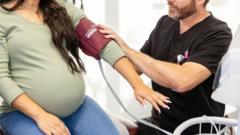
For decades, the medical response to severe preeclampsia has been a brutal compromise. Doctors describe it as a hostage situation where the placenta holds both mother and baby captive. When a pregnant woman's blood pressure spikes dangerously, threatening organ failure, strokes, or seizures, science has offered only one true cure.
Deliver the baby. Right now.
If you are at 37 weeks, it's an easy choice. But if you are at 26 or 29 weeks, that choice means pushing a fragile, underdeveloped infant into a grueling battle for survival in the NICU. Premature infants face massive risks of brain bleeds, chronic lung disease, and long-term developmental delays.
A groundbreaking clinical trial published in Nature Medicine by investigators at Cedars-Sinai Health Sciences University has demonstrated a way to buy these babies crucial extra time. Instead of relying on a new chemical drug that could harm the fetus, this new preeclampsia treatment acts like a high-tech filter, pulling toxic proteins directly out of the mother's blood. It's an aggressive, mechanical pivot away from traditional pharmacy solutions, and it works.
Breaking Down the Toxic Protein Overload
To understand why this works, you have to understand what preeclampsia actually does to the body. It isn't just generic high blood pressure. It is a systemic vascular crisis triggered by a malfunctioning placenta.
When the placenta lacks proper blood flow, it panics. It starts pumping out massive amounts of a protein called soluble Fms-like tyrosine kinase 1, or sFlt-1. In a healthy pregnancy, sFlt-1 helps regulate blood vessel growth. In a preeclamptic pregnancy, the placenta secretes way too much of it. The protein floods the mother's bloodstream, binding to and neutralizing the chemical signals that keep blood vessels healthy and relaxed.
The result is widespread damage to the mother's endothelial cells. Her blood vessels constrict, her blood pressure rockets upward, and her kidneys begin leaking protein into her urine.
The Cedars-Sinai research team, led by Dr. Ananth Karumanchi, Dr. Sarah Kilpatrick, and Dr. Ravi Thadhani, didn't try to stop the placenta from making sFlt-1. Instead, they designed a specialized device to catch it. They engineered a specific immune protein capable of binding to sFlt-1 and attached it to a blood-filtering apparatus.
Using a process called extracorporeal apheresis—which functions quite similarly to kidney dialysis—they pulled the mother’s blood out, ran it through the column to trap the toxic sFlt-1, and returned the cleansed blood back to her body.
What the Data Actually Shows
Medical breakthroughs are often oversold, so let's look at the hard numbers from this early-stage international study. The trial evaluated 16 women suffering from severe, early-onset preeclampsia before 34 weeks of gestation.
- 10 extra days: On average, the women who underwent the blood-filtering treatment safely extended their pregnancies by an additional 10 days compared to untreated patients.
- Double the time: Untreated women with similar severe preeclampsia typically require delivery within a few days. The apheresis treatment more than doubled their remaining time in gestation.
- Zero growth disruption: Ultrasound monitoring showed that babies continued to grow normally during the treatment cycles, proving that stripping the sFlt-1 didn't starve the fetus of vital resources.
- Blood pressure stabilization: Mothers saw immediate, measurable improvements in their blood pressure readings post-filtering.
Ten days might sound minor if you have never spent time in a neonatal ward. In maternal-fetal medicine, ten days is an eternity. Every single day a fetus stays inside the womb between weeks 24 and 32 drastically improves survival rates and slashes the risk of severe neurodevelopmental disabilities.
Why Filtering Beats Medication in Pregnancy
Developing drugs for pregnant women is notoriously difficult. Pharmaceutical companies are terrified of the liability, and for good reason. A drug that stabilizes a mother's liver enzymes might cross the placental barrier and cause severe birth defects in her developing child.
This blood-filtering approach sidesteps that obstacle completely.
By utilizing a mechanical device outside the body, doctors are not introducing foreign chemical agents into the fetal environment. They are simply restoring balance to the mother's existing circulatory system. The engineered proteins stay inside the machine; they never enter the woman's body or cross over to the baby.
Some patients in the trial did experience a rebound effect where sFlt-1 levels began to spike again a few days after treatment. However, subsequent filtering sessions successfully managed these secondary spikes, eventually causing the protein levels to plateau.
The Broader Pipeline for Preeclampsia Management
While the Cedars-Sinai apheresis device is capturing headlines, it isn't the only tool being tested. The medical community is attacking preeclampsia from several different angles right now.
Mitochondrial Targeting
At the Medical College of Wisconsin, Dr. Jennifer McIntosh is leading a clinical trial funded by the Gates Foundation to test a supplement called MitoQ. This trial focuses on mitochondrial antioxidants. The theory is that preeclampsia causes massive oxidative stress that destroys cellular energy centers. By protecting these mitochondria, researchers hope to fix the vascular dysfunction early on, offering a cheap, shelf-stable oral pill that could be used globally, especially in developing countries where expensive medical machines aren't available.
Gene Silencing
On the pharmaceutical front, a new small interfering RNA (siRNA) drug called CBP-4888 has received Fast Track designation from the FDA. Delivered via a simple injection under the skin, CBP-4888 is designed to temporarily knock down the expression of the sFLT1 gene right in the placenta. It is currently in Phase 1 clinical trials.
Repurposed Medications
Researchers are also taking a hard look at existing drugs. Extended-release metformin, a common diabetes drug, has shown a capacity to prolong pregnancy in preterm preeclampsia cases by roughly 9 to 11 days in recent multi-center trials. Similarly, low-dose pravastatin is being studied for its anti-inflammatory effects on placental tissue, though clinical trial results regarding its ability to lower sFlt-1 levels have been mixed.
The Reality for High Risk Patients Right Now
If you are pregnant or planning a pregnancy, you cannot go out and request an sFlt-1 blood filter tomorrow. This technology is still moving through the rigorous regulatory pipeline.
But you don't have to sit around and wait for clinical trials to finish to protect yourself. The standard of care has shifted dramatically over the last few years, and you need to ensure your OB-GYN is keeping pace.
First, identify your risk profile early. If you have a history of high blood pressure, kidney disease, diabetes, an autoimmune disorder like lupus, or if you had preeclampsia in a previous pregnancy, you are at high risk. First-time mothers, women carrying multiples, or those who conceived via IVF also carry an elevated risk.
Talk to your doctor about low-dose aspirin. The clinical consensus is clear: taking 81 mg to 162 mg of aspirin daily, starting before 16 weeks of pregnancy, can significantly reduce your chances of developing early-onset preeclampsia. Don't start this regimen on your own, but definitely force the conversation at your first prenatal appointment.
Second, push for advanced biomarker screening if your blood pressure starts fluctuating. Many hospitals now utilize blood tests that measure the ratio between sFlt-1 and placental growth factor (PlGF). This ratio can predict whether you will develop severe preeclampsia within the next one to two weeks, giving your medical team a massive head start on managing your care.
Invest in a reliable, validated home blood pressure cuff. Do not rely solely on the readings taken during your monthly or bi-weekly doctor visits. White-coat hypertension is real, but so is masked hypertension. Checking your blood pressure at home under calm conditions gives your maternal-fetal specialist a much more accurate picture of your cardiovascular health. If you notice a sudden jump in your numbers, or if you develop a persistent headache, visual disturbances, or sudden swelling in your face and hands, skip the phone call and go straight to labor and delivery. Preeclampsia moves incredibly fast, and waiting it out is never worth the gamble.