The media is currently obsessing over a narrative that is as predictable as it is structurally flawed. Representative Marjorie Taylor Greene recently sounded the alarm, warning of an immediate "revolution in America" if a second Trump administration deploys US troops into Iran. The mainstream press swallowed it whole. Analysts are hyperventilating on cable news, debating whether a foreign intervention could trigger a domestic civil war.
They are all asking the wrong question.
The lazy consensus assumes that the American public still possesses the collective friction required to spark a revolution over foreign policy. It assumes the anti-war movement is a sleeping giant waiting to be awoken by a boots-on-the-ground deployment.
It isn't. The premise is entirely dead.
If Donald Trump sends troops into Tehran, there will be no revolution. There will be no mass uprisings in the heartland. To understand why, you have to look past the theatrical rhetoric of political firebrands and analyze the cold, hard mechanics of modern American apathy, economic co-optation, and the reality of how the state projects power.
The Myth of the Foreign Policy Flashpoint
The foundational error in Greene's warning is the belief that foreign military intervention remains a domestic red line. It hasn’t been for decades.
Historically, revolutions and massive domestic upheavals require a direct, unignorable tax on the average citizen. Think of the Vietnam War. The flashpoint wasn't merely ideological opposition to communism; it was the draft. When the state forcibly conscripts a mother's son or a working-class young man, the stakes become existential. The risk calculation changes overnight.
Today, the United States operates on an all-volunteer force. Less than 1% of the population is active-duty military. The vast majority of Americans have zero skin in the game when a deployment order is signed. For 99% of the country, war is a distant, televised event, mediated through screens and algorithmic feeds.
I have spent years analyzing geopolitical risk and domestic political stability. I can tell you from the trenches that public outrage has a microscopic half-life in the current media ecosystem. A deployment to Iran would trigger a 72-hour cycle of furious hashtags, polarized cable news segments, and localized protests in predictable metropolitan hubs. Then, the algorithm would shift. A new cultural distraction would emerge. The outrage machine would reset.
To believe that an intervention in Iran creates a "revolution" is to profoundly misunderstand the nature of modern compliance. We are too comfortable, too distracted, and too economically dependent on the status quo to risk burning it down over an overseas conflict.
The Reality of Public Reaction to Foreign Interventions
Let us look at actual historical precedents rather than partisan fan fiction. The table below outlines how major US military actions over the last quarter-century actually impacted domestic stability, contrasting the predicted chaos with the empirical reality.
| Military Action | Predicted Domestic Outcome | Actual Domestic Reality | Long-Term Political Result |
|---|---|---|---|
| 2003 Invasion of Iraq | Sustained systemic collapse of public trust; massive civil disobedience. | Large initial protests, followed by rapid normalization and re-election of the administration in 2004. | Deepening polarization, but zero structural threat to the state. |
| 2011 Libya Intervention | Widespread bipartisan backlash over executive overreach. | Brief congressional grumbling; total public indifference within weeks. | Normalization of drone warfare and localized kinetic actions. |
| 2020 Assassination of Qasem Soleimani | Immediate escalation to World War III; massive domestic anti-war mobilization. | Intense online panic for 48 hours; forgotten by the public within a month. | No structural change to domestic stability or political alignments. |
The data shows a clear pattern. The American public does not revolt over foreign policy decisions, even highly controversial ones. They acquiesce.
Dismantling the People Also Ask Premise
If you look at what people are searching for around this topic, the anxiety is palpable. The questions reveal a deep-seated misunderstanding of how political power operates in 2026.
Would a war with Iran cause a draft?
Absolutely not. The Pentagon does not want a draft. Modern warfare is highly technical, reliant on specialized drone operators, cyber warfare units, and integrated logistics. Flooding the military with millions of resentful, untrained conscripts is a logistical nightmare that diminishes combat readiness. The military would rely on existing reserve components, private contractors, and automated systems. Because there is no draft, the average American civilian remains insulated from the consequences of the conflict.
Can a president unilaterally start a war with Iran?
The legal reality is that the Executive Branch has spent the last forty years systematically stripping Congress of its war powers. Between the War Powers Resolution of 1973 (which allows a 60-day window of military action before formal authorization) and the expansive interpretations of the 2001 Authorization for Use of Military Force (AUMF), a president has more than enough legal cover to initiate a massive strike or deployment before the legislative branch can even organize a committee meeting. By the time Congress debates it, the troops are already there.
Why do politicians warn of revolutions?
It is a fundraising and engagement tactic. Greene is not offering a sober sociological assessment of American revolutionary potential. She is leveraging fear to anchor her base, command media attention, and draw a sharp line between her faction of the populist right and the neo-conservative hawk faction that still lingers in Washington. It is theater masquerading as prophecy.
The Financial Shock Absorption System
The second reason Greene’s thesis falls apart is the sheer resilience of the American economic pacification engine.
When people are desperate, hungry, and unemployed, they revolt. When they are locked into mortgages, dependent on employer-provided healthcare, and heavily invested in 401(k) plans tied to the performance of the defense-industrial complex, they stay home.
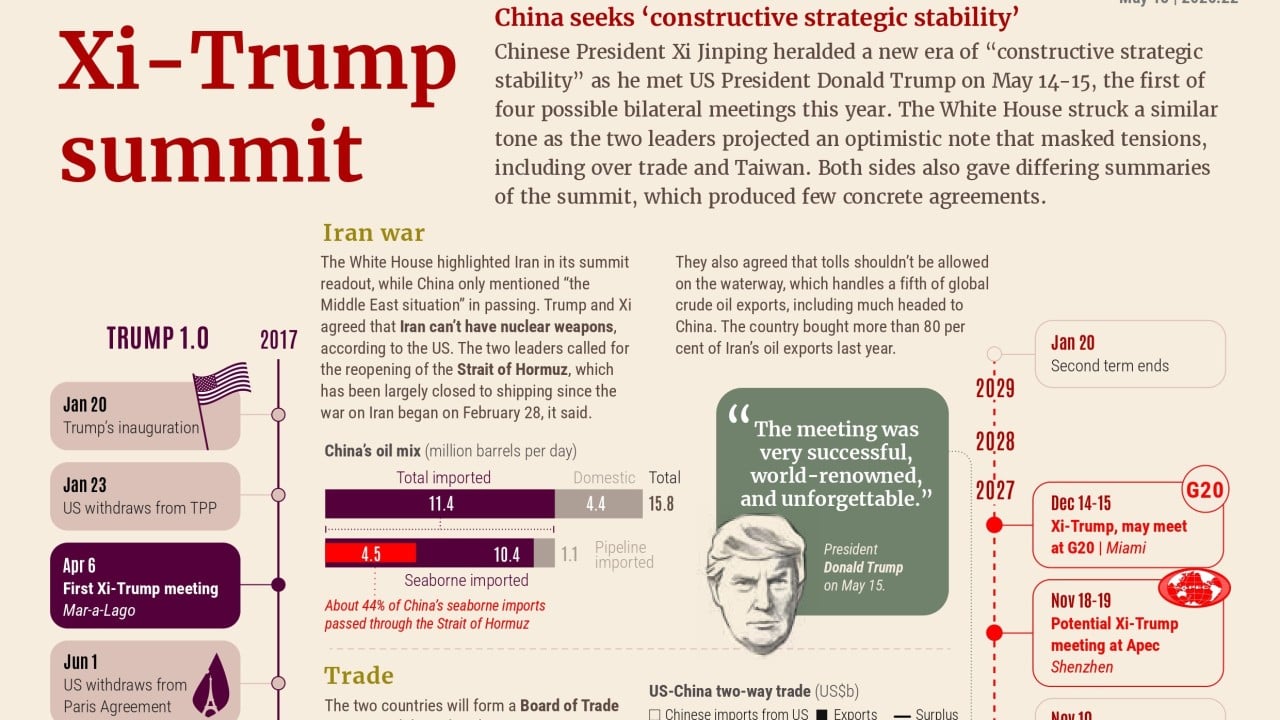
Consider the financial mechanics of a conflict with Iran. Yes, oil prices would spike initially. The Straits of Hormuz would become a high-risk transit zone. But the United States is now the world’s largest producer of crude oil. A global energy crunch actually benefits domestic energy conglomerates and the regional economies that support them.
Furthermore, a massive military deployment acts as a Keynesian stimulus package for the defense sector. Billions of dollars flow to contractors in Virginia, Texas, California, and Ohio. Jobs are created. Stock portfolios recover. The economic pain of a war is highly concentrated among the poorest demographics, while the broader middle and upper-mids are insulated by the inertia of the financial markets.
The downside to my contrarian view is grim: it acknowledges that our society has become so effectively bureaucratized and pacified that even a catastrophic foreign policy blunder cannot shake it out of its stupor. It is an admission that the machinery of the state is decoupled from the actual will or passion of the populace. That is a deeply uncomfortable realization, but it is the truth.
The Real Threat Is Attrition, Not Explosion
The danger of a Trump-led intervention in Iran is not a sudden, explosive domestic revolution. The danger is a slow, grinding systemic rot.
An invasion of Iran would be a geopolitical catastrophe. It is a mountainous country with a population of nearly 90 million people, a deeply entrenched military apparatus, and decades of experience operating asymmetric proxy networks. It would make the occupation of Iraq look like a minor logistical exercise.
But the consequence at home will not be citizens taking to the streets to overthrow the government. The consequence will be the final, absolute exhaustion of American institutional trust.
It will look like a hyper-accelerated cynicism. More citizens opting out of the political process entirely. Lower voter turnout. A deeper retreat into hyper-localized, insular communities. The military will face an even more severe recruitment crisis than it does today, forcing a reliance on corporate mercenaries and autonomous tech. The national debt will balloon by trillions more, fueling long-term inflationary pressures that quietly erode the purchasing power of the working class.
This is how modern empires decline. They do not end with a dramatic, cinematic revolution led by angry citizens storming the capitol over a foreign war. They end with a whimper, suffocated by the weight of their own apathy, while their leaders play to empty rooms and their citizens stare at their phones, entirely indifferent to the empire being run in their name.
Stop listening to politicians who promise a dramatic explosion. Watch the slow, steady erosion instead. That is where the real damage is being done.