Publicly, diplomats across the Middle East are issuing urgent pleas for de-escalation to prevent a catastrophic regional conflict. Privately, those same governments are hardening infrastructure, repositioning air defenses, and bracing for a multi-front war they increasingly view as unavoidable.
That gap between diplomatic rhetoric and military reality defines the current crisis. Whenever tensions spike across the Levant, the Persian Gulf, or the Red Sea, foreign ministries immediately release coordinated statements urging restraint. Western capitals echo the sentiment, dispatching envoys to shuttle between regional hubs in a familiar ritual of crisis management. Yet decades of covering regional security reveals a blunt truth: calls for calm in the Middle East rarely signal an actual path to peace. More often, they serve as tactical stalling mechanisms while state and non-state actors finalize their logistics, secure supply lines, and manage domestic political fallout before the next kinetic exchange.
The Anatomy of Diplomatic Stall Tactics
To understand why official statements carry so little weight on the ground, you have to look at the audience those statements are actually meant to reach. When regional leaders warn against escalation, they are rarely speaking to their adversaries. They are speaking to global energy markets, international lenders, and Western defense guarantors.
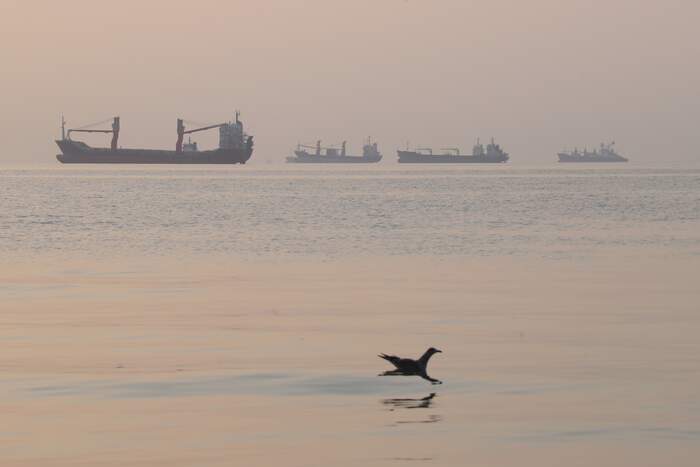
Stability is a currency. For Gulf states pursuing massive economic diversification programs, even the perception of an imminent regional war triggers capital flight, spikes maritime insurance premiums, and drives up borrowing costs. Issuing a call for calm buys time to reassure sovereign wealth partners and keep shipping lanes open through the Strait of Hormuz and the Bab el-Mandeb Strait.
Meanwhile, behind closed doors, defense ministries operate on a completely different set of assumptions. Deterrence theory relies on credible threat, not polite diplomacy. In a region where red lines have been repeatedly tested and blurred, no leader can afford to be caught flat-footed if an adversary miscalculates. As a result, the exact same governments preaching restraint at international summits are simultaneously accelerating munitions procurement, expanding underground command facilities, and conducting joint readiness drills.
Why Deterrence Is Breaking Down
For years, a fragile equilibrium held the region back from full-scale interstate warfare. That balance rested on mutual vulnerability—the shared understanding that any direct attack on a rival's core infrastructure would invite devastating, symmetrical retaliation. Today, that framework is eroding rapidly.
Several structural shifts explain why the old rules no longer apply:
- The Proliferation of Asymmetric Arsenals: Precision-guided munitions, long-range loitering drones, and ballistic missiles are no longer the exclusive domain of wealthy nation-states. Non-state militias now possess strike capabilities that rival those of conventional air forces, allowing them to threaten strategic targets hundreds of miles away at a fraction of the cost of traditional defense interceptors.
- The Erosion of Escalation Dominance: Historically, superior conventional militaries could control the tempo of a conflict by threatening overwhelming force. When decentralized networks operate across multiple borders simultaneously, traditional escalation dominance loses its bite. You cannot easily deter an adversary whose command structure is distributed across dense urban centers and hardened subterranean tunnels.
- Domestic Political Constraints: Leaders across the spectrum face intense internal pressures. Hardline factions demand visible strength, while exhausted populations struggle under inflation, currency devaluation, and water scarcity. Backing down publicly—even in exchange for quiet concessions—carries severe political survival risks.
When deterrence weakens, every tactical skirmish carries the risk of accidental strategic escalation. A single strike that kills a high-value commander, or a rocket that hits a densely populated civilian center instead of an empty field, can instantly invalidate months of backchannel diplomacy.
The Myth of the Monolithic Proxy Network
Mainstream coverage frequently reduces regional conflict to a simple chessboard, portraying local armed groups as mere puppets executing orders from a single external capital. That framing misses how modern alliances actually function on the ground.
While funding, weapons transfers, and intelligence sharing flow from major regional powers to allied militias, those local actors possess their own distinct political agendas, revenue streams, and domestic constituencies. Consider a hypothetical scenario where a regional patron instructs an allied militia to hold its fire during delicate ceasefire negotiations. If that militia faces pressure from its own local rivals or needs to demonstrate relevance to its recruits, it may launch a limited attack anyway—forcing the patron to either publicly disavow an ally or absorb the retaliatory blow.
This principal-agent problem makes crisis management extraordinarily difficult. Even if top leaders in major capitals genuinely want to avoid a wider war, they do not exercise absolute operational control over every rocket battery, naval drone, or border unit aligned with their cause. The decentralized nature of these networks ensures that local friction can quickly spiral into a regional conflagration.
Follow the Infrastructure Not the Speeches
If you want an accurate forecast of where the Middle East is heading, ignore the press releases from diplomatic summits and watch physical infrastructure instead. Defense analysts track concrete indicators that reveal true strategic intent far better than televised speeches.
Energy and Maritime Chokepoints
The global economy remains deeply tethered to Middle Eastern energy transit. Roughly one-fifth of the world's petroleum passes through the Strait of Hormuz, while the Red Sea handles a massive share of global container traffic. When tensions rise, oil traders immediately price in a geopolitical risk premium. Watch how regional exporters respond: increased reliance on overland pipelines that bypass maritime chokepoints, expanded strategic storage facilities outside the region, and naval escorts for commercial tankers all point toward an expectation of prolonged disruption.
Civil Defense and Hardening
States expecting a brief diplomatic spat do not invest billions in civil defense. When governments begin reinforcing hospital basements, stockpiling emergency medical supplies, decentralizing power grids, and distributing satellite communications gear to municipal authorities, they are preparing for sustained bombardment. These measures take months to implement and cannot be hidden from commercial satellite imagery or local observers.
Financial Hedging and Currency Controls
War is expensive, and sovereign bond markets react violently to instability. Central banks across the region quietly tighten foreign exchange controls, bolster gold reserves, and negotiate emergency credit lines with international allies long before the first air raid sirens sound.
The Hidden Economic Toll of Perpetual Brinkmanship
A region does not need to experience an all-out invasion to suffer war-level economic damage. Living permanently on the brink of conflict acts as a slow-acting poison on national economies.
Foreign direct investment stalls when boardrooms cannot calculate five-year political risk. Tourism—a vital source of foreign currency for several Levantine and North African states—evaporates overnight at the first travel advisory. Skilled professionals, engineers, and doctors accelerate their emigration, draining countries of the human capital needed to rebuild.
Worse still, perpetual mobilization diverts scarce public funds away from crumbling infrastructure, education, and climate adaptation. In a region already facing severe water stress and extreme heat, spending billions on interceptor missiles and air defense batteries guarantees deeper social instability down the road. The tragedy of the current standoff is that the economic devastation is already occurring, even while diplomats claim they are successfully preventing a war.
Washington and the Limits of External Leverage
For decades, the standard playbook for calming a Middle Eastern crisis involved deploying American aircraft carriers to the eastern Mediterranean or the Persian Gulf while sending a senior diplomat to twist arms in regional capitals. That model is hitting hard limits.
Military deployments still project raw firepower, yet their deterrent value has diminished against adversaries willing to absorb heavy losses to achieve long-term political goals. Simultaneously, Washington's diplomatic leverage has narrowed. Regional powers have spent the last decade hedging their bets, deepening trade and security ties with Beijing, Moscow, and European capitals. Leaders in the Gulf and the Levant no longer view American security guarantees as absolute, nor do they feel compelled to align their foreign policies exclusively with Western priorities.
When an external mediator lacks both the unconditional trust of the parties involved and the willingness to impose decisive consequences, shuttle diplomacy devolves into crisis management without crisis resolution. Envoys can occasionally broker temporary pauses, hostage exchanges, or localized deconfliction mechanisms. They cannot fix the underlying territorial disputes, ideological rivalries, or governance failures driving the violence.
What Actual De-escalation Requires
Genuine stability in the Middle East cannot be achieved through press conferences or temporary ceasefires that leave core grievances untouched. History demonstrates that durable de-escalation requires painful, concrete trade-offs that current leaders are largely unwilling or politically unable to make.
First, it demands enforceable security architectures with clear verification mechanisms, rather than vague verbal assurances brokered through third-party intermediaries. Second, it requires addressing the political vacuums and economic collapse in fragile states that allow armed militias to operate as states-within-a-state. Without functioning institutions and legitimate economic opportunities, young men will continue filling the ranks of paramilitary groups regardless of how many peace summits are convened.
Until those structural realities change, every call for calm issued from a podium in Cairo, Riyadh, Doha, Tehran, or Tel Aviv should be read for what it truly is: a momentary pause to reload, recalibrate, and prepare for the next round.