Call it a mourning run. Call it a clout chase. Either way, you are watching the wrong argument.
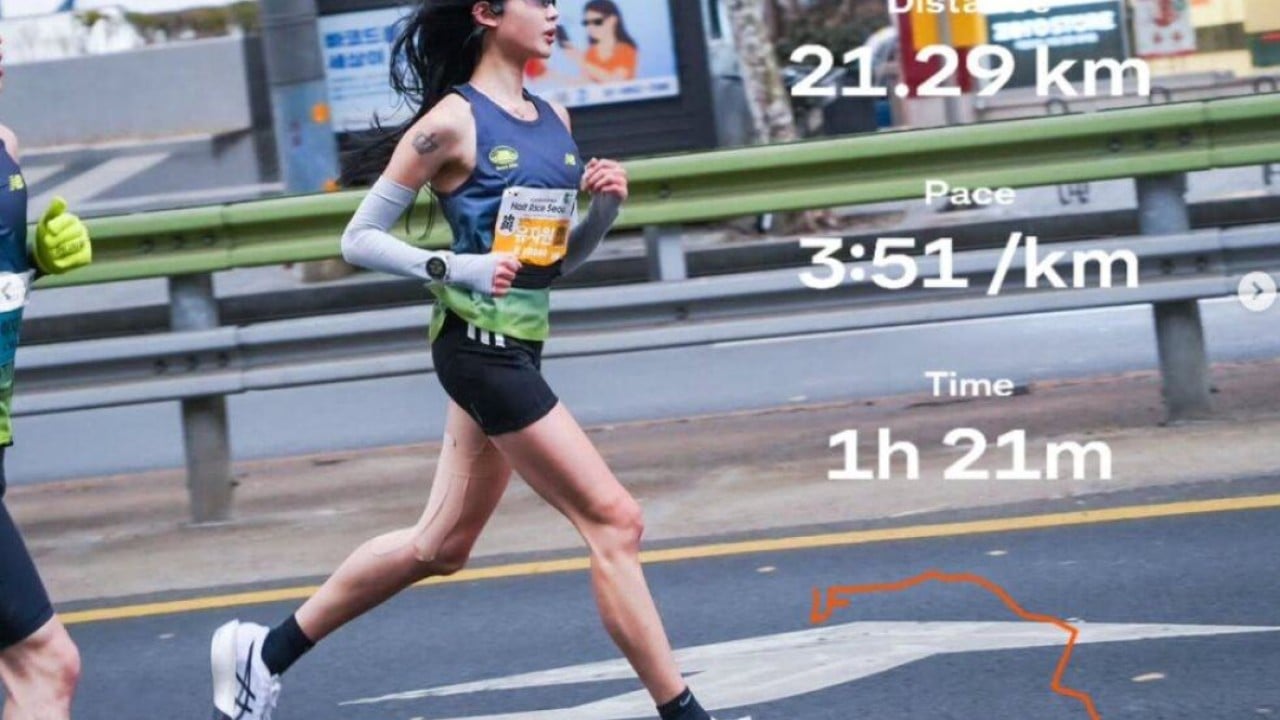
When a runner dies in South Korea and hundreds of strangers lace up matching shoes to jog in solidarity, the easy commentary splits right down the middle. One side cheers the warmth, the community, the refusal to let grief sit alone in a quiet room. The other side rolls its eyes at the camera angles, the Strava titles, the neatly framed captions, and the suspiciously photogenic paces. "Mourning run or clout chase?" becomes the neat binary for every thread and panel discussion.
Both sides are lazy. Both miss the real mechanics of how modern urban fitness culture works in South Korea and across hyper-connected cities everywhere else.
The debate frames public grief runs as a moral test of sincerity inside the runner's head. That is a distraction. Sincerity is private and mostly unreadable from a sidewalk. What matters is the system that turns sorrow into content, belonging into performance, and shared effort into social currency. You do not need to read a runner's mind to see how the incentive loop operates.
I have watched brands, creators, and community leaders pour millions into "authentic community" campaigns over the past decade, only to watch those same spaces turn brittle the moment grief or controversy arrives. When a subculture builds its identity around visible discipline, group aesthetic, and constant broadcast, even a tragedy gets pulled into the feed. Condemning the runners as pure narcissists ignores how deeply social proof is wired into modern running clubs. Pretending the event is pure, unmediated grief ignores how algorithms reward public emotion.
The False Binary of Sincerity Versus Clout
Ask most commentators whether a memorial run is genuine or performative, and they treat those two words like oil and water. Either you are honoring the dead, or you are farming engagement.
Real human behavior rarely comes in clean primary colors. Grief is messy. Social belonging is complicated. People often show up to honor someone they barely knew because they want to feel part of something larger than their own weekday routine, while still pulling out their phone afterward because documenting life is now a reflex.
Calling every camera-ready stride a "clout chase" flattens human motives into a caricature. Yet calling every group jog a pure act of devotion ignores how status operates inside running crews.
In South Korea, running has surged past niche hobby status into a high-visibility lifestyle marker, complete with tight-knit crews, coordinated gear, weekend park loops, and heavy social media documentation. When a tragedy hits a space built on shared presence and visual identity, people naturally gather where they already know how to belong. A run is the vocabulary that group speaks.
The problem starts when the vocabulary of mourning looks identical to the vocabulary of promotion.
Why Public Grief Looks Like Content
Modern social platforms do not distinguish between joy, outrage, and sorrow when ranking attention. Emotion is signal. Movement in groups is visually dynamic. A pack of runners moving along a city path or riverfront creates clean lines, strong pacing, and an unmistakable narrative arc.
Even when organizers ask participants to keep things quiet or respectful, the surrounding ecosystem pushes toward visibility. Friends share updates so distant acquaintances know the details. Crews post recaps to show unity. Casual observers film from the sidelines and add their own commentary.
Once a tribute enters that stream, intent stops controlling perception. A runner who wanted nothing more than to clear their head while honoring a fallen peer ends up looking like a cast member in a viral clip. Meanwhile, someone who genuinely came for the content can hide behind the solemnity of the occasion and claim moral immunity from criticism.
That ambiguity is why the binary fails. It forces observers to play amateur psychologist instead of examining the culture that made the spectacle possible.
How Modern Run Culture Turns Every Moment Into a Broadcast
To understand why these tributes spark friction, you have to look at how contemporary running culture evolved from solitary endurance into a social media ecosystem.
Traditional distance running was famously austere. You woke up early, ran ugly miles alone or with a small core group, and rarely turned a ten-kilometer training block into a public production. Even races were mostly about personal clocks and local clubs, not curated feeds.
Over the last ten years, urban run clubs flipped that script. Running became social, stylish, and measurable. GPS watches track cadence, heart rate, elevation, and split times down to the second. Apps turn every route into a public map. Group runs end with coffee, photos, and shared tags.
I have seen fitness communities thrive when they keep the focus on showing up consistently rather than looking good doing it. I have also seen them hollow out when status becomes the main fuel. When belonging depends on being seen in the right group at the right time, every gathering carries an underlying current of image management.
The Status Economy Inside Crew Culture
In high-density cities like Seoul, space is tight, work hours run long, and young adults often look for structured ways to build real-world ties outside the office. Run clubs solve a real loneliness problem. They give people a schedule, a route, and a tribe.
Yet every tribe develops status markers. Faster paces earn respect. Regular attendance builds insider standing. Sharp photos and strong engagement boost visibility inside and outside the crew.
When a death occurs within or adjacent to that world, the grief collides with those existing status mechanics. Who organizes the tribute? Which crews show up in force? How is the story framed online?
None of this means participants wake up scheming to profit from tragedy. Most people are simply acting inside habits they practice every weekend. When your normal way of processing life is to gather with your crew and post about it, you do the same thing when something breaks.
What Behavioral Science Tells Us About Shared Grief and Signaling
Sociologists and psychologists who study collective rituals have long observed a tension between emotional comfort and social signaling. Émile Durkheim wrote about "collective effervescence"—the shared energy and solidarity people feel when moving or acting together in a common cause. Physical synchronization, like walking or running in step, can lower isolation and strengthen group bonds.
At the same time, evolutionary and social psychologists point out that humans constantly broadcast alignment with group norms. Showing up publicly signals values, loyalty, and identity to peers.
Imagine a scenario where a runner dies after a hit-and-run or a sudden medical emergency, and a local crew organizes a slow five-kilometer memorial loop at dawn. Fifty people show up. Thirty of them genuinely knew the runner or feel gutted by the loss. Fifteen came mainly to support friends and feel grounded. Five care mostly about being seen at a high-profile community moment. From the curb, all fifty look the same.
Trying to sort them into "pure mourners" and "fakes" is a fool's errand. A more useful question is what happens to a community when public display becomes the default proof of care.
When care is measured by public visibility, quiet support gets undervalued. The friend who brings food to a grieving family without posting a single story looks invisible next to a crowd jogging past a camera. Worse, people start editing their grief to fit how it will read on a screen.
Why "People Also Ask" Questions Miss the Real Issue
Scroll through search suggestions around this topic and you see the exact same questions repeated in different words. Every single one is framed around blame or purity.
Is a mourning run disrespectful to the dead?
That asks the wrong question. Respect is defined by what the person who died would have valued, what their family wants, and how the gathering is conducted—not by whether strangers on the internet approve of the optics.
If a runner loved the camaraderie of the road and their family welcomes a quiet, safe tribute, moving together can be deeply fitting. If the tribute turns into reckless traffic blocking, loud self-promotion, or unwanted spectacle for grieving relatives, then it crosses a line. Respect lives in conduct and consent, not in an abstract rule against running.
Are clout chasers ruining fitness communities?
Blaming "clout chasers" is an easy scapegoat that lets everyone else off the hook. Attention-seekers exist in every subculture, from lifting and cycling to tech and finance. They only gain power when the community rewards spectacle over substance.
If a crew treats viral reach as a badge of honor on normal days, it should not act shocked when people bring that same mindset to heavy days. You cannot build a house on look-at-me culture and expect quiet humility during a crisis.
How can people honor a runner without looking performative?
Start by dropping the obsession with how it looks. You do not need an audience to grieve or remember someone.
Run on your own time. Keep the pace honest. Leave the phone in your pocket or skip the post entirely. If you are part of a group tribute, follow the organizer's rules, respect local residents and traffic, and put the family's wishes ahead of group branding.
If the goal is real solidarity rather than a content moment, privacy is a feature, not a flaw.
The Uncomfortable Blind Spots of This Contrarian Take
Pushing back against the "mourning run versus clout chase" debate has its own traps, and pretending otherwise would be dishonest.
First, cynicism can go too far. Dismissing public rituals as inherently performative can make people sound cold or detached from real community life. Shared movement can genuinely help people process shock and feel less alone after a sudden loss.
Second, assuming every visible post is status-driven can misread simple human connection. People today share almost everything—wins, meals, bad days, milestones—because social feeds are where their friendships live. Treating normal digital habits as proof of malice misses how modern communication actually works.
Third, focusing heavily on urban crew culture can overlook local nuances, such as differences between casual social clubs, competitive track groups, and safety advocacy around pedestrian and runner fatalities. Context matters. A tribute aimed at demanding safer roads carries a very different weight than a casual photo-heavy group jog.
What Needs to Change in How We Judge and Run Together
If commentators want sharper analysis, they should stop acting like moral referees over strangers' motives. Look at the incentives, the safety practices, and the impact on the people actually grieving.
For runners and crew leaders, the fix is straightforward:
- Separate tribute from brand. Strip crew logos, promotional tags, and highlight reels out of memorial gatherings. Let the moment stand without marketing weight.
- Ask the family first. Before organizing anything public, check whether a visible gathering helps or burdens those closest to the person who died.
- Prioritize safety over optics. Slowing down traffic, obeying signals, and keeping formation orderly matters far more than getting a clean group shot.
- Normalize unposted grief. Give people permission to show up, run hard or slow, go home, and say nothing online.
For observers and media commentators, the fix is just as simple:
- Stop reducing complex human reactions to a catchy headline binary.
- Pay attention to underlying issues like road safety, overtraining, and community support instead of obsessing over who held a camera.
- Remember that judging someone's heart from a fifteen-second clip says more about your own feed habits than theirs.
Tributes do not expose evil in runners. They expose how thoroughly performance has woven itself into everyday life.
Put the phone away. Lace up. Run for the person, not the feed.