Steel does not forgive. When two hundred tons of momentum meet a curve at twice the rated speed, physics ceases to be a textbook theory and becomes an immediate, violent reality.
Consider the anatomy of a rail disaster in central Spain, specifically the kind of tragedy that echoes through the headlines from Toledo to Santiago de Compostela. In the aftermath of a crash that claims sixty-eight lives, the official narrative almost always arrives with suspicious speed. Investigators point to the cab. Officials release transcripts. The public is handed a single, digestible culprit wrapped in neat, bureaucratic phrasing.
Human error.
Two words. Clean. Contained. Blaming a solitary person at the controls allows everyone else—the executives, the infrastructure planners, the budget committees—to sleep soundly at night. If the tragedy was simply the fault of one distracted driver, then the system itself remains blameless. The trains are safe. The tracks are fine. Nothing fundamental needs to change.
Except that is a lie.
I spent years working adjacent to European transit infrastructure, walking the ballast lines in the freezing pre-dawn mist of Castile-La Mancha, watching high-speed corridors slice through ancient olive groves. You learn quickly out there that a railway is not a collection of isolated parts. It is a living, breathing nervous system. When a train leaves the rails near a historic city like Toledo—where winding terrain meets modern commuter demands—the failure rarely begins in the last ten seconds before impact. It begins years earlier, in boardrooms and budget spreadsheets, long before a driver ever places a hand on the throttle.
The Anatomy of a Split Second
To understand what really happens when a train crashes, step inside a hypothetical cab on a rainy evening south of Madrid. Let us call our driver Mateo. He is a veteran with fifteen years on the tracks, a man who knows every grade, every signal mast, and every acoustic shift in the steel beneath his boots.
At 190 kilometers per hour, the world outside the windshield blurs into streaks of wet slate and sodium-vapor orange. Mateo’s cab is a symphony of low hums and intermittent chimes. In modern rail operations, cognitive load is the invisible enemy. A driver is not merely steering; they are monitoring braking curves, interpreting trackside beacons, managing communications with central dispatch, and compensating for weather conditions that alter friction coefficients by the millisecond.
Now, picture a transition zone.
In Spanish rail networks, trains frequently move from state-of-the-art high-speed lines—protected by automated braking systems that physically override a human if the train goes too fast—onto conventional, legacy tracks where safety relies heavily on human vigilance and older signaling protocols.
Mateo’s phone rings. It is an internal operational call from a conductor three cars back asking about a ticket discrepancy or a station stop adjustment. It is a routine distraction, sanctioned by company protocol. For four seconds, Mateo’s eyes leave the trackside speed board. At nearly two hundred kilometers per hour, four seconds is more than two hundred meters of blind travel.
By the time he looks up, the curve is already biting into the front bogie. The centrifugal force builds with sickening grace. The wheels scream against the outer rail, climb the flange, and surrender to gravity.
When the dust settles and sixty-eight people are dead, the investigators will pull the black box. They will hear the phone call. They will note the delayed braking application. And the headline the next morning will read that human error caused the Toledo crash.
Mateo will carry the weight of sixty-eight ghosts for the rest of his life. Meanwhile, the people who decided not to install automatic speed-control beacons on that specific stretch of legacy track will issue a press release expressing their deepest condolences.
Why We Crave a Scapegoat
There is a deep psychological comfort in blaming the person in the chair. Psychologists call it the fundamental attribution error—our stubborn tendency to attribute disasters to individual character flaws rather than systemic traps.
If a bridge collapses because an engineer miscalculated a load factor, we question the entire firm. If a plane falls from the sky because a wing spar cracks, we ground the whole fleet. Yet when a train derails, we obsess over the driver's pulse, their phone records, their sleep schedule. We treat the human being as a defective microchip that simply needs to be swapped out.
History proves how dangerous this habit is. Look back at the devastating 2013 derailment in Angrois, near Santiago de Compostela, where seventy-nine people perished. For years, the legal and public battle centered intensely on the driver who missed a braking point after taking a routine phone call. Yet deeper technical inquiries revealed a glaring systemic vulnerability: the abrupt transition from high-speed signaling to conventional track without an automated braking safety net to catch an inevitable human lapse.
Humans are biological organisms, not algorithms. We get tired. Our attention drifts when a routine task repeats ten thousand times without incident. Aviation learned this lesson through blood and ash decades ago. Modern cockpits are designed around the assumption that pilots will make mistakes. Systems are built with redundant alarms, tactile feedback, and automated envelopes that refuse to let a momentary lapse become a mass-casualty event.
Railways, particularly where old infrastructure meets new ambition, have often lagged behind that philosophy. When a government pours billions into flagship high-speed lines linking major capitals, the regional connectors—the lines winding toward places like Toledo, carrying daily commuters, students, and retirees—often make do with patchwork upgrades.
The Invisible Architecture of Safety
Think of railway safety like a block of Swiss cheese. This is a well-known metaphor in industrial risk management, and for good reason. Every safety measure—driver training, trackside signals, cab alarms, automated braking, speed restrictions—is a slice of cheese. None of them is solid. Every single layer has holes in it, representing weaknesses, blind spots, or potential failures.
Most days, the holes do not line up. A driver misses a sign, so the cab alarm sounds. The alarm fails, so the automated track beacon triggers the emergency brakes. The train stops safely. Passengers complain about a two-minute delay and go home to dinner.
A disaster that kills sixty-eight people only happens when all the holes align simultaneously.
When you examine the wreckage of a major train crash, you are looking at a failure of defense in depth. Why was a single human being the last line of defense between normal operation and catastrophic derailment? Why was there no automatic enforcement system physically preventing the train from entering a tight curve above its survival threshold?
These questions make officials deeply uncomfortable because the answers always have price tags attached. Installing European Rail Traffic Management System (ERTMS) level-two infrastructure across every kilometer of regional track costs hundreds of millions of euros. Updating legacy rolling stock takes years of service disruptions. Passing strict rules banning non-emergency cab communications requires rethinking dispatch workflows from the ground up.
It is much cheaper to train a new driver than to rebuild a signaling network.
Inside the Rescue
Numbers sanitize horror. Saying "sixty-eight dead" takes less than a second to read, yet each digit represents an entire universe abruptly extinguished.
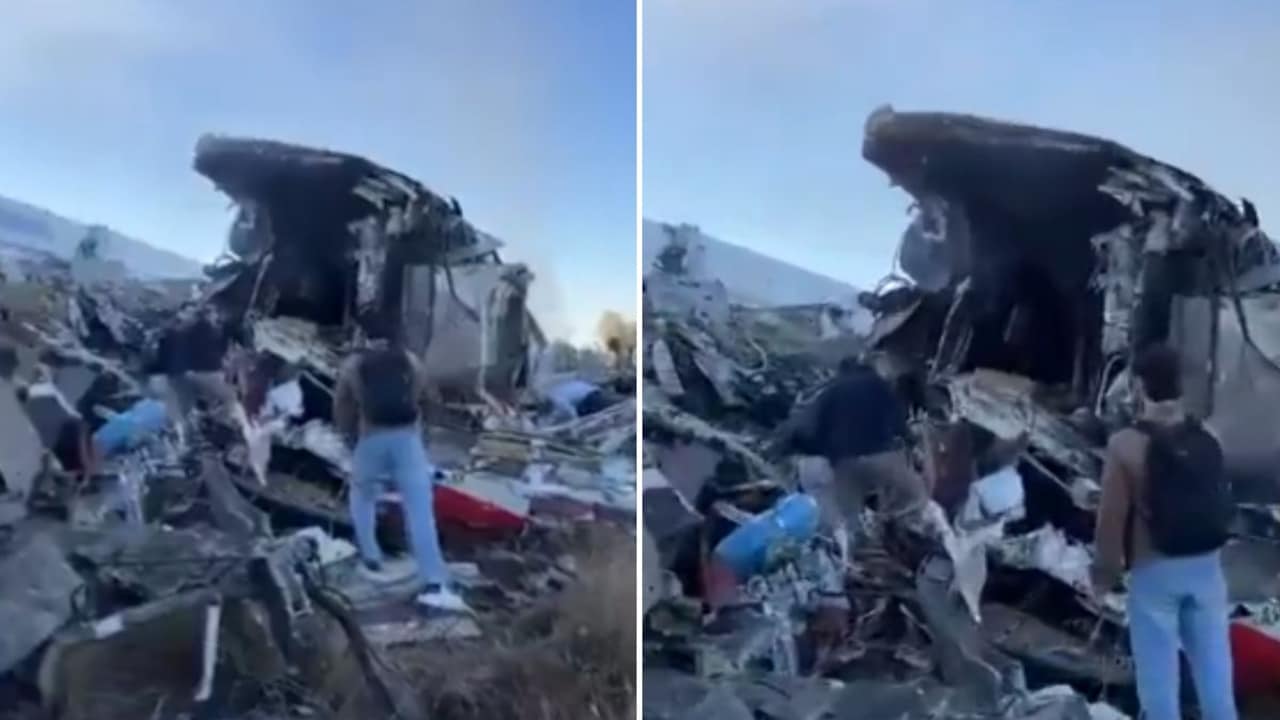
When a train leaves the tracks at high speed, the carriages do not neatly tip over like toys. They jackknife. Steel walls tear open like aluminum foil. Seats wrench free from their floor mounts, becoming projectiles inside a tumbling cylinder. The sound—survivors always talk about the sound first—is a deafening, metallic shriek followed by an eerie, suffocating silence broken only by hissing air brakes and the distant crackle of snapped overhead power lines.
In the immediate aftermath, local communities always become the true first responders. Before the heavy cranes arrive from Madrid, before the forensic teams tape off the perimeter, it is neighbors in slippers and farmers with tractor lights who climb through the twisted wreckage. They use crowbars from their trunks to pry open jammed carriage doors. They tear bedsheets into tourniquets.
I remember speaking with a volunteer firefighter who worked the aftermath of a major Spanish derailment years ago. He told me that the hardest part wasn't the physical labor of cutting through reinforced steel in the heat. It was the ringing cell phones inside the silent carriages. Dozens of them, vibrating in pockets and purses, illuminating cracked screens with incoming calls from mothers, husbands, and children who had just seen the breaking news banner on television.
That is the real price of an "acceptable risk" calculated on a balance sheet.
Engineering for Reality, Not Perfection
If we want to prevent the next Toledo, we have to abandon the fantasy of the infallible operator. Good engineering does not demand perfection from flawed humans; it builds environments where human imperfection cannot kill sixty-eight people.
First, automated speed enforcement must be non-negotiable wherever passenger trains travel at lethal speeds. If a curve cannot be safely navigated above eighty kilometers per hour, the track itself must possess the electronic authority to slow the train down if the driver does not. Relying on a painted sign beside the rails and the hope that a human brain will process it without fail every single time is negligence disguised as tradition.
Second, the sterile cockpit rule—standard practice in commercial aviation during critical phases of flight—must become ironclad law in rail cabs. During high-speed runs, station approaches, and signaling transitions, non-essential communication must be strictly blocked. A conductor wondering about a minor scheduling detail can wait five minutes until the train reaches a straight, low-risk stretch of track.
Third, transparency in accident investigation has to bypass political self-preservation. When a crash occurs, independent technical boards must have immediate, unfettered authority to examine not just the cab voice recorder, but the maintenance logs, the budget deferrals, and the risk assessments signed off by senior executives years prior.
The Weight on the Tracks
Truthfully, standing beside a high-speed rail line today still fills me with a mix of awe and quiet dread. Watching a sleek, aerodynamic train glide effortlessly across the Spanish plains is a triumph of human ingenuity. It shrinks distances, connects isolated towns, and offers one of the cleanest, most efficient ways to move humanity across the earth.
Yet trust in that steel ribbon is fragile. Every passenger who steps onto a platform in Atocha or Toledo enters into an unspoken covenant. They hand over their lives to strangers—to the engineers who poured the concrete viaducts, to the technicians who calibrated the switches, to the regulators who signed the safety certificates, and to the tired driver staring out into the dark.
When that covenant breaks, calling it human error is not an explanation. It is an abdication.
The next time you board a train, listen to the heavy, hydraulic thud of the doors sealing shut, feel the gentle lurch as the electric motors engage, and look out the window at the silver rails stretching toward the horizon—knowing that between safe arrival and unthinkable ruin lies nothing more, and nothing less, than the choices made long before the journey ever began.