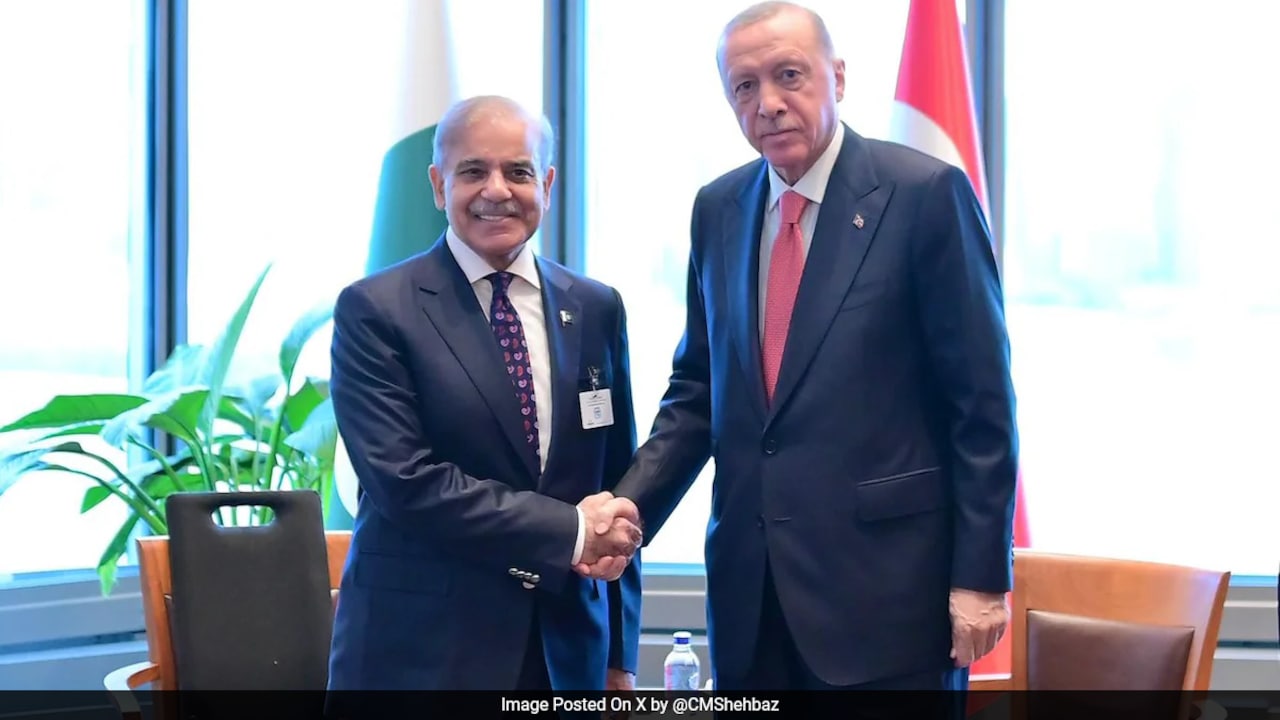
The headlines are running wild with breathless warnings about a new geopolitical axis forming between Riyadh, Ankara, and Islamabad. Every armchair strategist with an internet connection is typing out frantic threads about an Islamic NATO, a new nuclear umbrella, and a seismic shift in global power that will leave Washington and Brussels scrambling.
It is complete fiction. For a more detailed analysis into similar topics, we suggest: this related article.
I have spent the last fifteen years tracking defense procurement, structural military logistics, and bureaucratic inertia across the Middle East and South Asia. I have watched billions of dollars vanish into vanity projects, unserviceable hardware mismatches, and alliances forged in press releases that evaporate the second a real bullet flies.
The lazy consensus says this newly reported defense pact changes the balance of power. The reality is far less glamorous and infinitely more fragile. This agreement is not a grand strategic realignment. It is a desperate exercise in mutual PR management by three capitals facing severe domestic headaches and failing foreign policy bets. For broader details on this issue, comprehensive reporting is available at Reuters.
Let us break down why this alliance is structurally dead on arrival.
The Logistics Nightmare Nobody Wants to Talk About
Wars are not won by signing ceremonies or glossy photo ops featuring generals shaking hands in air-conditioned ballrooms. Wars are won by supply chains, interchangeable ammunition, secure command networks, and maintenance infrastructure.
Look at the hardware profiles of these three militaries.
Pakistan relies primarily on a chaotic mix of legacy American platforms, homegrown Chinese-backed systems, and older European gear. Turkey has built a formidable indigenous drone and aerospace sector, heavily reliant on Western subcomponents, while managing a NATO-standard military apparatus that frequently clashes with American logistics chains. Saudi Arabia is a massive consumer of high-end United States and British hardware, locked into proprietary Western maintenance contracts that require continuous foreign contractor oversight to keep a fighter jet in the sky.
Imagine a scenario where a joint command center is established under this new pact. Turkish Bayraktar drones, Pakistani JF-17 fighters, and Saudi F-15s are supposed to operate under a unified doctrine. They speak different technical languages. Their encryption keys are entirely incompatible. Their logistics software does not talk to each other.
When you try to force militaries with zero operational interoperability to coordinate in a real crisis, you do not get synergy. You get friendly fire incidents, grounded fleets, and radio silence.
The Nuclear Myth and Pakistan's Economic Reality
The most persistent fantasy floating around defense circles is that Saudi Arabia is finally cashing in its blank check for Pakistani nuclear weapons. Pundits love to point to historical financial bailouts and whisper about underground missile silos in the desert.
It ignores simple state survival dynamics.
Pakistan's economy is on life support. Islamabad spends a staggering percentage of its national budget just servicing domestic debt and begging the International Monetary Fund for another tranche of emergency loans. The military establishment in Rawalpindi cares about one thing above all else: self-preservation and securing the cash flow required to keep its generals fat and its domestic unrest suppressed.
Selling or formally extending a nuclear umbrella to Riyadh is not a diplomatic card Pakistan can play without triggering immediate, catastrophic economic strangulation from Washington and the West. Islamabad cannot afford to become an international pariah for the sake of a Saudi security guarantee that Riyadh itself would struggle to operationalize.
When the bill comes due, Pakistan looks at its ledger, looks at its foreign exchange reserves, and calculates that rhetoric is cheap while Western sanctions are terminal.
Turkey's Strategic Solipsism
Ankara under Recep Tayyip Erdogan plays a very specific game. Turkish foreign policy is neo-Ottoman in ambition but purely transactional in execution. Turkey will sell drones to anyone with cash, sign memorandums of understanding with anyone offering diplomatic cover, and pivot away the moment a better deal emerges in Brussels or Moscow.
Turkey does not want a permanent entangling alliance that limits its independent maneuvering room. Erdogan wants access to sovereign wealth funds in the Gulf to prop up a struggling domestic economy plagued by rampant inflation and a battered lira.
When Ankara signs a defense pact, it is looking for investment, defense contracts for its domestic arms industry, and political leverage against its traditional rivals in Athens and Cairo. Treating this agreement as a permanent security architecture is like buying a used car because the salesman promised the engine was brand new based on a fresh coat of spray paint.
Saudi Arabia's Quest for Strategic Autonomy Without the Heavy Lifting
Riyadh wants to look like a regional hegemon without taking on the grueling, dirty work of maintaining a self-sufficient security apparatus. Under Vision 2030, Crown Prince Mohammed bin Salman has tried to pivot the kingdom toward domestic defense manufacturing through SAMI, aiming to localize half of its military equipment spending.
It is a noble goal on paper. In practice, building advanced military technology takes decades of institutional knowledge, engineering talent, and rigorous trial and error. You cannot simply buy a domestic defense industry with petrodollars.
By signing broad, toothless defense pacts with Turkey and Pakistan, Riyadh is signaling to Washington that it has alternatives. It is a high-stakes diplomatic bluff designed to extract better security commitments from the United States, not a serious pivot toward an Asian security bloc.
When the Houthis launch drones across the border or regional tensions spike in the Gulf, Riyadh does not call Islamabad or Ankara for air defense support. They call Washington, Patriots are deployed, and American contractors go back to work.
The Dangerous Flaw in Asking the Wrong Questions
The media asks: Will this alliance isolate the West and reshape the Middle East?
It is the wrong question entirely. It assumes these nations possess a shared ideological or strategic vision that overrides their domestic survival instincts.
The real question you should be asking is: How many days would this pact survive a genuine military crisis involving a major regional adversary?
The answer is zero.
Because when national survival is on the line, states retreat to their core interests. Pakistan will look inward to avoid implosion. Turkey will look out for its own regional footprint in the Caucasus and the Black Sea. Saudi Arabia will defer to the only security guarantor with the global logistics network capable of protecting oil shipping lanes.
Actionable Takeaway for Realists
Stop trading on headlines. When you see news of sweeping defense pacts, bilateral summits, and historic brotherhood agreements between nations with completely divergent logistics, incompatible political systems, and conflicting foreign policies, look at the balance sheets. Look at the maintenance contracts. Look at where their elites send their children to school and where they keep their money.
The defense sector runs on cold, hard engineering, not diplomatic theater. This pact is noise. Ignore it.