The radar screen doesn't show you the faces of the sailors. It doesn't show the smell of diesel or the way the salt air sticks to your skin just before dawn. It only shows green blips—clean, mathematical, and utterly detached from the reality of what happens when a piece of steel meets a high-velocity kinetic strike.
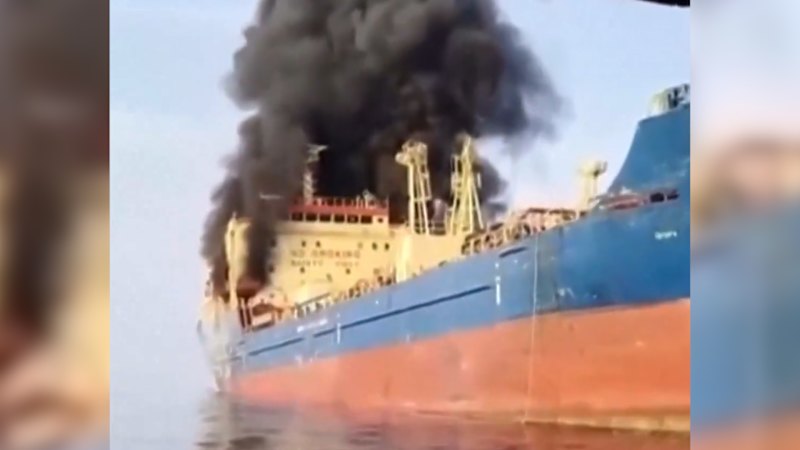
When the news broke that the United States had destroyed nine Iranian ships, the headlines read like a scoreboard. Numbers. Targets. Success. But for those who understand the geography of the Strait of Hormuz, these weren't just data points. They were the culmination of a high-stakes game of chicken where the sidewalk finally ran out.
Donald Trump stood before the microphones with the cadence of a man who had just closed a difficult deal. He spoke of precision and consequence. According to the administration, these vessels weren't just drifting; they were active threats, part of a calculated web of harassment designed to choke the world’s most vital artery of energy.
The Invisible Choke Point
To understand why nine small ships matter, you have to look at the water. Imagine a doorway so narrow that if someone stands in the middle with their arms outstretched, the entire house stops breathing. That is the Strait. Twenty percent of the world’s petroleum passes through this sliver of blue. When an Iranian fast-attack craft buzzes a tanker, they aren't just bothering a captain. They are poking a needle into the global economy.
The tactics used by these crews are often described as "swarm" maneuvers. They don't use massive destroyers. They use speed. They use numbers. They use the psychological weight of knowing that one wrong move by a multi-billion-dollar U.S. carrier could trigger a regional conflagration.
But on this particular night, the "wait and see" approach vanished.
The engagement wasn't a long, drawn-out battle of the world wars. Modern naval warfare is measured in seconds and milliseconds. A sensor detects a lock-on. A computer calculates the trajectory. A human finger hesitates, then presses. The result is a brief, violent flash on the horizon that the rest of the world only learns about hours later through a press briefing.
The Human Cost of Strategy
Consider a hypothetical sailor on one of those vessels—let’s call him Hamid. Hamid likely grew up in a coastal village where the sea was a source of life, not a theater of war. In his mind, he is defending his home waters against an encroaching giant. In the mind of the American drone operator sitting in a climate-controlled room thousands of miles away, Hamid’s boat is a "hostile actor" or a "validated target."
This is the tragedy of modern geopolitics: the total erasure of the individual in favor of the "asset."
When we hear that nine ships were destroyed, we rarely think about the families in Bandar Abbas waiting for a radio call that will never come. We rarely think about the American sailors on the USS Lewis B. Puller, whose adrenaline is spiking as they wonder if this is the start of the Big One. We only think about the price of gas or the movement of the S&P 500.
The administration’s logic was simple: deterrence. If you touch us, we break the hand that touched us. It is a philosophy of overwhelming response. But deterrence is a fragile ghost. It only works if the other side fears losing more than they value the fight.
A History of Friction
The tension didn't start with a single tweet or a sudden maneuver. It has been a slow, grinding friction for decades. We are watching the latest chapter in a book written in 1988, during Operation Praying Mantis, when the U.S. Navy decimated the Iranian fleet in a single day after a mine nearly sank the USS Samuel B. Roberts.
History doesn't repeat, but it certainly echoes.
The Iranian strategy has always been asymmetrical. They know they cannot win a head-to-head fight against a superpower. So, they nibble. They harass. They create "gray zone" conflicts where the rules of engagement are murky. By destroying these nine ships, the U.S. attempted to color that gray zone bright red. It was a signal that the "harassment" phase of the relationship had reached its expiration date.
The Weight of the Silence
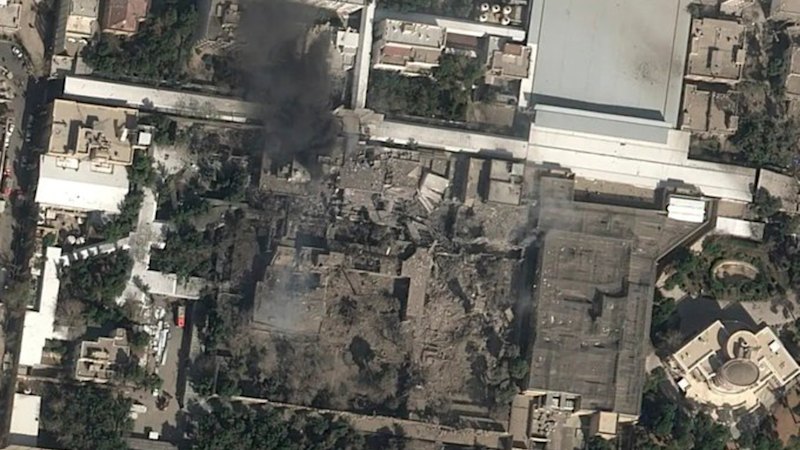
After the fire dies down and the debris sinks to the floor of the Gulf, a heavy silence follows. This silence is where the real danger lives.
Diplomacy is often just a series of conversations meant to prevent the silence from becoming permanent. When ships are exploding, the talking has stopped. The move was described by the Pentagon as a defensive necessity, a reaction to "imminent threats" to American assets and international commerce. While the military terminology is precise, the political fallout is anything but.
Critics argue that such strikes are a match in a powder keg. Supporters argue that ignoring the "swarm" only invites a larger, more lethal attack later. Both are likely right. That is the paradox of the Middle East; every action to secure peace carries the DNA of the next conflict.
The Machine and the Man
We live in an era where war is increasingly fought by machines, but the consequences remain stubbornly human. The sensors on a Global Hawk drone can see a man’s watch from miles in the air, but they can’t see his intentions. They can't see the pressure from his superiors or the fear in his gut.
When Trump announced the destruction of these ships, he was asserting a return to a specific kind of American posture: unpredictable, heavy-handed, and unwilling to tolerate the "mosquito bites" of asymmetrical warfare. To some, this is the only language a regional power like Iran understands. To others, it is a reckless abandonment of the delicate balance that keeps the oil flowing and the missiles in their silos.
The ships are gone. The water has closed over them. The oil tankers continue their slow, lumbering trek through the Strait, their crews likely looking at the horizon with a bit more anxiety than they did yesterday.
The real story isn't the nine ships. It’s the tenth ship. It’s the one that hasn't been fired upon yet. It’s the decision-maker in Tehran or Washington who has to decide if the next move is a handshake or a hammer.
We watch the news and see a tally of metal and fire. We see a president claiming victory in a skirmish that lasted minutes. But beneath the surface of the water, and beneath the surface of the rhetoric, there is a much older story playing out. It is the story of two powers locked in a narrow hallway, each waiting for the other to blink, while the rest of the world holds its breath, hoping the lights don't go out for good.
The ocean has a way of hiding the scars of war. Within days, the salt and the silt will begin to reclaim the wreckage of those nine vessels. The radar screens will go back to being clear. But the men who watched the blips disappear will remember the glow on the screen, and the world will wait to see if the dawn brings a new kind of peace or a darker kind of storm.
The sea is wide, but the path to escalation is remarkably thin.