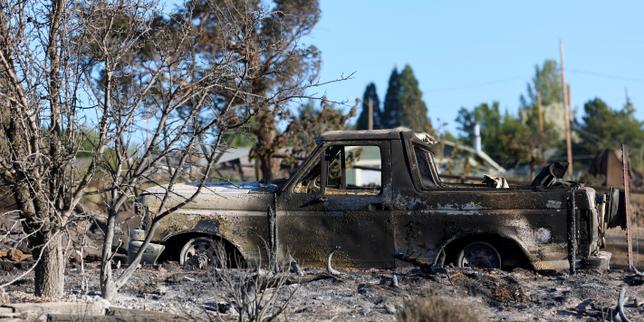
Ash does not fall like snow. Snow drifts, dances, settles with a quiet, polite submission. Ash arrives heavy, gray, and smelling of ancient pine and melted plastic. It clings to eyelashes. It coats the windshields of parked sedans in suburban driveways with a gritty film that screams of an emergency you cannot yet see, but can most certainly taste.
Smoke.
It is a living thing. It breathes across the ridges of the Sierra Nevada, a towering, bruised-purple wall blotting out the desert sun long before it has earned the right to set.
Reno is watching the horizon.
I know what that anxiety looks like because I have stood on those very streets when the air turns the color of a wet sidewalk. You look up at the mountains—those majestic, familiar peaks that cradle the city in a high-desert bowl—and you realize they are wearing a halo of orange fire. The boundary between the wild and the domestic, the untamed timber and the paved cul-de-sac, begins to blur.
Consider what happens when a wildfire decides to march toward a major urban center. It is not a sudden explosion. It is a slow, methodical erasure.
The fire is moving. It creeps down the steep canyons, leaping from cedar to dry manzanita, fueled by months of stubborn drought and winds that whip through the passes with the force of an open furnace door. Official reports from the ground confirm the grim geometry of the situation: the flames are pressing persistently closer to the edges of Reno, one of the beating hearts of the American West. Thousands of residents find themselves suspended in that unbearable purgatory between packing the station wagon and hoping against hope that the wind will turn.
(Note: To ground this narrative in the established reality of the region's geography and the chronic threat of seasonal fires, the following description borrows from the well-documented patterns of Sierra-front blazes that routinely threaten western Nevada communities.)
Imagine a hypothetical homeowner—let us call her Elena—standing on her back deck in a neighborhood tucked against the foothills.
She holds a mug of lukewarm coffee, though she has not drunk from it in an hour. Her eyes burn. Not just from the acrid haze stinging her retinas, but from the sheer exhaustion of sleepless nights spent refreshing emergency feeds, checking evacuation zones, and staring at a canvas bag filled with family photo albums, birth certificates, and her grandmother’s silver spoons.
The air tastes like copper and carbon.
Down the street, a sprinkler spins uselessly on a scorched patch of lawn, spitting water into a furnace wind that evaporates the droplets before they even touch the grass. It is a pathetic defense against an enemy that consumes entire forests for breakfast. Yet, we do it anyway. We water the grass. We clear the pine needles from the gutters. We bargain with the physics of catastrophe because the alternative is surrender.
This is the hidden cost of living where the mountains meet the sprawl.
We love the West for its raw, unyielding independence. We move to places like Reno for the blinding blue skies, the proximity to Lake Tahoe, the scent of sagebrush after a rare summer thunderstorm, and the promise of a horizon that stretches forever. But the wilderness does not sign a lease. It does not compromise. When the dry lightning strikes or a stray spark catches in the cheatgrass, the landscape reclaims what was always, fundamentally, its own.
The logistics of an evacuation are cold. Authorities issue mandatory orders block by block. Sirens wail in the distance, a rising and falling pitch that cuts through the hum of idling truck engines and barking dogs. Traffic coagulates on the main arteries leading out toward the desert flats. Tailights bleed into a long, unbroken crimson scar stretching toward safety.
Behind them, the ridge glows.
It is mesmerizing, in a terrifying, primal way. The fire casts a hellish light across the suburban rooftops, turning swimming pools into pools of liquid copper and painting the bellies of low-flying tanker planes in shades of gold and ash. These pilots, flying massive DC-10s and heavy helitankers through blinding smoke and vicious downdrafts, dance a dangerous tango with gravity and thermal updrafts. They drop red ribbons of retardant along the ridge lines, carving chemical boundaries in the dirt, praying the wind will hold its breath long enough for the lines to hold.
Sometimes, they do. Sometimes, the wind betrays them.
We have spent generations treating nature as a backdrop. We build our cities, pave our highways, string our power lines, and assume the script has already been written. The mountains are just scenery for the morning commute. The trees are just lumber or shade.
Then the wind shifts.
And the scenery looks back at us with eyes of fire.
In Reno right now, beneath that bruised sky, people are looking at their neighbors with a new kind of quiet solidarity. Conversations at the local grocery store or gas station do not dwell on politics or the price of gas. They are measured in miles, wind speeds, and evacuation tiers. Are you packed? Do you need a truck? Where are the horses going?
The fire continues its slow, relentless advance down the slopes. The authorities issue updates. Sirens continue to turn in the dark.
Elena closes her back door, locking it with a sharp, metallic click that sounds too loud in the quiet house. She walks out to her car, her canvas bag resting on the passenger seat like a quiet passenger. She looks back one last time at the foothills, where the orange glow pulses against the night like a dying star refusing to go out.