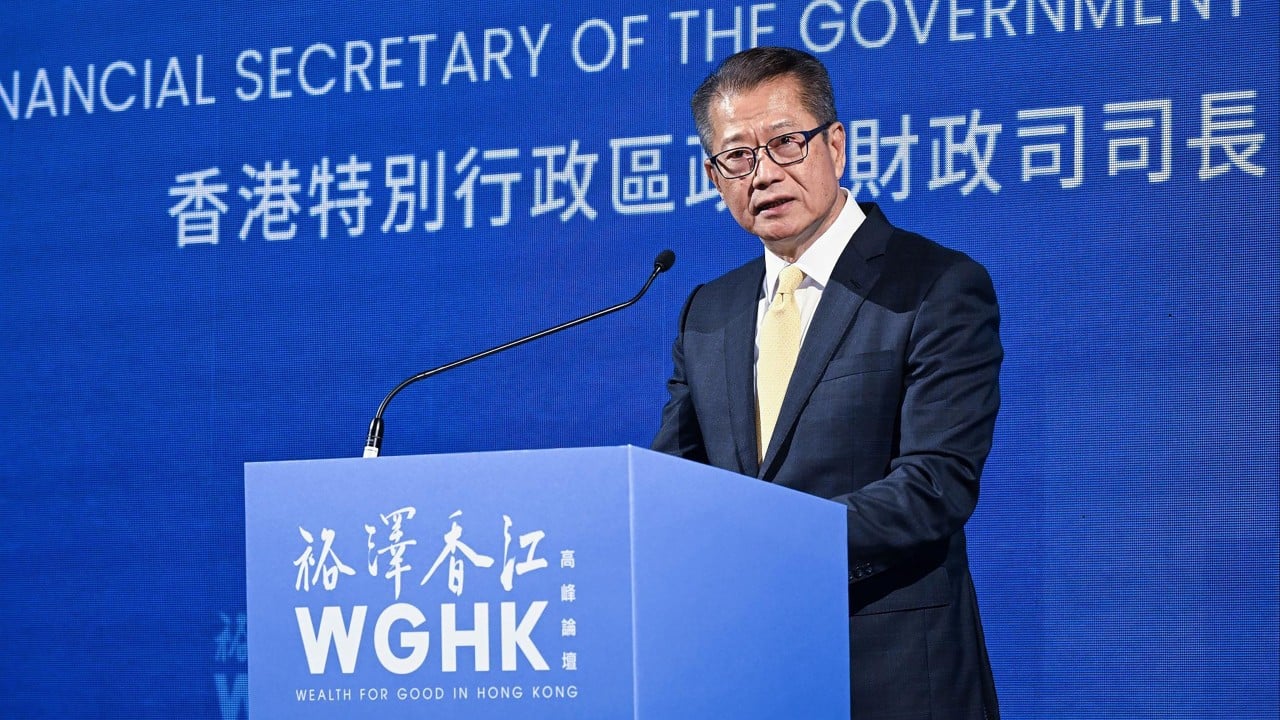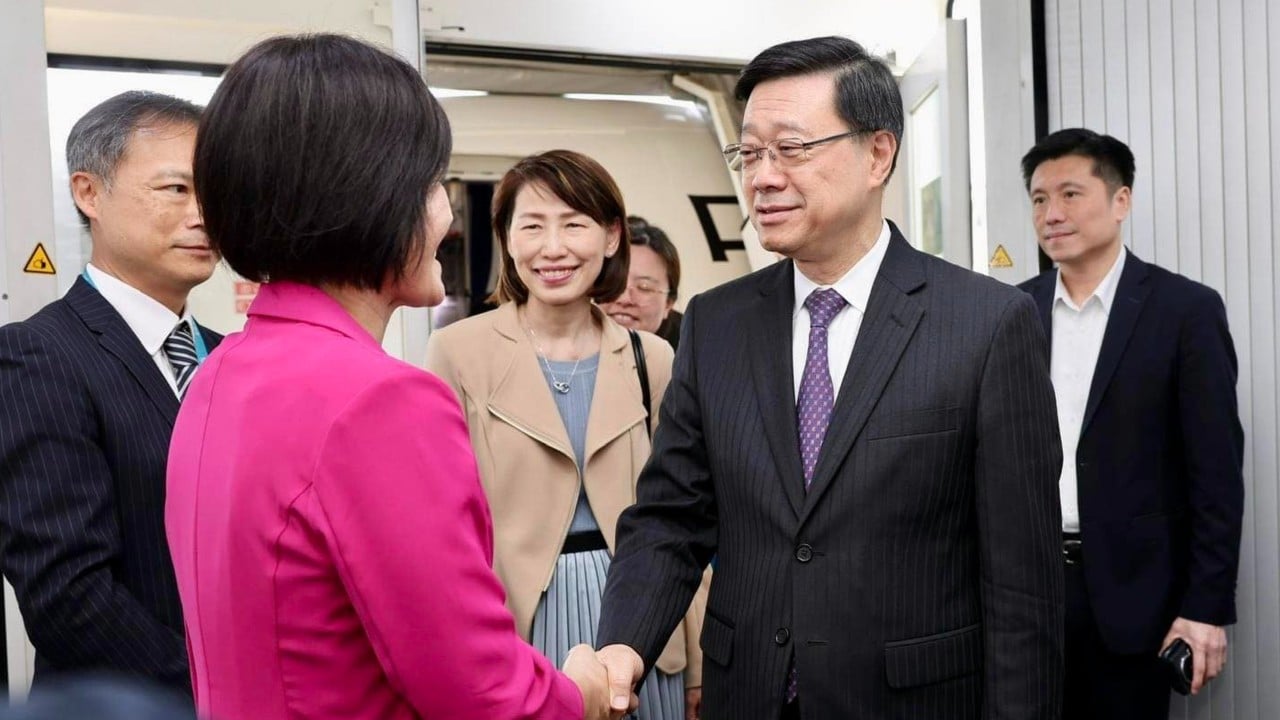
The air in the Boao Forum auditorium carries a specific kind of tension. It is the hum of high-stakes machinery, the collective intake of breath from two thousand delegates who know that the old maps of global trade are being redrawn in real-time. Outside, the world feels increasingly like a series of closed doors and rising walls. Inside, John Lee, Hong Kong’s Chief Executive, stands before a podium to argue for the exact opposite: the radical, necessary act of staying open when the instinct is to hunker down.
He isn't just delivering a policy speech. He is defending an identity.
To understand why this matters, you have to look past the spreadsheets. Consider a hypothetical logistics manager named Sarah. She operates out of a small, glass-walled office overlooking the Kwai Tsing Container Terminals. For Sarah, "global uncertainty" isn't a headline; it is a late-night phone call about a rerouted shipment, a sudden tariff hike, or a fluctuating currency that threatens to wipe out her quarterly margins. She watches the cranes swing back and forth—metronomes of the city’s heart—and wonders if the world still wants what Hong Kong is selling.
The answer Lee provided at Boao was a resounding, calculated "yes." But it wasn't a "yes" based on nostalgia. It was a "yes" built on the cold reality of shifting economic tectonic plates.
The Gravity of the East
For decades, the gravity of the financial world pulled toward the Atlantic. That era is over. We are living through a massive, silent migration of capital. As the West grapples with internal friction and sluggish growth, the RCEP (Regional Comprehensive Economic Partnership) countries have become the new center of the universe. This isn't just a trend. It is a fundamental realignment.
Hong Kong sits at the absolute center of this friction point. Lee’s message to the forum was clear: while some regions are choosing protectionism, Hong Kong is doubling down on its role as the world's "super-connector." It is a bold move. It’s the equivalent of keeping your windows open during a gale because you know the breeze carries the scent of a new spring.
The city is currently making a massive play to join the RCEP. Why? Because the numbers demand it. These fifteen nations represent roughly 30% of the world's population and GDP. For Sarah, our logistics manager, Hong Kong’s entry into this bloc would mean lower barriers, smoother transitions, and a seat at the table where the future of Asian trade is being decided. It means her office stays busy. It means the cranes keep moving.
A Bridge Made of Trust and Law
Abstract concepts like "One Country, Two Systems" are often discussed in political terms, but in the halls of the Boao Forum, they are discussed in terms of utility. Investors are pragmatic creatures. They don't look for perfection; they look for predictability.
Hong Kong offers a unique, almost paradoxical advantage. It provides direct, unfettered access to the massive Chinese market while maintaining a common law system that international businesses understand and trust. It is a bilingual financial ecosystem. It is the only place on earth where you can be under the umbrella of the world's second-largest economy while operating under legal frameworks that mirror London or New York.
Lee emphasized that this isn't just a convenience—it’s a lifeline. In a world of "de-risking" and "friend-shoring," Hong Kong serves as the ultimate neutral ground. It is the counting house where different worlds meet to do business because they simply have no other choice.
The Human Capital at Risk
Beyond the trade figures lies a more visceral challenge: the war for talent. A city is nothing more than the sum of the people who believe in its future. Over the last few years, the narrative around Hong Kong has been one of departure. The "uncertainty" Lee mentioned isn't just about trade wars; it’s about the person sitting in a coffee shop in Central, looking at a job offer in Singapore or London and wondering where their children will have the best shot.
To counter this, the government is pivoting toward innovation. They are betting on the "Greater Bay Area" (GBA) as a tech engine that could rival Silicon Valley. The GBA isn't just a geographic designation; it’s an attempt to fuse the financial muscle of Hong Kong with the manufacturing and tech prowess of Shenzhen and Guangzhou.
Think about a young biotech researcher. In the old model, she might have to choose between the funding of Hong Kong and the lab space of the mainland. In the new model, the border becomes porous for ideas and talent. Lee’s pitch at Boao was that Hong Kong isn't just a place to store money; it’s a place to build the future of green tech, healthcare, and artificial intelligence.
The Fragile Strength of Openness
There is a certain vulnerability in Lee's stance. To be open is to be exposed. When you invite the world in, you invite its volatility, its crises, and its demands. Yet, the alternative is a slow, dignified slide into irrelevance.
The "uncertainty" the Chief Executive spoke of is real. It’s the sound of the wind howling outside the gate. But his argument is that the gate must remain unbolted. By leaning into the Middle East, strengthening ties with Southeast Asia, and reinforcing the legal pillars that make the city unique, Hong Kong is attempting to turn its vulnerability into its greatest strength.
It is a high-wire act performed without a net.
As the forum concludes and the delegates head to the airport, the message lingers. The world is changing, and the old certainties are dissolving like salt in the sea. But in the quiet corners of the Kwai Tsing terminal, as Sarah watches the first light of dawn hit the containers, the mission remains the same. You don't survive a storm by building a bigger wall; you survive it by being the most reliable bridge in the harbor.
The cranes are moving. The gate is open. The rest is up to the strength of the connection.
Would you like me to analyze the specific economic indicators of the RCEP nations to see how they might impact your current business strategy?