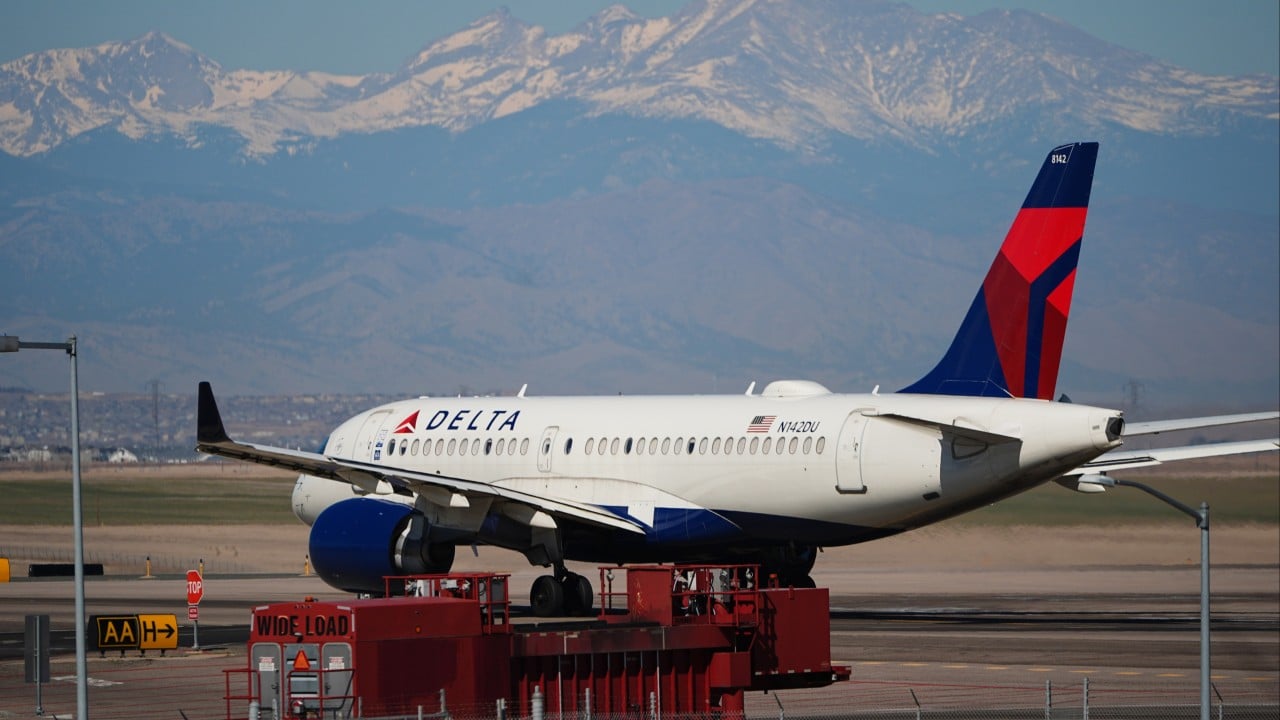
Delta Air Lines isn't being "brave" or "principled" by pulling the plug on special treatment for Congress during a government shutdown. They’re being efficient. They are clearing the decks of a low-margin annoyance while the media lap up the narrative of a corporate titan standing in solidarity with the common traveler.
The standard narrative suggests that removing these perks—special phone lines, expedited rebooking, and VIP escorts for lawmakers—is a punishment for legislative gridlock. It’s framed as a "we’re all in this together" moment. That is a fantasy. In reality, this is a masterclass in PR-driven operational streamlining. When the Federal Aviation Administration (FAA) and Transportation Security Administration (TSA) face funding gaps, the system doesn't just "slow down." It reveals its inherent fragility. Delta isn't punishing Congress; they are insulating their brand from the inevitable chaos that happens when the people who run the infrastructure stop getting paid.
The Myth of the VIP Sabotage
Most people think Congress gets "special treatment" because of some shadowy elitist pact. It’s simpler and more cynical than that. Airlines provide high-touch service to lawmakers because lawmakers control the committees that regulate airline mergers, slot allocations at major airports like Reagan National (DCA), and passenger facility charges.
When a shutdown hits, that leverage shifts. A congressman stuck in line at Hartsfield-Jackson is a liability, not an asset. By "suspending" these perks, Delta achieves two things:
- They signal to the public that they are "on the side of the people."
- They remove a labor-intensive service tier at exactly the moment their staff is overwhelmed by general passenger meltdowns.
If you believe this is about civic duty, you’re missing the balance sheet. A government shutdown creates massive "irregular operations" (IROPS). In IROPS, every second of gate agent time is precious. Expending that time to hand-hold a Senator’s chief of staff is a poor allocation of resources when three hundred angry passengers are staring down a missed connection to London. Delta is simply cutting the least profitable "high-maintenance" segment of their customer base until the heat dies down.
Why Chaos is the Feature Not the Bug
The "chaos" everyone fears at the airport during a shutdown is often described as a failure of management. It isn't. It is the logical conclusion of a system designed to run at 99% capacity with zero margin for error.
Consider the math of a modern hub. An airport isn't a building; it’s a high-frequency throughput engine. The efficiency of a hub-and-spoke system is defined by the formula for throughput:
$$T = \frac{N}{W}$$
Where $T$ is throughput, $N$ is the number of entities in the system, and $W$ is the time spent in the system. When TSA agents start calling out sick because their paychecks are frozen, $W$ (wait time) increases exponentially. Because $N$ (the number of travelers) remains constant, the system chokes.
The media focuses on the "misery" of the lines. The industry insider focuses on the "cascading delay." One flight delayed by 20 minutes due to a security bottleneck doesn't just affect those 150 people. It ripples through the next four rotations of that aircraft. By the end of the day, that 20-minute blip has morphed into a 4-hour cancellation in a different city entirely.
Delta knows this. They know that during a shutdown, the "product" they are selling—on-time arrival—is physically impossible to guarantee. Suspending perks for Congress is a distraction from the fact that the airline is about to fail its regular customers on a massive scale.
The False Premise of People Also Ask
If you search for "government shutdown airport impact," you’ll find questions like "Will my flight be canceled?" or "How early should I arrive?"
These are the wrong questions. You’re asking about the symptoms of a sick system. The real question is: "Why does the most profitable aviation market in the history of the world collapse after three days of a budget dispute?"
The answer is the Single Point of Failure problem. The U.S. aviation system is a public-private Frankenstein. We have private airlines flying into publicly funded, federally managed bottlenecks. We've spent decades "optimizing" the system to remove redundancy because redundancy is expensive.
- Redundancy = Extra staff sitting around.
- Optimization = Just enough staff to handle Tuesday at 10:00 AM.
When a shutdown occurs, that "just enough" becomes "not enough." The industry hates talking about this because admitting the system lacks resilience would mean admitting that ticket prices need to be higher or profit margins lower to fund a buffer. Instead, they point at Congress and say, "See? We're taking away their lounge access. We're mad too!"
The Efficiency of Outrage
I have seen airlines blow millions on "customer experience" initiatives that are nothing more than digital wallpaper. They’ll give you an app that tracks your bag in real-time, but they won't hire the five extra mechanics needed to ensure the plane actually leaves the tarmac.
The suspension of Congressional perks is the PR equivalent of that digital wallpaper. It costs Delta $0 to implement. In fact, it saves them money in man-hours. Yet, it generates millions in earned media value.
If Delta actually wanted to "disrupt" the shutdown cycle, they wouldn't just pull the VIP phone lines. They would leverage their massive lobbying arm to demand that the FAA and TSA be removed from the "essential services" designation during a shutdown and fully privatized—or at least funded through a lockbox model. They won't do that. Why? Because the current system is actually quite profitable for them, even with the occasional shutdown.
A shutdown is a stress test that kills smaller, less capitalized airlines. For a giant like Delta, it’s a temporary inconvenience that consolidates power. They can afford the IROPS costs. Their competitors might not.
The Nuance You're Missing
This isn't just about "Congress vs. The People." It’s about the asymmetry of impact.
The average traveler loses a vacation day. The airline loses some fuel efficiency and takes a hit to its NPS scores. But the system itself resets.
A shutdown is the only time the aviation industry’s "hidden costs" are visible to the public. Usually, we don't notice that we are one air traffic control center power failure away from a nationwide grounded fleet. A shutdown forces us to look at the wiring behind the walls.
Delta’s "bold" move is a way to pull the curtains back shut. They want you to focus on the "punished" politician rather than the fact that your $800 ticket is subject to the whims of a 24-hour news cycle and a budget office in D.C.
The Actionable Order
Stop waiting for a "fix" from the top. The system is designed this way.
- Assume the Delay: If a shutdown is on the horizon, the TSA "sick-out" is already being planned on WhatsApp threads. If you aren't TSA PreCheck or CLEAR, don't fly.
- Book the First Flight of the Day: This is the only way to beat the "throughput decay." If you’re on the 6:00 AM flight, you’re ahead of the ripple effect. If you’re on the 4:00 PM flight, you’re a statistic.
- Ignore the PR: When a CEO talks about "fairness" or "treatment," they are talking about their stock price.
Delta’s suspension of perks is a magician’s trick. Look at the left hand (the politician losing his lounge access) so you don't see the right hand (the systemic inability to handle a 5% decrease in staffing).
The true crisis isn't the shutdown. It’s the fact that our aviation system is built on a house of cards that collapses the moment someone stops paying the dealer.
Don't thank Delta for being "fair." Ask them why their billion-dollar operation is so brittle that it needs to perform PR stunts to distract you from the cracks in the foundation.
The VIP line was never the problem. The fact that we need a VIP line to bypass a failing public infrastructure is the problem. Delta didn't solve it; they just stopped letting Congress cut the line.
You’re still stuck in it.