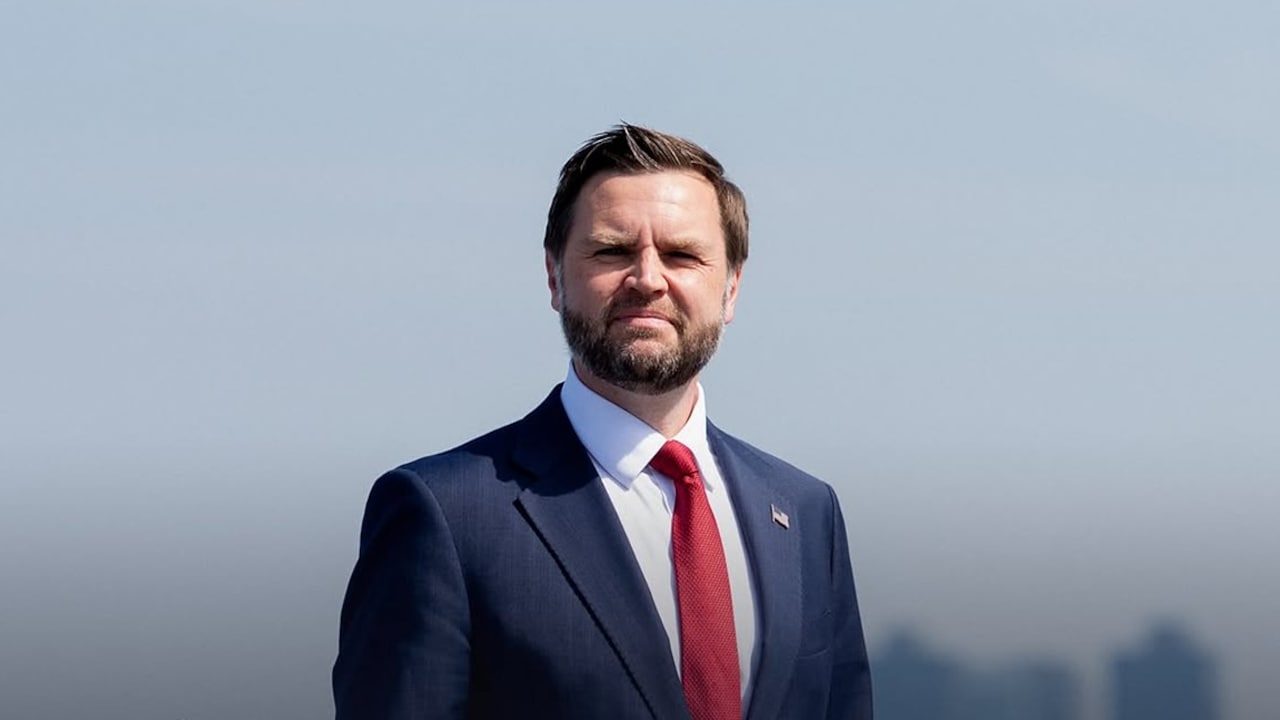
Political pundits love a clean breakup story. Whenever a vice president tweaks a talking point after a rough election night, cable news panels immediately declare a civil war inside the West Wing. That's exactly what's happening right now with the narrative that JD Vance is trying to distance himself from Donald Trump following the Republicans' midterm rout earlier this month.
Here's the problem with that theory. It misses how modern political survival actually works.
Vance isn't abandoning Trump, nor is he staging some quiet palace coup to rebrand himself as a moderate ahead of 2028. What you're watching is a calculated calibration—a vice president trying to protect his own populist brand from the specific policy missteps and messaging failures that cost Republicans dearly in November 2026, without alienating the MAGA base he desperately needs to win a future primary. If you've spent any time tracking how ambitious second-in-commands survive midterm wave elections, this playbook looks painfully familiar.
Why the Midterm Rout Forced a Recalibration
Midterm elections are almost always a referendum on the party holding the White House. When voters deliver a stinging rebuke, the president usually absorbs the immediate blame, while the vice president gets stuck with an impossible assignment: defend the administration's record on Sunday morning shows while quietly signaling to donors and swing-state voters that you understand why they're angry.
In the November 2026 midterms, Republicans ran into a buzzsaw of voter frustration over persistent cost-of-living pressures, chaotic tariff rollouts, and unpopular legislative fights that alienated suburban independents. Looking at the post-election autopsy data from groups like the Pew Research Center and exit polling across battleground districts, the pattern wasn't hard to spot. Independent voters didn't suddenly fall in love with Democratic policies; they punished the party in power for economic unpredictability and governance drama.
Vance saw those numbers the same night everyone else did. Unlike traditional politicians who panic and sprint toward the center after a loss, Vance has spent his entire political career—from Hillbilly Elegy to his Senate run in Ohio to the vice presidency—building an ideological lane rooted in economic nationalism and working-class populism. When Trump's rhetoric or executive actions drift away from kitchen-table affordability and toward personal grievances or erratic trade battles, Vance takes collateral damage.
So when Vance starts emphasizing specific policy priorities—like targeted industrial support, family-focused tax credits, or stricter limits on foreign interventions—while declining to echo every truth-social tirade or sweeping tariff threat coming from the Oval Office, observers call it "distancing." In reality, it's brand preservation. He's reminding working-class voters in Pennsylvania, Michigan, and Wisconsin why they liked his pitch in the first place, even if they soured on the administration's broader execution.
The Historical Trap Every Vice President Faces
To understand why Vance is walking such a tightrope, look at what happened to past vice presidents who tried to separate themselves from an unpopular or embattled president. Spoiler alert: it rarely ends well.
Take Hubert Humphrey in 1968. Stuck defending Lyndon B. Johnson's deeply unpopular handling of the Vietnam War, Humphrey waited until late September—just weeks before Election Day—to break slightly from Johnson's bombing policy in a speech in Salt Lake City. By the time he created daylight between himself and the president, voters saw the move as pure political opportunism rather than genuine conviction. He lost to Richard Nixon by less than a percentage point.
George H.W. Bush faced a similar dilemma in 1988, though from a stronger position. Bush spent eight years as Ronald Reagan's fiercely loyal lieutenant, absorbing endless mockery from the press for submerging his own identity. When it came time to run on his own, Bush didn't attack Reagan; instead, he subtly softened the edges by promising a "kinder, gentler nation" and drawing a hard line on taxes. It worked in 1988, though that exact tax pledge came back to haunt him four years later.
More recently, look at Al Gore in 2000 and Mike Pence after 2020. Gore distanced himself so aggressively from Bill Clinton's personal scandals that he practically refused to campaign with one of the most effective retail politicians in modern history, arguably costing himself crucial votes in states like Arkansas and Tennessee. Pence, meanwhile, tried to thread the needle between defending the Trump-Pence record and criticizing January 6, only to discover that Republican primary voters had zero appetite for a half-in, half-out candidate.
Vance knows this history cold. He's an avid student of political realignment, and he understands that openly breaking with Trump is political suicide in the modern GOP. You don't win a Republican nomination by telling millions of loyal Trump voters that their leader got it wrong. At the same time, you don't win a general election in 2028 by owning every unpopular decision of a second-term administration after a midterm wipeout.
Where the Daylight Actually Appears
If you look past the breathless headlines and examine Vance's actual public appearances, interviews, and donor briefings since the election, the gap between him and Trump isn't ideological betrayal. It's a shift in tone, emphasis, and audience.
Economic Messaging Over Culture War Distractions
During the closing stretch of the 2026 campaign, Trump frequently veered off-message during rallies, spending long stretches relitigating old political battles or attacking individual critics. Vance, by contrast, has spent the post-midterm weeks hammering a remarkably disciplined economic script.
In recent appearances on podcast circuits and regional media across the Midwest, Vance has focused heavily on housing affordability, domestic manufacturing jobs, and energy costs. When pressed by reporters on whether the White House's messaging strategy contributed to the House losses, Vance hasn't thrown Trump under the bus. Instead, he's pivoted to saying Republicans "need to do a better job showing voters how our policies lower their monthly bills." That's classic political code. It acknowledges the failure without naming the culprit.
Subtle Shifts on Trade and Tariffs
Trade is where the nuance gets really interesting. Both Trump and Vance reject the old free-trade consensus that dominated the Republican Party from Reagan through Paul Ryan. Yet they approach tariffs differently.
Trump treats sweeping, across-the-board tariffs as an all-purpose tool—a blunt instrument for everything from trade deficits to border enforcement to diplomatic leverage. Business groups and agricultural lobbies in red states have grown increasingly vocal about retaliatory tariffs hurting American farmers and raising input costs for domestic factories.
Vance has begun framing trade protectionism in much narrower, more surgical terms. Rather than cheering broad consumer-facing tariffs that spook markets and irritate suburban voters, Vance talks about "strategic reshoring" and protecting critical supply chains like semiconductors, pharmaceuticals, and steel. It's a distinction that sounds minor to casual observers, but to Wall Street donors and Rust Belt business owners, it signals a more predictable, disciplined approach to economic nationalism.
Letting Surrogates Do the Talking
Another telltale sign of how Vance operates is what his allies say when he's not in the room. In Washington, you can almost always gauge a principal's true thinking by listening to their closest advisors, friendly podcasters, and aligned think-tankers.
Since the midterm results came in, populist-aligned commentators who regularly coordinate with the vice president's orbit have openly criticized the administration's legislative priorities and campaign management. They've argued that the White House wasted valuable political capital on fights that didn't help working-class families while failing to pass popular structural reforms. Vance never has to say a word against Trump personally because his ideological ecosystem is already making the argument for him—framing Vance as the true keeper of the populist flame who would run a tighter, more focused ship.
Why Media Narratives Misread the Dynamic
Part of the reason coverage of Vance's post-midterm positioning feels so distorted is that mainstream political journalism is hardwired to cover politics like a soap opera. Conflict sells. A headline claiming "Vance Breaks With Trump" generates ten times more clicks than "Vance Adjusts Rhetorical Emphasis on Industrial Policy."
There's also a deep-seated assumption among legacy media outlets that Trump demands total, robotic conformity from everyone around him, and that any deviation equals impending exile. That was certainly true for traditional establishment Republicans like Rex Tillerson, Jeff Sessions, or Mike Pence, who never truly shared Trump's worldview and viewed themselves as guardrails restraining him.
Vance isn't a guardrail. He's an ideological heir who came to Trumpism from the outside and helped give it an intellectual framework. Because Trump knows Vance isn't secretly leaking to the New York Times or plotting with Never-Trump consultants, Vance enjoys a much longer leash than his predecessors ever had. Trump understands transactional politics better than anyone alive; he knows his vice president has to start laying groundwork for 2028, especially now that a Democratic House or weakened congressional majority will limit what the White House can pass legislatively over the next two years.
Honestly, calling Vance's recent moves a "betrayal" or a "desperate pivot" gives both men too little credit. Trump isn't blind to his vice president's ambitions, and Vance isn't naive enough to think he can survive a public war with the man who put him a heartbeat away from the presidency.
What This Means for Republicans Heading Into 2028
The real story isn't whether Vance likes Trump anymore. The real story is how the post-2026 landscape reshapes the early shadow primary for 2028.
A heavy midterm loss always weakens a second-term president's grip on his party. Lame-duck dynamics set in faster. Donors start taking calls from rival camps. Governors and senators who stayed quiet during the first two years suddenly find their voices and start pitching alternative visions for the party's future.
By subtly separating his economic message from the administration's broader stumbles right now, Vance is trying to preempt those challengers before they gain traction. If ambitious GOP governors—whether from Florida, Texas, Virginia, or Georgia—try to argue in 2027 that Vance represents a failed, chaotic status quo, Vance wants a paper trail showing he was focused on working-class affordability and disciplined governance all along.
At the same time, this strategy carries real risks. If Vance leans too hard into policy wonkery and careful distance, he risks looking like just another calculating Washington insider—the exact thing MAGA voters despise. Conversely, if he stays locked in lockstep with every unpopular move coming out of the White House over the next twenty-four months, he'll carry the full weight of a sluggish economy or legislative gridlock into the primaries.
How to Spot Real Political Separation vs. Media Spin
If you want to cut through the noise whenever headlines claim a vice president is breaking with the president, stop paying attention to anonymous staff leaks and watch three concrete indicators instead.
- Check the donor and staffing overlaps. Real political splits show up in money and personnel long before they show up in speeches. Watch whether Vance's political action committees start hiring operatives who previously clashed with Trump's campaign team, or whether major bundlers begin hedging their bets between the vice president and rival 2028 hopefuls. As long as the fundraising apparatus remains unified, any rhetorical differences are mostly cosmetic.
- Track legislative break points on Capitol Hill. Rhetoric is cheap, especially during post-election media tours. The real test comes when a contentious bill—like a government funding package, a debt ceiling hike, or a major trade authorization—hits the Senate floor. Watch whether Vance quietly lobbies Republican senators behind closed doors for outcomes that differ from the White House's official Statement of Administration Policy.
- Compare primary-state travel schedules. Pay close attention to where Vance spends his weekends over the next six months. If he's showing up at traditional county Lincoln Day dinners and chamber of commerce events in Iowa and New Hampshire alongside state party establishment figures, he's actively broadening his coalition beyond the core Trump base. If he sticks strictly to massive rallies and populist media appearances, he's doubling down on the existing formula.
Watching those three signals will tell you far more about the future of the Republican Party than a hundred cable news panels dissecting every adjective in JD Vance's latest interview.