When Donald Trump told a crowd in New Jersey that "radical Islam" was trying to take over France, the headlines wrote themselves. Most outlets grabbed the sharpest soundbite, slapped it into a breaking news banner, and moved on to the next outrage cycle. That coverage missed the entire point.
If you actually look at what happened at Sciences Po and the Sorbonne in Paris during the spring of 2024, alongside the specific rhetoric Trump used at his Wildwood rally, you see two completely different political worlds colliding. One is rooted in France's strict, centuries-old secularism. The other is built for an American electorate already primed to view European unrest as a warning sign for domestic immigration policy.
I've spent years tracking how transatlantic political narratives get distorted in translation. What happens on the ground in Paris rarely matches how it gets packaged for cable news in New York or rallies on the Jersey Shore. Let's look at the actual events, the exact words spoken, and why both sides of the political aisle keep misreading the situation.
The Wildwood Rally and the Exact Quote
Context matters. You can't analyze a political soundbite without knowing the room it was delivered in.
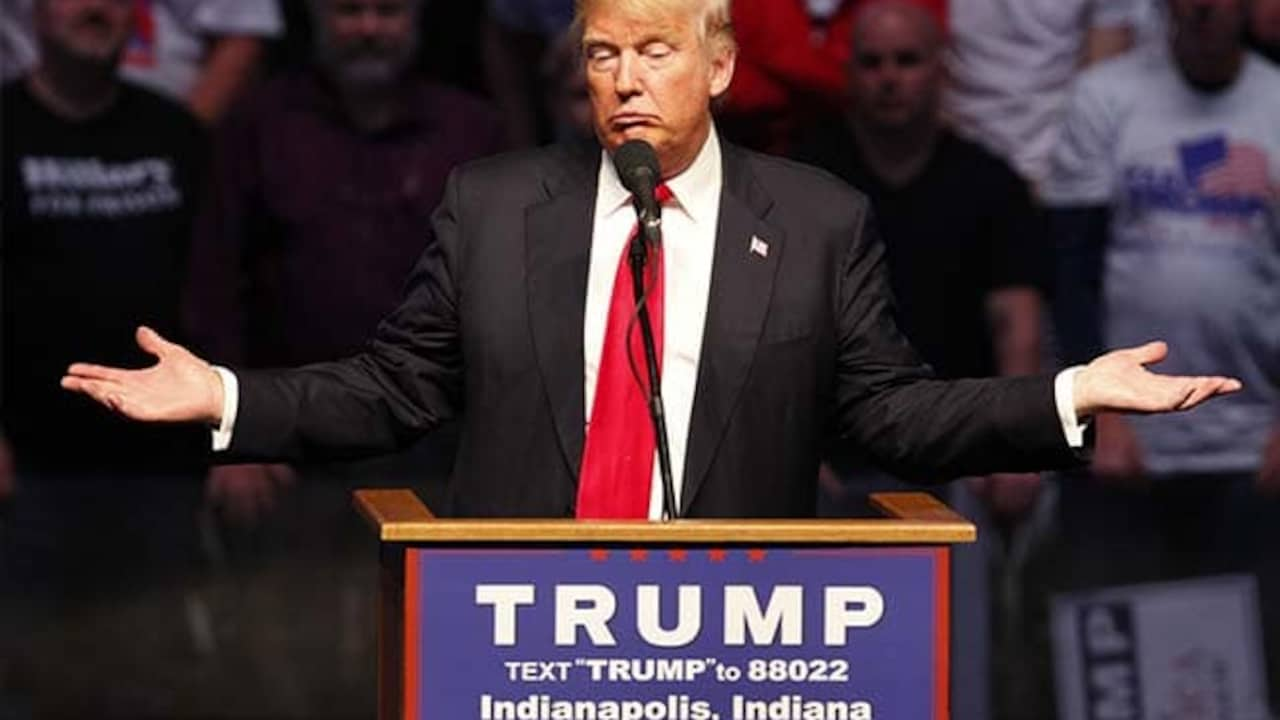
On May 11, 2024, Donald Trump stood before tens of thousands of supporters on the beach in Wildwood, New Jersey. During a sprawling speech that touched on inflation, border security, and foreign conflicts, he pivoted to the wave of pro-Palestinian campus protests sweeping across American universities like Columbia and UCLA. Then, he looked across the Atlantic.
Trump brought up the student demonstrations in France, specifically pointing to the occupations at elite Parisian institutions. He claimed that France was losing control of its own institutions and stated flatly that Islam was "wanting to take over" the country. He framed the student protests not as a localized foreign policy dispute over the war in Gaza, but as an existential cultural takeover of a major Western ally.
His critics immediately labeled the remark Islamophobic fear-mongering. His supporters cheered it as blunt truth-telling that mainstream politicians were too timid to voice. Both reactions skipped the factual reality of what was actually happening inside those French universities.
What Actually Happened on French Campuses
The protests Trump referenced didn't emerge out of nowhere, and they weren't a uniquely religious movement. They were a direct echo of the American campus encampments.
In late April and early May 2024, students at Sciences Po—France's premier political science university, which educated Emmanuel Macron and several previous French presidents—staged sit-ins and blockaded campus buildings. Similar demonstrations broke out at the Sorbonne. The protesters' demands were concrete and political:
- They wanted university administrators to cut institutional ties and partnerships with Israeli universities.
- They demanded an official condemnation of Israel's military operations in Gaza.
- They called for an end to disciplinary actions against students who participated in earlier demonstrations.
The French government didn't sit back and let the occupations drag on. Unlike some American university presidents who negotiated with protesters for weeks, French Prime Minister Gabriel Attal took a hard line immediately. Police were deployed swiftly to clear the barricades at Sciences Po and remove tents from the Sorbonne courtyard. Attal stated publicly that France would never tolerate an "active and dangerous minority" imposing its rules on French higher education.
Notice the disconnect here. Trump portrayed France as helplessly surrendering to an ideological takeover. In reality, the French state used riot police to shut the protests down faster and more aggressively than almost any state governor in the United States.
The Laïcité Factor Nobody Explains Properly
To understand why French politicians reacted so fiercely—and why American commentators constantly misinterpret French politics—you have to understand laïcité.
In the United States, religious freedom generally means the right to express your faith openly in public spaces without government interference. France operates on the exact opposite principle. Established by law in 1905, laïcité is a strict form of state secularism designed to keep religion entirely out of the public sphere, especially in government buildings and schools.
Under French law, public school students cannot wear conspicuous religious symbols, including Islamic headscarves, Jewish kippahs, or large Christian crosses. The state doesn't recognize religious or racial sub-groups; legally, you're just a French citizen.
When protests erupt on French campuses over Gaza, the debate inside France quickly gets tangled up in laïcité and national identity. Conservative French politicians—like Marine Le Pen of the National Rally and Éric Zemmour—regularly accuse left-wing parties like Jean-Luc Mélenchon's La France Insoumise (France Unbowed) of "Islamo-leftism." They argue that the French far-left is pandering to Muslim voters in the suburbs (banlieues) by importing Middle Eastern conflicts onto university campuses.
Trump essentially borrowed a talking point from the French right, stripped away the nuance of laïcité, and translated it into plain, blunt American populism.
Why This Narrative Works So Well in American Politics
Trump's rhetorical strategy relies on connecting distant foreign events to immediate domestic anxieties. He doesn't give history lessons on the 1905 French separation of church and state. Instead, he paints a broad, easily digestible picture of Western civilization under siege.
This works for three specific reasons:
- Visual overlap. When American voters turn on the TV and see masked protesters blocking buildings at Columbia University, and then see identical footage from Paris the next night, it creates the impression of a coordinated global movement.
- Immigration linkage. Trump consistently ties European civil unrest to Europe's immigration policies over the past decade. By pointing to France, he's making an implicit argument to American voters about what happens if U.S. border policies aren't tightened.
- Distrust of elite institutions. Sciences Po is the ultimate symbol of the French establishment, just like the Ivy League is in America. Showing these elite schools in chaos reinforces the populist argument that traditional leaders have lost their grip on reality.
It's effective political messaging. You don't have to agree with his framing to see why it lands with millions of voters who feel their own cultural norms are shifting too fast.
The Blind Spots in Both Media Narratives
If you only read mainstream American media, you might walk away thinking Trump invented the tension in France out of thin air. That's false. France genuinely struggles with deep social divisions, high unemployment in heavily immigrant suburbs, and a sharp rise in both antisemitic and anti-Muslim incidents since October 2023. According to France's Interior Ministry, antisemitic acts surged dramatically in the months following the outbreak of the Israel-Hamas war, creating real fear among France's Jewish community—the largest in Europe.
On the flip side, if you only listen to Trump's rally speeches, you'd think Paris is on the verge of becoming an Islamic republic. That's equally detached from reality. France remains one of the most aggressively secular democracies on earth. Its government routinely bans religious garments in schools, dissolves hardline religious associations, and enforces strict speech and security laws that would be unconstitutional under the U.S. First Amendment.
The student protests at Sciences Po involved a few hundred activists out of a student body of roughly 15,000. They made massive headlines because Sciences Po is a media magnet in the heart of Paris, not because the students were seconds away from toppling the French Fifth Republic.
How to Read Transatlantic Political News Without Getting Played
Political figures will always use foreign crises as a mirror for their own domestic agendas. Whether it's a conservative politician pointing to riots in Paris or a progressive politician pointing to healthcare systems in Scandinavia, foreign countries rarely get represented accurately in American campaign speeches.
When you see a viral headline about civil unrest in Europe paired with a quote from an American politician, run through a quick mental checklist before sharing it:
- Check the local response. Look at what the host country's actual government did, not just what the protesters demanded. In France, the police cleared the buildings within days.
- Look at the numbers. Media coverage always magnifies the loudest voices. Find out how many people actually participated compared to the total population of the campus or city.
- Separate domestic campaigning from foreign policy. A rally speech in New Jersey is designed to win votes in Pennsylvania and Michigan, not to provide an objective briefing on European sociology.
Stop taking campaign soundbites—or the outraged counter-headlines—at face value. Look at the local facts on the ground first, understand the legal and cultural framework of the country involved, and you'll immediately see past ninety percent of the political theater.