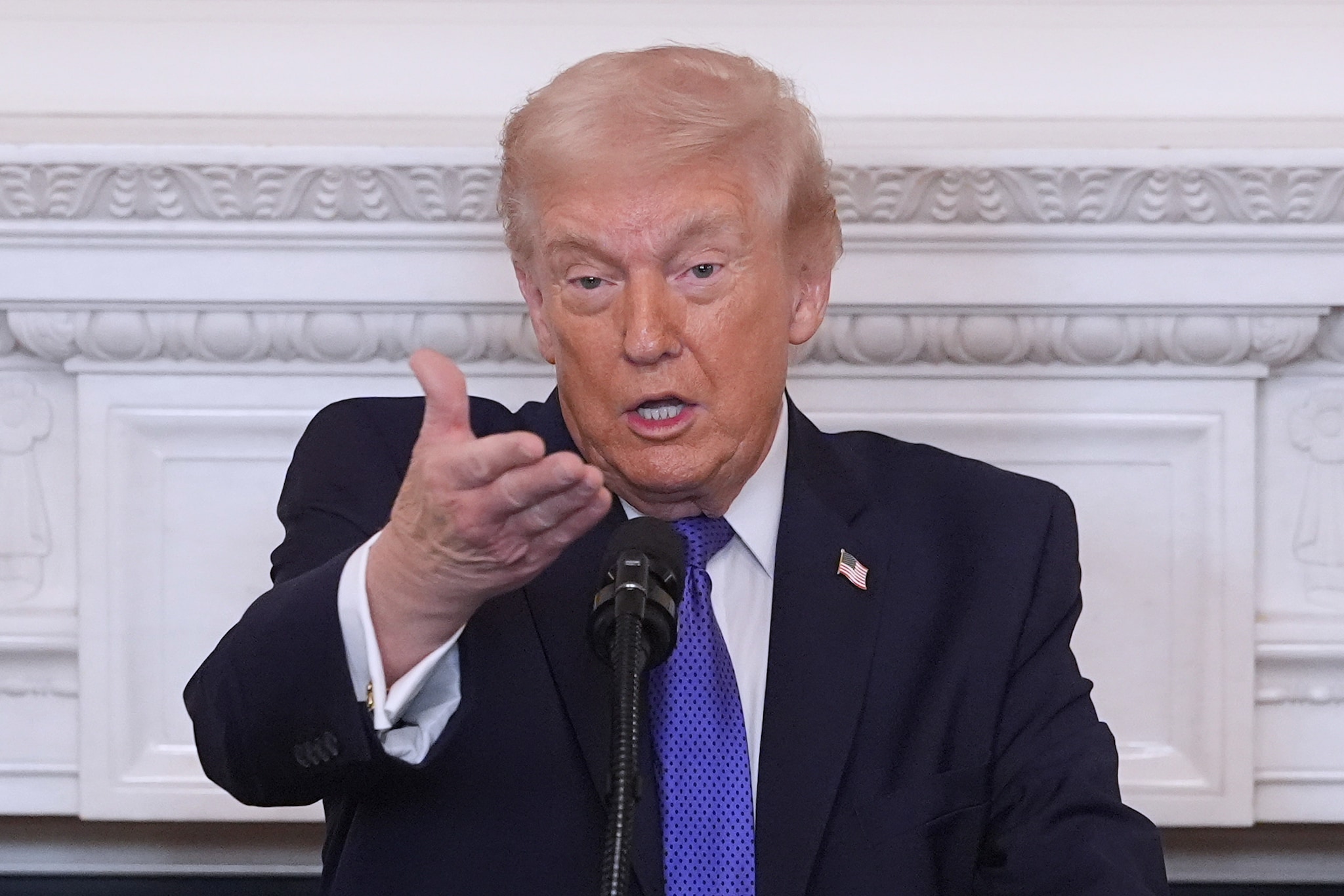
The air inside the House Chamber was thick with the kind of practiced stillness that only precedes a tectonic shift. It wasn't just the cameras or the choreographed applause. It was the weight of the numbers. When the President stepped to the rostrum for the State of the Union, he wasn't just delivering a speech; he was redrawing the blueprints for how an entire generation pays for its bread and its peace of mind.
Most policy analysis reads like an instruction manual for a lawnmower. It’s dry. It’s detached. But when you talk about replacing income taxes with tariffs or overhauling how a person retires, you aren't talking about spreadsheets. You are talking about the quiet anxiety that sits at a kitchen table at 11:00 PM while a flickering calculator screen counts down the years until the savings run out.
The Great Tax Trade
For nearly a century, the Internal Revenue Service has been the silent partner in every American paycheck. We’ve grown accustomed to the line item that vanishes before the money hits the bank. But the proposal floated during the address suggests a radical pivot: what if we stopped taxing what you earn and started taxing what you bring in from across the sea?
The idea is to leverage—or rather, to use—massive tariffs as a substitute for traditional federal income taxes. On paper, it sounds like a liberation. No more filing forms. No more April 15th dread. But the reality of a tariff-driven economy moves the tax from the paycheck to the checkout counter.
Consider a hypothetical worker named Elias. Elias works in a logistics hub in Ohio. Under the current system, the government takes a slice of his hourly wage. Under the proposed shift, that slice stays in his pocket. He feels wealthier on Friday afternoon. However, when Elias goes to buy a new set of tires for his truck, or a laptop for his daughter’s schoolwork, or even a toaster, he encounters a new reality. The 20% or 50% tariff applied at the port of entry has trickled down. The price tag on the shelf has mutated.
It is a shell game of sorts, shifting the burden from the producer to the consumer. The stakes are invisible until you reach for your wallet. If the cost of goods rises faster than the extra cash in the paycheck, the math fails the man. This isn't just a debate over trade theory; it's a gamble on the daily cost of living for every household that relies on imported electronics, clothing, and components.
The New Architecture of the Finish Line
Beyond the border walls and trade wars, the address pivoted to a more intimate frontier: the end of the working life. For decades, the "Three-Legged Stool" of retirement—Social Security, a private pension, and personal savings—has been wobbling. Pensions are relics. Social Security is a political football. That leaves personal savings to do the heavy lifting.
The President’s new retirement plan aims to bridge this gap, but it requires a fundamental reimagining of what the government owes the worker and what the worker owes themselves. The proposal suggests a more streamlined, perhaps even mandatory, approach to private investment accounts.
Think of Sarah. She’s forty-two. She’s spent twenty years working in retail and freelance design. She has no 401(k) because her employers never offered one, and the jargon of "diversified portfolios" feels like a foreign language spoken by people in better suits. The proposed plan seeks to automate the "nest egg." It’s an attempt to bake retirement security into the fabric of employment, regardless of whether you work for a Fortune 500 company or a local coffee shop.
But the friction remains. Any plan that encourages or mandates more private saving often ignores the "now." If the aforementioned tariffs drive up the price of milk and gas, Sarah has less "now" money to put into her "later" bucket. The two policies are inextricably linked. You cannot fix the end of the story without addressing the middle.
The Ghost of 1930
History has a long memory. When the President suggests tariffs as a tax alternative, economists often point back to the Smoot-Hawley era, a time when protectionism was seen as a shield but acted like a magnifying glass for the Great Depression. The fear isn't just that prices go up; it's that other countries hit back.
Imagine a game of poker where every time you raise the stakes, the person across the table does the same, but neither of you is playing with your own money. You’re playing with the cost of a farmer’s tractor in Iowa or the price of a manufacturing job in South Carolina. If we tax their cars, they tax our soybeans.
The President’s argument is one of leverage. He sees the American market as the ultimate prize—a gate that others must pay to enter. It’s an aggressive, alpha-move strategy. If it works, it revitalizes domestic factories. If it fails, it creates a "bottleneck economy" where everything is expensive and nothing is moving.
The Human Core of the Policy
We often treat the State of the Union like a sporting event. We cheer for our side and boo the other. We focus on the optics—the tie color, the standing ovations, the rebuttals. But beneath the theater, there are real, jagged edges.
For the person living on a fixed income, a shift toward tariff-based taxation is terrifying. They don't have a "paycheck" that gets a tax cut. They only have "purchases" that get a price hike. For the young professional, the promise of a new retirement vehicle is a glimmer of hope in a world where the word "pension" sounds as ancient as "blacksmith."
The confusion is the point. These policies are massive, lumbering beasts that take years to show their true teeth. When we hear about "tax alternatives," we should be asking: Who holds the debt? When we hear about "new retirement plans," we should be asking: Who controls the keys?
It is a period of profound uncertainty. The traditional safety nets are being unraveled and re-woven before our eyes. The President’s vision is a bold departure from the neoliberal consensus of the last forty years. It’s a return to a more insulated, self-reliant, and arguably more expensive America.
Whether this is a masterstroke of economic genius or a slow-motion car crash depends entirely on which side of the checkout counter you’re standing on. We are moving away from a system that taxes what we contribute and toward a system that taxes what we need.
The speech ended with the usual flourishes, the "God Bless Americas" and the rhythmic clapping. The lights in the Chamber eventually dimmed. But in the quiet suburbs and the bustling city centers, the math is just beginning. People are looking at their bank statements, their grocery receipts, and their graying hair in the mirror. They are trying to figure out if the new plan makes them a partner in the nation’s prosperity or just a passenger in its latest experiment.
The sun will rise on a country that is fundamentally the same as it was yesterday, yet the rules of the game have been shifted. The price of the table has changed. The map to the golden years has been redrawn. And all we can do is keep walking, hoping the new path leads somewhere with a roof over our heads and enough in the bank to finally, mercifully, stop working.
The silence that follows a State of the Union isn't peace. It’s the sound of 330 million people trying to balance their checkbooks in the dark.