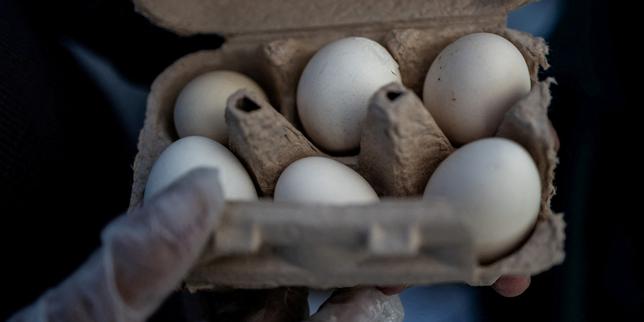
Breakfast used to be simple. A skillet on the burner. The sharp crack of a shell. The bright, orange-yellow yolk sliding into the grease, spitting faintly against the iron. We took it for granted. Every single morning, millions of kitchens across America flicked on the lights and relied on a quiet, steady commodity that sat neatly in cardboard rows of twelve.
Then the math changed. For another look, check out: this related article.
Prices spiked. Not by a few cents, but by leaps that forced families to pause in the dairy aisle, turning cartons over in their hands, weighing breakfast against other household bills. Behind those sticker shocks was not just inflation, not just bad weather or avian flu, but something much colder. A boardroom strategy. A closed-door agreement among major egg producers who realized that if they quietly tightened the supply chain together, the market would have no choice but to pay whatever price they demanded.
Cartels are usually associated with narcotics or international shipping lanes. We do not picture them wearing business casual, sitting in air-conditioned conference rooms, orchestrating the cost of a staple food. But the mechanism is identical. Control the flow. Starve the market just enough to keep prices artificially high. Profit. Related insight regarding this has been published by Associated Press.
The truth eventually surfaced, as it always does, through subpoenas, leaked emails, and the slow, grinding machinery of federal antitrust investigations.
Consider what happens next: accountability, or at least a version of it.
A federal settlement recently laid bare the mechanics of this price-fixing scheme. Major egg producers found themselves cornered by the Department of Justice and private class-action lawsuits, forced to pay a steep penalty for manipulating the market. The numbers are staggering on paper. Three point three million dollars in financial penalties. But the detail that catches the throat, the one that feels almost cinematic in its surrealism, is the addition of fifty-three million eggs.
Fifty-three million shells. Fifty-three million yolks.
They are not being sold back into the gouged market. Instead, they are being funneled directly into food banks, charities, and community kitchens—handed over to the very families who bore the brunt of the inflated costs.
Walk into a regional food pantry on a Tuesday morning, and you understand the human weight of these numbers. The line often wraps around the side of the building before the doors even open. Single parents balancing toddlers on their hips, retirees counting fixed incomes against prescription costs, gig workers stretching a precarious paycheck over seven days. For these individuals, a carton of eggs is not a casual grocery item. It is a luxury, a hard calculation, a nutritional anchor that frequently gets left behind on the shelf.
When a corporation artificially hikes the price of protein, they are not just shifting numbers on a quarterly earnings report. They are quietly rationing dignity. They are deciding who gets to feed their children a proper breakfast and who has to water down the pancake batter.
The corporate defendants argued market forces. They pointed to feed costs, regulatory burdens, and disease outbreaks. Every industry has its defense playbook. But internal documents painted a different portrait. They showed executives actively conspiring to cull flocks prematurely, reducing the national laying capacity not because chickens were dying, but because fewer eggs meant higher prices. It was a manufactured scarcity, engineered to squeeze every possible dollar out of a public that had nowhere else to turn.
Justice, when it arrives via antitrust litigation, rarely looks like a dramatic courtroom movie. There are no Perry Mason moments. It looks like lawyers shuffling massive binders of data. It looks like spreadsheet analysis of egg yields from 2008 onward. It looks like a settlement agreement signed in quiet offices.
Yet, those fifty-three million eggs represent a strange, poetic form of poetic restitution. They are tangible. You cannot hide them behind shell corporations or offshore accounts. They have an expiration date. They require refrigeration. They must be handled with care, trucked across state lines, and unloaded by volunteers into the hands of people who need them.
There is a grim irony in agricultural conglomerates being forced to pay their debt in the very commodity they weaponized.
We live in an economy increasingly dominated by invisible hands that are actually just clenched fists. From housing to healthcare, consolidation allows a handful of powerful entities to dictate terms to millions. We accept it as the modern way of the world. We shrug and pay the markup because fighting back feels like tilting at windmills.
This case proves otherwise. It proves that the architecture of our food supply is not entirely beyond public control. When the manipulation becomes too brazen, when the math of greed becomes too obvious to ignore, the system can snap back.
The settlement money will disperse into government funds and legal fees, absorbed into the machinery of bureaucracy. But the eggs? Those will go into skillets. They will be scrambled for kids before school, whisked into batter for community bread, fried for shift workers coming off the night shift.
They will disappear into the quiet routines of everyday survival, neutralizing, if only for a brief moment, the artificial scarcity that put them there.
The next time you reach into the dairy case and feel that familiar hesitation at the price tag, remember the hidden levers pulling at the other end of the supply chain. Remember that markets are built by human choices, and human choices can be challenged.
The shells will crack. The kitchens will warm. And the cost of doing business, for once, was paid in the currency of the people who were meant to go without.



.png?width=1200&auto=webp&trim=0%2C0%2C0%2C0)