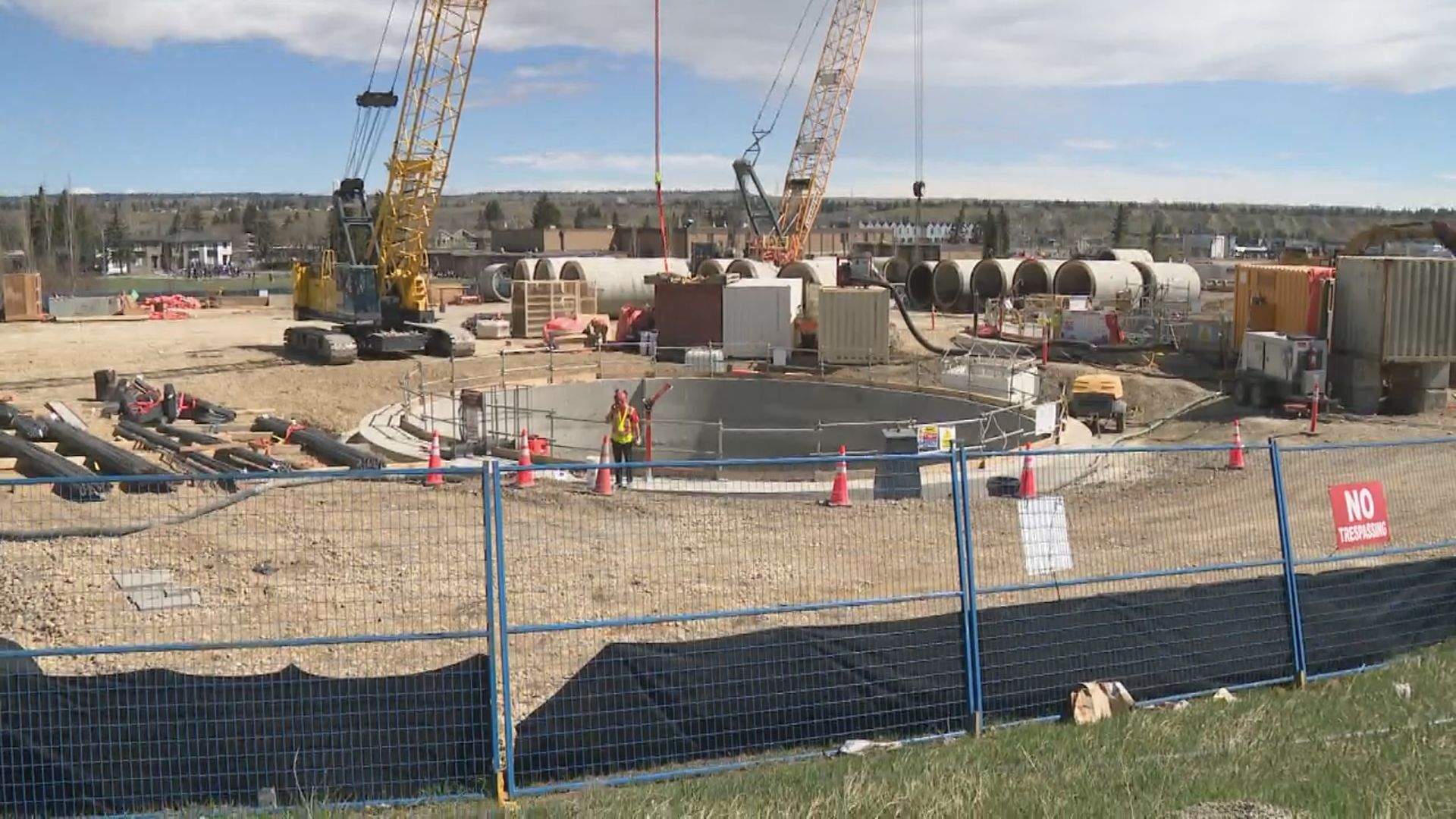
The sound of a dry faucet is a particular kind of silence. It is a hollow, metallic rasp that signals a breakdown in the basic contract between a city and its people. For Calgarians, that sound became a haunting reality when a massive feeder main burst, turning a modern metropolis into a place where every drop of water was suddenly a precious, finite resource.
When the dust settled and the mud dried, the questions began. How did this happen? Who was watching? And, perhaps most contentiously in the current political climate: how much are we paying the people responsible for making sure it never happens again? For a deeper dive into this area, we suggest: this related article.
At the center of this storm sits the new water oversight board. They are the guardians of the infrastructure, the experts tasked with peering into the dark, pressurized world beneath the pavement. But as the City of Calgary moves to finalize their compensation, a new rift has opened. It is a debate about value, accountability, and what it costs to buy peace of mind in a city that can no longer take its plumbing for granted.
The Cost of Expertise
Imagine a woman named Sarah. She lives in a modest bungalow in Bowness. During the height of the water crisis, Sarah wasn’t thinking about "governance structures" or "oversight models." She was thinking about whether she had enough grey water to flush her toilet and how she would manage to bathe her toddler with a single pot of boiled water. To Sarah, the water system is a ghost—invisible until it fails, at which point it becomes the only thing that matters. For broader context on this topic, comprehensive reporting is available on Associated Press.
Now, Sarah hears that the members of the board meant to prevent another catastrophe could be earning hundreds of dollars an hour. To her, that feels like a slap in the face. She sees a city budget stretched thin and a utility bill that keeps climbing.
The proposed pay structure for the new board isn't just a line item; it is a lightning rod. The numbers being floated—roughly $300 to $500 per meeting or daily retainers that mirror professional consulting rates—are standard in the world of corporate boards. But Calgary’s water board isn't a private corporation. It is a public necessity.
The friction lies in a simple, uncomfortable truth: you cannot get world-class oversight for entry-level wages. The people needed for this board aren't just enthusiasts; they are engineers, risk management specialists, and infrastructure veterans. They are the people who can look at a pressure gradient chart and see a catastrophe three years before it happens.
If the city lowballs the compensation, they risk seating a board of "yes-men" or well-meaning amateurs. If they pay the market rate, they risk the fury of a taxpayer base that feels the city is disconnected from the struggles of the average kitchen table.
A Legacy of Neglect
The feeder main break wasn't an act of God. It was an act of time.
For decades, the invisible arteries of the city were treated with a philosophy of "out of sight, out of mind." We paved over them, drove our heavy trucks over them, and assumed they would pulse forever. But infrastructure has a memory. It remembers every winter freeze, every shift in the soil, and every year a maintenance check was deferred to balance a quarterly budget.
The creation of an independent oversight board is an admission of guilt. it is a confession that the previous way of doing things—internal reports and political maneuvering—wasn't enough to catch the rot.
The board is designed to be the "critical friend" of the water department. Their job is to be annoying. They are there to ask the questions that make directors sweat: Why wasn't this pipe scanned? Why is the contingency fund empty? What happens if this valve fails on a Tuesday in July?
But the skepticism from the public remains. There is a feeling that we are throwing money at a problem after the damage is already done. It’s like hiring a world-class fire warden after the house has burned down. People are asking why this oversight wasn't already a part of the job descriptions of the highly-paid executives already on the city payroll.
The Professionalization of Accountability
Consider the difference between a volunteer committee and a professional board. A volunteer committee meets once a month, eats some lukewarm catering, and reviews the highlights provided by management. They provide a "rubber stamp" of community involvement.
A professional board—the kind Calgary claims to be building—operates with a different level of skin in the game. They carry fiduciary responsibility. If they miss a glaring red flag, their reputations, and sometimes their legal standing, are on the line.
The city's argument for high compensation is rooted in this risk. They want people who have more to lose than a few hours of their time. They want experts who will treat the city’s pipes with the same clinical obsession a surgeon treats a heart valve.
Yet, there is a middle ground that feels increasingly lost. In years past, serving on a municipal board was seen as a form of civic duty—a way for a retired professional to give back to the city that made their career possible. That era of "noblesse oblige" is fading, replaced by a cold, transactional reality. In 2026, time is a commodity, and expertise is an export.
The Invisible Stakes
While the debate over meeting fees rages in Council chambers, the actual work of the board remains abstract to most. We talk about dollars and cents because they are easy to measure. We don't talk about "preventative cavitation analysis" or "transient pressure monitoring" because they are boring.
But those boring things are what keep the taps running.
The real danger isn't that we pay a board member $1,000 for a day of work. The real danger is that the board becomes just another layer of bureaucracy—a shield for politicians to hide behind when things go wrong. "Don't look at us," they could say, "the Oversight Board signed off on it."
If the board is paid like a corporate entity but acts like a political subcommittee, the city loses twice. We lose the money, and we lose the safety.
Trust is a fragile thing. It is built over decades of reliable service and destroyed in a single afternoon of flooding. To rebuild that trust, the city needs more than just a board; it needs a transparent process. Calgarians need to see that these board members aren't just collecting a check, but are actively wrestling with the problems that led to the June crisis.
The Price of Silence
We often value things only by the cost of their absence.
When you turn on your shower tomorrow morning, you won't think about the board. You won't think about the salary of the chairperson or the per-diem rates of the engineers. You will simply expect the water to be there—clear, cold, and endless.
That expectation is the most expensive thing in the city.
It is maintained by a vast, crumbling network of steel and concrete, and now, by a group of people sitting in a boardroom, arguing over maintenance schedules and risk tolerances. Whether we pay them a little or a lot, the true measure of their worth won't be found in a budget spreadsheet. It will be found in the continued, unremarkable hum of a city that has forgotten what it's like to be thirsty.
The debate over compensation is a proxy for a much deeper anxiety. It is the sound of a city realizing that its foundations are not as solid as it thought. We are haggling over the price of the watchman because we are finally, belatedly, terrified of what happens when he falls asleep.
As the sun sets over the Bow River, the water continues to flow, invisible and vital, beneath the feet of millions. The pipes don't care about the politics of the board. They only care about the pressure. And the pressure, as always, is rising.
The faucet stays closed. The city waits. The next move isn't about the money; it’s about whether anyone is actually listening to the pipes.