Thirty years is an incredibly long time to wait for a criminal charge. But federal prosecutors just dropped a bombshell that proves Washington hasn't forgotten about one of the cold war's final, bloodiest flashpoints.
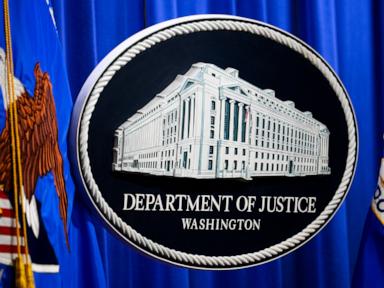
The U.S. Department of Justice unsealed a seven-count indictment charging 94-year-old former Cuban President Raúl Castro with murder and conspiracy to kill U.S. nationals. The charges stem directly from the infamous February 24, 1996, shootdown of two unarmed civilian aircraft operated by the Miami-based exile group Brothers to the Rescue. Four men died when Cuban MiG fighter jets blew those Cessna planes out of the sky over international waters.
If you think this is just a symbolic, history-book legal maneuver, you're missing the bigger picture. This indictment isn't just about closing a painful chapter from 1996. It's a calculated, high-stakes geopolitical play by the Trump administration that could signal a looming military confrontation right on America's doorstep.
The Cold Blood of 1996
To understand why this matters right now, you have to look at what actually happened in the skies over the Florida Straits three decades ago.
Brothers to the Rescue wasn't a military outfit. They were a volunteer group of pilots flying search-and-rescue missions to spot Cuban rafters fleeing the island's brutal economic realities. On that Saturday in 1996, three of their Cessna 337 Skymasters took off from Opa-locka Airport in Florida.
According to the unsealed 20-page indictment, Cuban intelligence agents had thoroughly infiltrated the exile group. They knew exactly where those planes would be. Under a direct chain of command overseen by Raúl Castro, who was Cuba's defense minister at the time, military MiGs intercepted the unarmed aircraft.
They didn't give warnings. They didn't try to force them to land. They fired air-to-air missiles.
Two planes disintegrated over international waters. Four men—Carlos Costa, Armando Alejandre Jr., Mario de la Peña, and Pablo Morales—were killed instantly. A third plane, flown by the group's leader José Basulto, barely escaped back to Florida. The international community expressed outrage, and the incident directly triggered the signing of the Helms-Burton Act, which permanently codified the U.S. embargo against Cuba.
For decades, the families of those four men lobbied for the ultimate decision-makers to face a courtroom. Now, acting Attorney General Todd Blanche has delivered exactly that, announcing the charges at Miami’s historic Freedom Tower.
This Isn't Just Symbolic Anymore
Legal analysts are already pointing out the obvious hurdle: Cuba does not extradite its citizens, let alone its revolutionary icons, to the United States. Raúl Castro is sitting in Havana, highly protected.
But dismissing this as teeth-gnashing political theater for South Florida voters ignores recent history. Look at what happened in January. American special forces launched a stunning raid in Caracas, capturing Venezuelan President Nicolás Maduro and flying him straight to New York to face federal narco-terrorism charges.
The legal justification used for that unprecedented raid? A U.S. federal court indictment.
Blanche made the administration's aggressive stance crystal clear during the press conference:
"This is not a symbolic indictment. We expect him to show up, either by his own will or by another way."
By unsealing these murder charges, the Justice Department has built a formal legal framework that could justify future direct action. Out of the six named defendants in the indictment, only one—65-year-old former pilot Luis Raul Gonzalez-Pardo Rodriguez—is currently in U.S. custody, where he's awaiting sentencing on an unrelated immigration charge. The rest are in Cuba. For a 94-year-old Castro, the world just got dramatically smaller, and the threat of an American operation suddenly got very real.
Driving Cuba to the Brink
This indictment doesn't exist in a vacuum. It drops at a moment when Cuba is facing its worst humanitarian and economic collapse since the fall of the Soviet Union.
Ever since American forces captured Maduro, the U.S. has effectively blockaded oil shipments from Venezuela to Cuba. Venezuela was Cuba’s economic lifeline, supplying the cheap petroleum keeping the island's lights on. Without it, the island has completely unraveled.
The Cuban government openly admitted that the country has entirely run out of oil and diesel. The electrical grid has completely failed, hospitals are canceling life-saving surgeries, and schools have shut down. Food is scarce. Tensions are boiling over.
On top of that, Washington recently slapped sweeping new sanctions on Cuba’s military-run companies. The White House also reversed a last-minute effort by the previous administration to remove Cuba from the state sponsors of terrorism list.
Current Cuban President Miguel Díaz-Canel reacted furiously to the indictment, taking to social media to call the charges a total fabrication. He claims Washington is deliberately building a legal file to justify the "folly of a military aggression against Cuba."
Reading Between the Lines
So, what's the actual endgame here?
If you talk to Cuba experts, opinions are sharply divided. Some view the move as the ultimate pressure tactic. The Trump administration has been holding quiet talks with Cuban officials since February, but U.S. intelligence officials reportedly worried that Havana was simply playing for time. Dropping a murder indictment against the godfather of the regime is a massive leverage play to force concessions, like opening up the economy or freeing hundreds of political prisoners.
Others see a darker path. Over the weekend, a leaked intelligence report revealed that Cuba has quietly acquired several hundred drones over the past few years. The timing of that leak wasn't accidental. It frames Cuba not just as a broken communist relic, but as an active national security threat sitting just 90 miles off the coast of Florida.
Whether this ends in a diplomatic grand bargain or a dramatic military escalation, the status quo is dead. The U.S. government has officially criminalized the top tier of the Cuban regime. If you want to keep tabs on where this crisis goes next, keep your eyes on the Florida Straits, watch for any shifts in U.S. naval deployments, and monitor whether Havana tries to bargain away its old guard to keep the lights on.