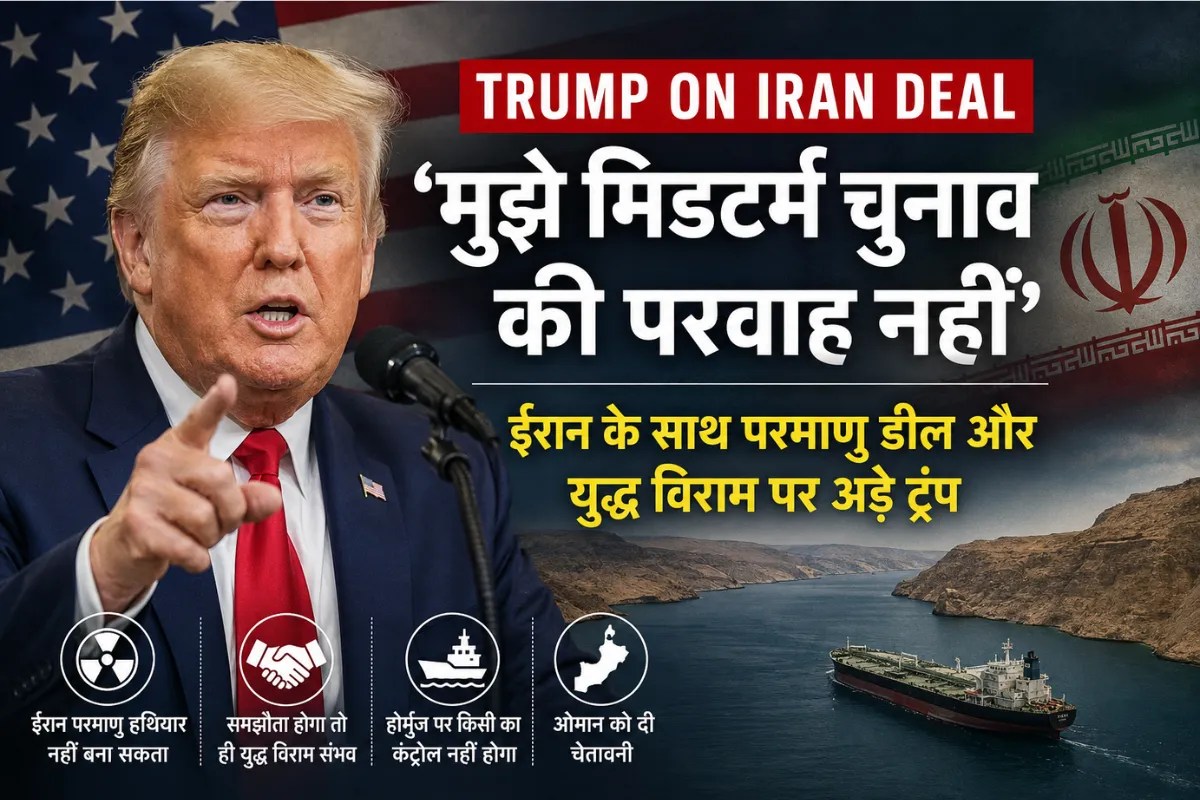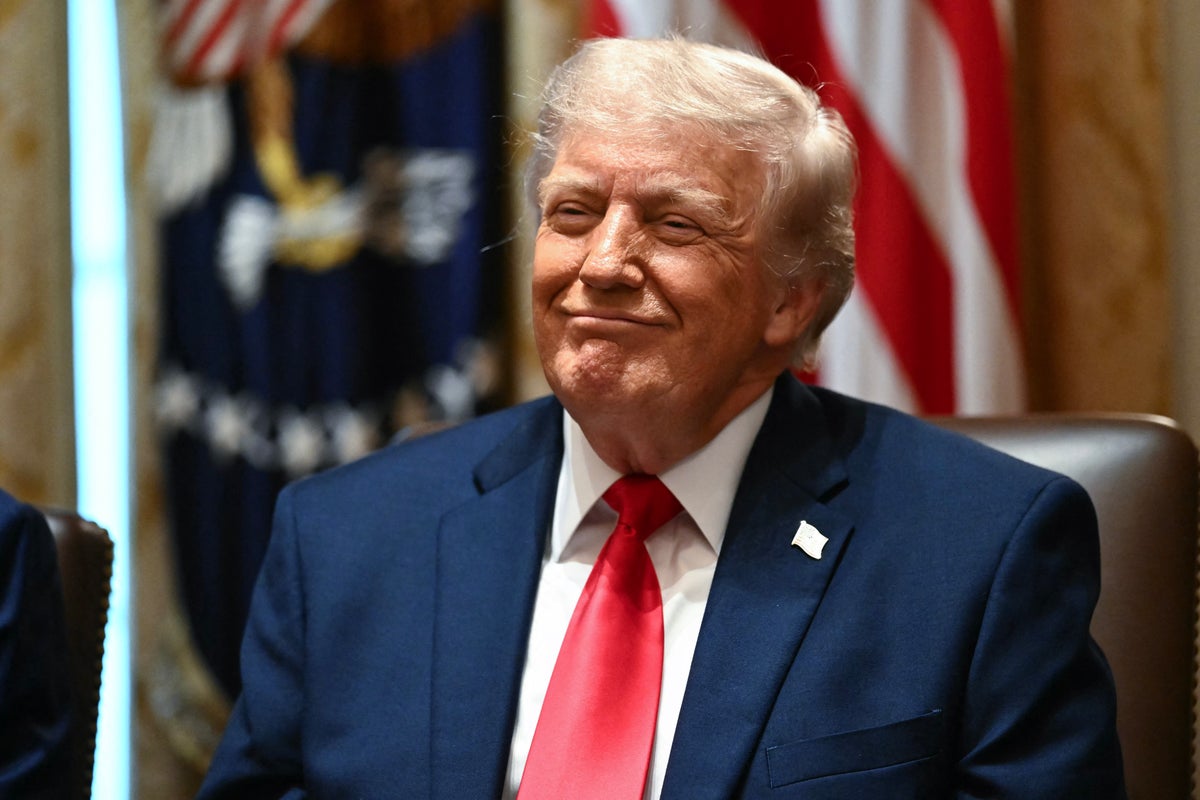
Donald Trump just told his own party that their most critical survival line of the year does not matter to him. Sitting in the White House Cabinet Room, the president dismissed the upcoming midterm elections while discussing grueling, high-stakes negotiations over the war in Iran. “I don’t care about the midterms,” Trump stated plainly, reacting to intelligence that Tehran is trying to run down the clock until November in hopes of a softer American stance.
This is not a casual rhetorical slip or a display of political ignorance. It is a calculated dismissal of traditional party loyalty in pursuit of an aggressive, legacy-defining foreign policy agenda. While congressional Republicans panic over sagging national approval ratings, soaring gas prices, and an increasingly unpopular overseas conflict, Trump is operating on a completely separate timeline. He is gambling that absolute executive dominance abroad will shield his legacy, even if it burns down his party's razor-thin majorities in Congress.
The Strategy Behind the Disdain
Tehran believed it possessed a powerful psychological weapon in the American electoral calendar. Iranian negotiators in Doha had spent five rounds of talks slowing down proceedings, operating under the assumption that a domestic political crunch would force Washington to offer hasty sanctions relief to lower global oil prices before voters head to the polls. Trump used a single Cabinet meeting to systematically dismantle that leverage.
By declaring the midterms irrelevant to his decision-making, the president signaled to Iranian leadership that he is perfectly willing to resume full-scale military operations if they refuse his terms. He wants a flawless deal, not a fast one. This posture completely strips away the leverage of the Iranian delegation, but it simultaneously leaves down-ballot Republicans exposed to intense political headwinds.
National Republican campaign operations are suddenly trapped in a defensive crouch. Strategists at the NRCC and NRSC have spent months crafting messaging designed to pivot voter anxiety away from the war and toward domestic economic stability. Trump's total indifference to the election calendar severely undermines that effort. It forces vulnerable incumbents to defend an open-ended conflict that lacks a defined legislative or diplomatic expiration date.
The Fiscal Squeeze Beyond Washington
The consequences of this prolonged deadlock extend far beyond the Beltway. Consider the case of America's primary regional allies, who are bearing the immediate structural costs of an extended geopolitical stalemate.
- Deficit Spikes: Regional partners lack the financial insulation to endure an indefinite duration test.
- Maritime Tolls: Maritime choke points remain restricted, allowing hostile regional actors to extract millions in transit fees from commercial shipping.
- Military Vulnerability: The longer the diplomatic vacuum persists, the higher the risk of renewed local skirmishes that drag American assets deeper into the theater.
The Texas Proof of Concept
Trump feels insulated from the anxieties of the congressional establishment because of his absolute grip on the Republican base. His dismissal of the midterms came less than twenty-four hours after a massive internal party victory in Texas. In a bitter primary runoff, state Attorney General Ken Paxton—heavily backed by Trump—soundly defeated a long-serving establishment figure.
To the White House, that primary result was a definitive proof of concept. Trump viewed it as undeniable evidence that his core voters prioritize absolute loyalty to his movement over institutional party seniority. Why should an executive care about aggregate congressional polling when he can personally unseat any lawmaker who steps out of line?
This creates a severe structural imbalance within the party. The institutional arms of the GOP are relying on deep financial reserves to save their majorities, boasting hundreds of millions of dollars across party committees. They believe raw cash and high-profile MAGA rallies can bridge the gap in hostile suburban districts. Trump, however, uses his endorsement power selectively, treating it as a tool to reward allies or settle personal scores rather than a mechanism to build a stable legislative majority.
The Mirage of Sanctions Relief
The core policy sticking point remains a fundamental disagreement over sequence and scope. Iran wants immediate economic breathing room in exchange for capping its highly enriched uranium stockpiles. Trump has flatly rejected this framework. He insists that no economic relief will be granted before absolute verification of complete compliance, and he has explicitly warned global competitors like Moscow and Beijing against attempting to take custody of Iran’s nuclear materials.
This hardline stance complicates the life of every Republican running in a swing district. Voters are feeling the immediate sting of inflation and disrupted energy markets right now. By refusing to compromise for a quick diplomatic win that could stabilize global trade, Trump is forcing his party to run on raw ideological discipline rather than tangible short-term economic relief.
A standard political operation prioritizes self-preservation. It seeks to minimize risk in the run-up to a major vote. Trump is doing the exact opposite, treating the entire apparatus of the state and the fortune of his legislative party as secondary variables in a grand geopolitical gamble.
The political calculus is brutal. If Trump secures an absolute capitulation from Tehran, his legacy is secure, and his methods will be vindicated. But if the deadlock drags past November without a breakthrough, the cost of that stubbornness will be paid entirely by the congressional Republicans who find themselves wiped out in an election their leader openly refused to care about.