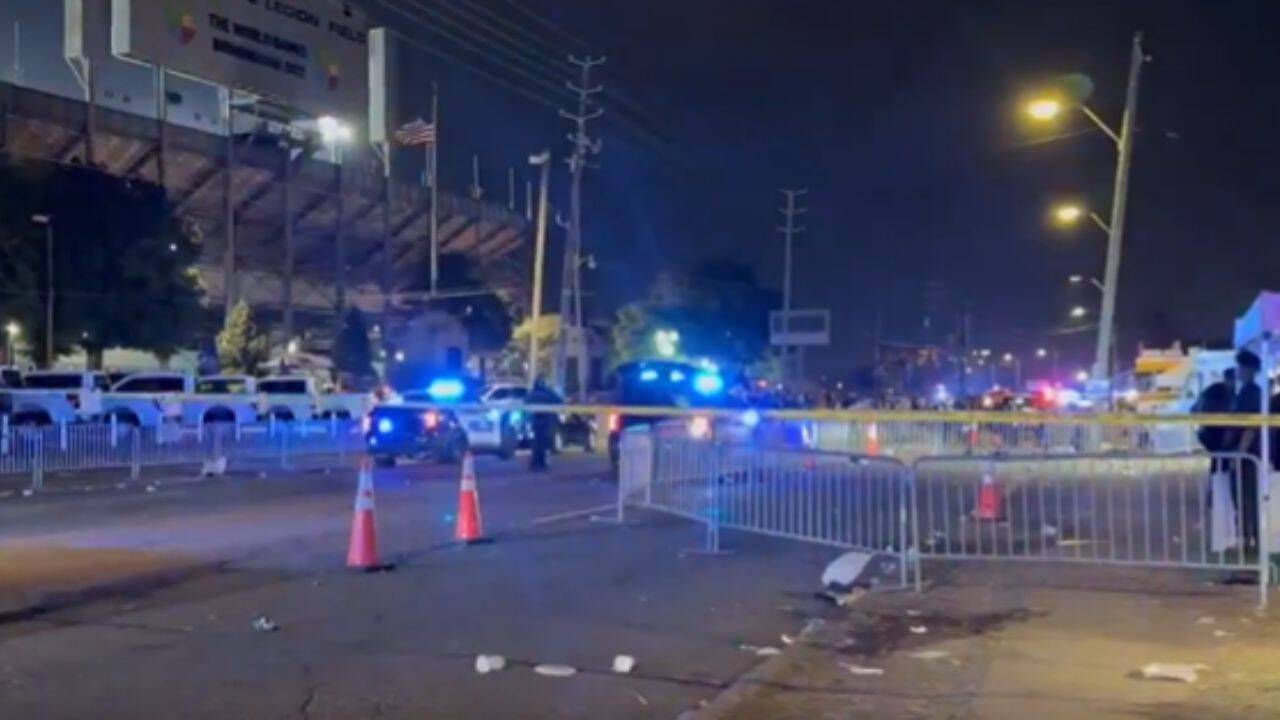
Every November 1st, the exact same headline hits the wire. Multiple shootings on Halloween leave dozens dead and injured across the country, and for twenty-four hours, everyone acts shocked.
It's predictable. Honestly, it's exhausting.
When news breaks that multiple shootings on Halloween left 4 dead and 15 injured across different American cities, the coverage almost always follows a lazy, copy-paste template. Reporters list the street names, quote a shaken police chief, and move on by November 2nd. They treat these incidents like random weather events rather than the predictable collision of alcohol, crowded house parties, warm autumn nights, and easy access to firearms. If you actually look at the data from the Gun Violence Archive and criminological research into holiday crime spikes, a much clearer—and far more frustrating—picture emerges.
Why Halloween Night Turns Violent So Fast
You might think Halloween crime is mostly teenagers egging houses or stealing candy bowls. That's the suburban myth. In reality, late October creates a specific environmental cocktail that law enforcement agencies dread every single year.
First, look at the crowd dynamics. Unlike Thanksgiving or Christmas, which keep people indoors with immediate family, Halloween pushes millions of young adults into loosely organized, unmonitored spaces. Pop-up block parties, rented Airbnbs, and overcrowded nightclubs become the norm. When you pack hundreds of strangers into a tight space with zero security screening, minor interpersonal beefs escalate instantly. A spilled drink or a bumped shoulder doesn't end in a shouting match anymore.
Then there's the anonymity factor. Masks aren't just costumes; they're a massive headache for municipal surveillance and eyewitnesses. When a dispute breaks out at 1:30 AM and half the crowd is wearing full-face coverings, the perceived risk of getting caught drops dramatically.
According to research from the Gun Violence Archive, mass shooting incidents—defined as four or more people shot, not including the shooter—consistently cluster around major social holidays. Halloween frequently rivals Fourth of July weekend for late-night gun violence, largely because it falls right before the winter weather forces people inside for the season. It's the last big outdoor party night of the year in much of the US.
What Local News Reports Always Miss About These Incidents
When you read a wire brief stating that multiple shootings left 4 dead and 15 injured, the framing makes it sound like a single coordinated event. It rarely is.
Most holiday casualty counts are the sum of separate, unrelated tragedies happening within a six-hour window across different time zones. One incident might be a stray bullet hitting a bystander outside a downtown bar in the Midwest. Another might be an argument at a backyard gathering in the South. Grouping them into a single ticker-tape statistic flattens the reality of what's actually happening on the ground.
I've spent years analyzing municipal crime blotters and emergency dispatch logs, and the pattern is undeniable. Local outlets rush to publish the raw casualty numbers because those get clicks. They almost never follow up three weeks later to report on the root causes, whether the venue was operating illegally, or how many of the injured victims are now facing six-figure medical bills and permanent disabilities.
The Hidden Toll of Non-Fatal Injuries
Media coverage obsesses over fatalities. Four dead makes the national ticker, while fifteen injured gets treated like a footnote.
That's a massive blind spot. Surviving a gunshot wound isn't like getting stitched up in an action movie and walking out of the hospital the next morning. Those fifteen injured people represent shattered femurs, colostomy bags, traumatic brain injuries, and years of physical therapy. According to studies published by the American College of Surgeons, survivors of firearm violence experience high rates of post-traumatic stress disorder and chronic pain long after the news vans pack up and leave.
When a newsroom summarizes a weekend's violence as "4 dead, 15 injured," the public unconsciously reads those fifteen people as "okay." They aren't okay. Their lives were permanently altered in five seconds outside a Halloween party.
How Cities and Venues Actually Prevent Holiday Gun Violence
If we know October 31st brings predictable risks, why do cities keep getting caught flat-footed? Mostly because municipal leaders rely on reactive policing instead of proactive crowd and venue management.
Putting extra patrol cars on major avenues helps with traffic, sure. It doesn't stop a shooting inside an unlicensed warehouse party three blocks away. Cities that have successfully driven down holiday shooting numbers do a few specific things differently, and none of them involve empty press conferences.
- Cracking down on short-term rental parties. Platforms like Airbnb and Vrbo have tried to implement anti-party algorithms around Halloween, but determined hosts and guests still bypass them. Cities that enforce strict, immediate fines on property owners hosting unpermitted commercial-style events see fewer late-night disturbances.
- Targeted violence interruption. Organizations modeled after Cure Violence deploy trained outreach workers—often people with deep roots in the exact neighborhoods where shootings happen—to de-escalate simmering conflicts before Halloween night even arrives. If two local groups are beefing online in mid-October, waiting until October 31st to intervene is already too late.
- Mandatory security protocols for late-night venues. Bars and clubs extending their hours for Halloween events need real entry screening, adequate lighting in parking lots, and strict capacity limits. Most bar-related shootings don't happen inside the building; they happen at closing time in unlit parking lots when everyone gets dumped onto the asphalt at the exact same minute.
The data from groups like Everytown for Gun Safety shows that states with stronger background check laws and permit-to-purchase requirements consistently record lower rates of gun homicides year-round, including during high-risk holiday weekends. Policy sets the baseline, while local enforcement and venue accountability handle the immediate crowd dynamics.
Protecting Yourself Without Giving Up Your Social Life
You shouldn't have to lock yourself in your basement every October 31st out of fear. Statistically, your odds of being caught in a public shooting are still low. Still, ignoring basic situational awareness during high-volume holiday nights is a rookie mistake.
If you're heading out to a party, a bar district, or a large public gathering on Halloween, treat it differently than a random Tuesday night.
Skip the massive, unvetted house parties where nobody actually knows the host. Those are the exact environments where crowd surges and unmonitored arguments spiral out of control. Stick to venues with professional security, clear exits, and controlled capacity.
Pay attention to the clock. Emergency room doctors and trauma surgeons will tell you that the sharpest spike in penetrating trauma happens between midnight and 3:00 AM. Leaving a crowded bar district thirty minutes before last call dramatically cuts your exposure to the worst parking-lot chaos.
Know where the exits are before you need them. It sounds paranoid until you're in a packed room and hear a loud pop. Don't just look at the front door you walked through; spot the kitchen exit or the emergency side door.
Finally, push back against lazy news consumption. When you see another brief headline tallying up dead and injured Americans after a holiday weekend, look past the raw numbers. Demand better reporting from your local outlets, support community-based violence intervention programs in your city, and hold local venue owners and lawmakers accountable for the basic safety standards that keep preventable tragedies from becoming an annual tradition.