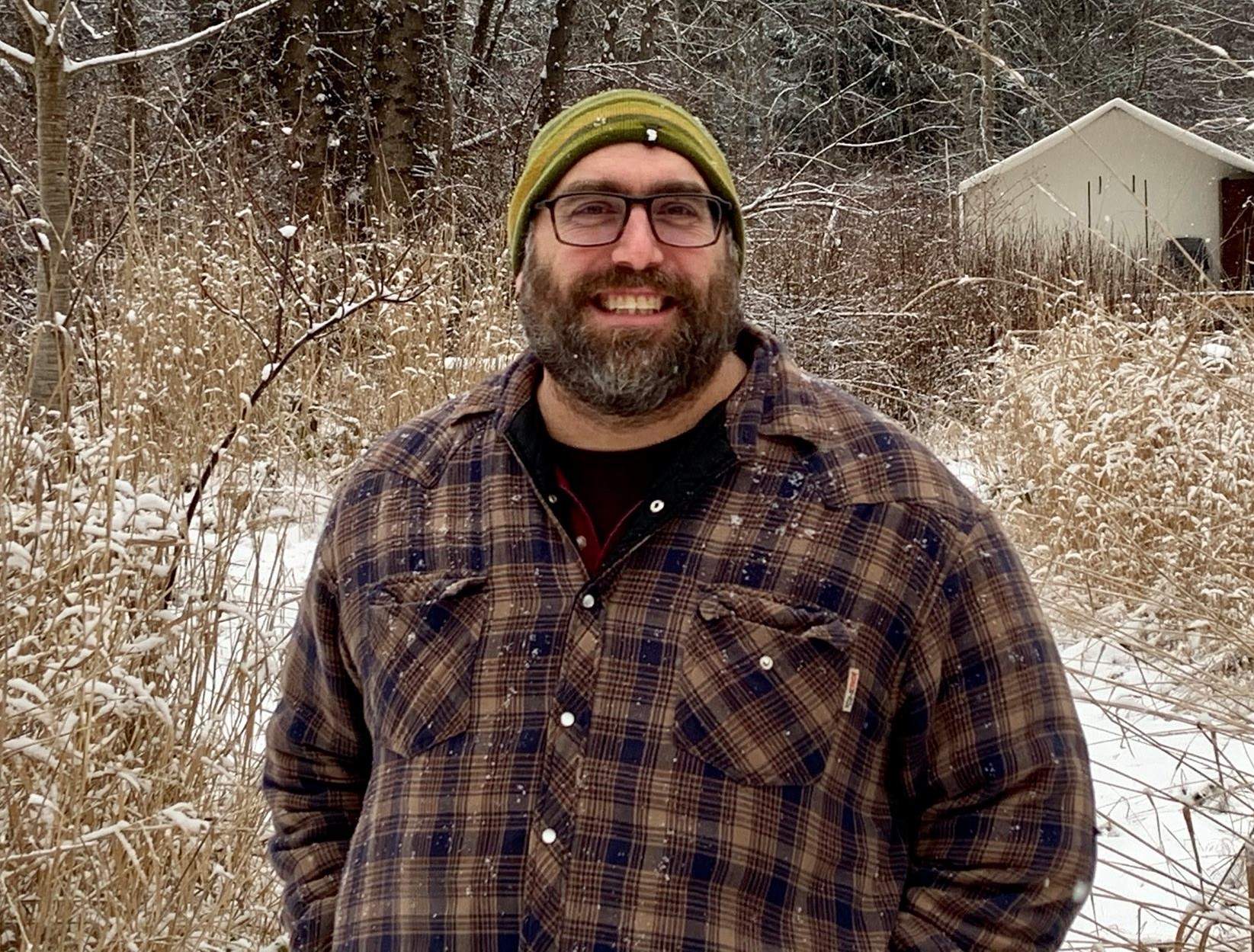
The coffee in the pot goes cold, but the front porch light stays on. It is a small, rhythmic defiance against the dark. In Courtenay, British Columbia, the passage of time isn't measured by calendars or the changing of the leaves anymore. It is measured in the silence where a voice used to be. Six years have vanished since Michael Gazetas drove away from his home, leaving behind a life that seemed full, a career in the film industry that kept him busy, and a family that never imagined they would become experts in the mechanics of disappearance.
He was 51. He was a location scout, a man whose very job was to find the places everyone else overlooked. He knew the logging roads of Vancouver Island like the back of his hand. He knew where the canopy thickened and where the cell service died. On January 31, 2020, he climbed into his red Ford Ranger and drove into a landscape he understood better than most. He hasn't been seen since.
Statistics tell us that people go missing every day. Most are found within forty-eight hours. They are hikers who took a wrong turn, teenagers blowing off steam, or elders who lost their way in a fog of memory. But then there are the others. The ones who slip through the cracks of logic. For the Gazetas family, the "missing" status isn't a headline. It is a living, breathing roommate that occupies every chair at the dinner table.
The Anatomy of a Void
When a person vanishes without a trace, the human brain revolts. We are wired for cause and effect. We crave the funeral, the hospital bed, or the phone call from a distant city. Without these markers, the mind builds its own scenarios. It constructs a thousand different movies, each one more vivid and haunting than the last.
Maybe the truck slid off a rain-slicked embankment into a ravine so deep the brush swallowed the crimson paint of the Ford Ranger within days. Maybe he stepped out to take a photo of a valley and lost his footing. Or maybe—and this is the thought that keeps the lights on at 3:00 AM—he is still out there, somewhere beyond the reach of the search parties.
The search for Michael was not a casual effort. It was a massive, coordinated surge of human will. Search and Rescue teams, helicopters with infrared sensors, and drones scouring the rugged terrain of the Comox Valley. They looked for a glint of metal, a broken branch, or a tire track that ended abruptly. They found nothing. Vancouver Island is a beautiful, cruel paradox; it is a tourist’s paradise and a labyrinth of impenetrable old-growth forest.
Consider the sheer scale of the wilderness. A vehicle, even a bright red one, becomes a speck of dust in a cathedral of green when the mist rolls in. To look for Michael was to look for a needle in a haystack where the hay is constantly growing and shifting with the seasons.
The Cost of the Unfinished
There is a specific kind of grief reserved for the families of the missing. Psychologists call it ambiguous loss. It is a wound that cannot scab over because the "event" hasn't actually finished happening. For Michael’s wife and his sisters, the last six years have been a masterclass in psychological endurance.
They speak of him in a mix of tenses. He is a talented scout. He was always ready with a joke. This linguistic tightrope is the hallmark of a family trapped between hope and mourning. To mourn fully feels like a betrayal; to hope fully feels like a delusion. So, they exist in the middle. They keep his story alive not because they are stuck in the past, but because the present refuses to provide an answer.
The search didn't stop when the official crews went home. The family took the lead, utilizing social media, billboards, and the "Missing Michael Gazetas" campaign to ensure his face didn't fade into the background noise of daily news. They turned themselves into investigators, advocates, and keepers of a flame that the wind keeps trying to blow out.
The Ghost in the Machine
We live in an age of total surveillance. We assume that between GPS, cell towers, and satellite imagery, no one can truly disappear. But Michael Gazetas proved how fragile that digital tether really is. Once you move beyond the range of the last tower, you aren't just off the grid. You are gone.
His phone didn't ping. His credit cards remained untouched. The red truck—BC plate NX 7235—simply stopped existing in the eyes of the world.
Think about your own life. The trail of breadcrumbs you leave behind every day is a mile long. Your grocery receipts, your "likes," your location history. Now, imagine all of it stopping at a specific GPS coordinate on a rainy Friday morning. The silence that follows is deafening. It forces us to confront a terrifying truth: despite all our technology, the earth is still vast, and we are still very small.
The family’s persistence is a lesson in the invisible stakes of love. Most people would have folded under the weight of half a decade of "no news." But the Gazetas clan operates on a different frequency. They have navigated the bureaucratic hurdles of police reports and the emotional exhaustion of false leads. They have learned that the "news cycle" has a short memory, but a sister’s memory is eternal.
The Weight of the Red Ranger
Every time a red Ford Ranger drives down a street in Courtenay or Comox, heads turn. For a split second, the heart rate spikes. Could it be? It never is. But that split second is where the family lives.
They aren't just looking for Michael anymore. They are looking for the truck. In the world of missing persons, the vehicle is often the key. It is a 3,000-pound piece of evidence that doesn't just evaporate. It is tucked into a gully, submerged in a lake, or parked in a garage somewhere. Finding the metal is the first step to finding the man.
The community has joined this vigil. Hunters, hikers, and loggers keep an eye out for that specific shade of red. It has become a local legend, a ghost ship of the Vancouver Island woods. But for the family, it isn't a legend. It is the vessel that carried away a brother, a husband, and a friend.
A Resilience Without an End
There is no "closure." That word is a lie we tell people to make ourselves feel better about their tragedies. There is only integration. You learn to carry the weight until your muscles grow strong enough to bear it. The Gazetas family hasn't "moved on," because moving on implies leaving Michael behind. Instead, they have moved forward, taking him with them in every interview, every flyer, and every prayer.
They have faced the reality of six years with a courage that is quiet and relentless. They have dealt with the "what ifs" and the "if onlys" that haunt the peripheries of their vision. If he had stayed for one more cup of coffee. If the rain hadn't been so heavy. If he had taken a different route. These thoughts are a trap, and they have learned how to step around them.
The mystery of Michael Gazetas is a reminder of the fragility of the human narrative. We think we are the authors of our own stories, but sometimes the ink runs out mid-sentence. We are left with a blank page and a pen that won't write.
Tonight, the sun will set over the Beaufort Range. The shadows will stretch long across the logging roads where Michael once worked. Somewhere, perhaps under a canopy of hemlock or at the bottom of a forgotten slope, a red Ford Ranger sits in the dark. And back in town, a porch light remains on, casting a small, stubborn glow into the night, waiting for a driver who knows the way home by heart.