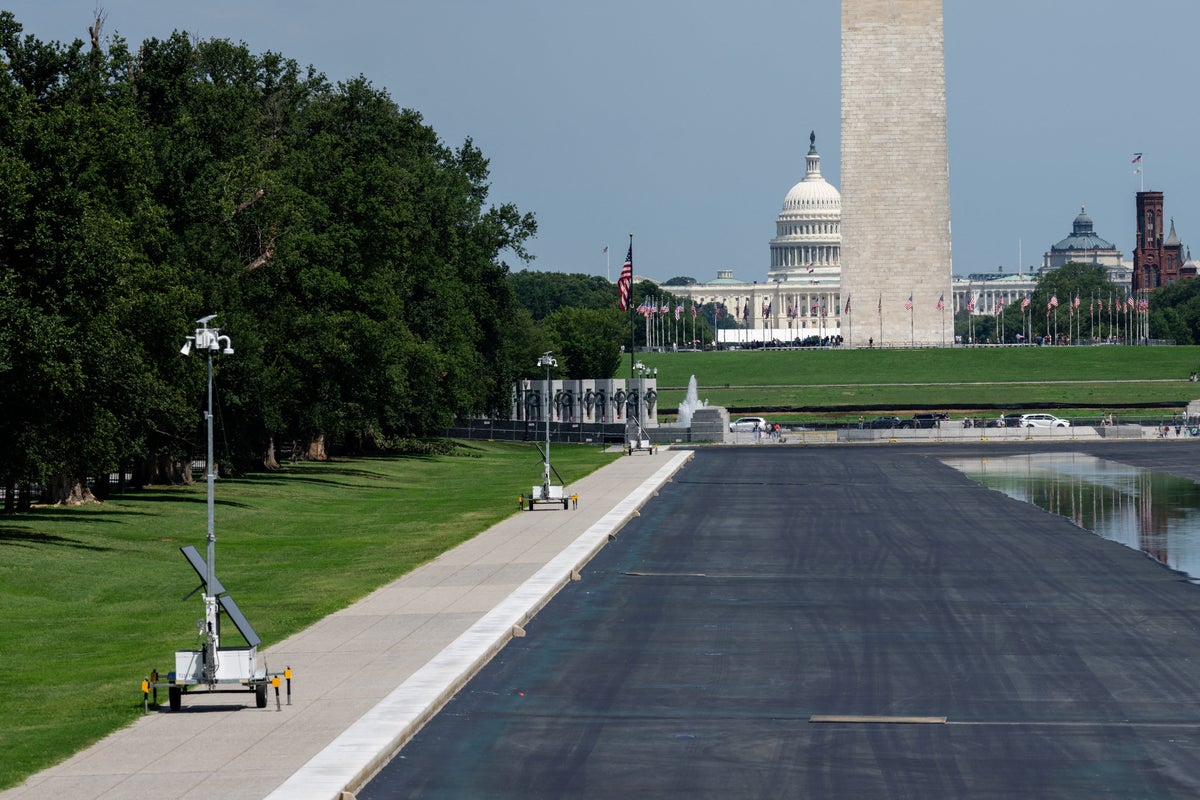
The machinery of federal prosecution rarely breaks down with such public theatricality. When U.S. Attorney Jeanine Pirro’s office quietly filed to dismiss felony vandalism charges against former Olympic canoeist David Hearn, it did more than end a single absurd court case. It unmasked an administration desperate to mask infrastructure failure behind the heavy hand of the criminal justice system.
The fallout was swift. President Trump accused his handpicked prosecutor of folding like an umbrella, publicly chastising her in the Oval Office. Yet the collapse of the case—quickly followed by the quiet dismissal of misdemeanor charges against three others, including Justin Carreno, Sophie Dennison-Gibby, and Cameron Thiers—was inevitable. Reality collided with political narrative. The Lincoln Memorial’s newly revamped basin was not destroyed by malicious saboteurs. It was undone by a rushed, botched renovation schedule.
To understand how the Department of Justice ended up arresting cyclists for touching loose plastic, one must examine the frantic timeline of the capital's preparatory push for the nation's 250th anniversary. The project was meant to be a swift architectural triumph. Instead, ballooning costs and compounding construction errors turned the basin into an embarrassment of peeling liners and algae blooms.
When the physical proof of poor workmanship began peeling away from the concrete walls, accountability evaporated. Officials chose a convenient scapegoat. They blamed shadowy vandals armed with box cutters.
Enter David Hearn. A sixty-seven-year-old athlete taking a routine bike ride, stopping to poke at a strip of synthetic lining that was already floating loose in the water. For this, he faced a felony indictment and the prospect of a decade behind bars. The prosecution’s initial posture was aggressive, framed by high-profile press conferences warning that civic order itself was under siege.
The legal foundation crumbled the moment discovery phase requirements forced prosecutors to look at actual internal documents from the Department of the Interior. Those files revealed a catalog of waterproofing failures, weather setbacks, and hurried application processes that predated Hearn’s afternoon bike ride. Confronted by a skeptical judiciary and a defense team ready to expose the systemic flaws of the renovation during a September trial, the U.S. Attorney’s office chose retreat over public humiliation in court.
The subsequent public friction between the White House and the Justice Department underscores an uncomfortable truth for the administration. Executive pressure to project flawless competence can warp prosecutorial discretion. Prosecutors are supposed to weigh facts independently. Here, the facts were subordinated to a political script until internal documentation made further pursuit legally untenable.
The dismissal of the remaining misdemeanor cases signals a quiet containment strategy. The government is attempting to sweep a fabricated crisis under the rug. For the defendants who spent weeks or months under a legal cloud, the damage extends far beyond the courtroom. Careers were disrupted, reputations smeared, and state power weaponized over a construction defect.
The concrete pool at the foot of the Lincoln Memorial remains filled with water, but the legal wreckage surrounding it is entirely dry. No amount of presidential bluster can rewrite the engineering reports, and no angry reprimand can disguise the fact that the state attempted to jail citizens for the consequences of its own haste.