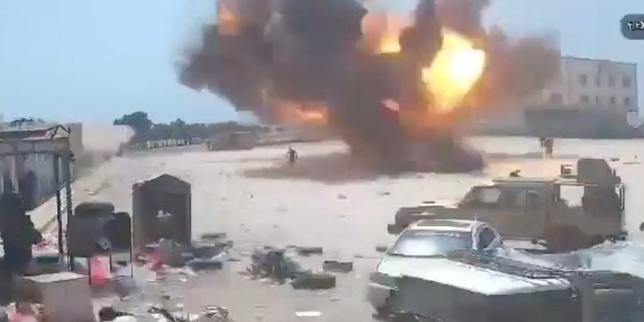
The fragile calm that once offered a glimmer of hope across the Arabian Peninsula has shattered. Yemen finds itself plunged back into open warfare, and the diplomatic architecture painstakingly built over recent years is unraveling fast. When Houthi authorities recently came forward to accuse Saudi Arabia of launching lethal airstrikes targeting civilian infrastructure and strategic ports, it wasn't just another routine political grievance. It signaled a dangerous, full-scale return to hostilities that threatens regional stability from the Red Sea to the Gulf.
If you've been trying to make sense of why old fault lines are erupting with such ferocity right now, you aren't alone. Most international coverage treats these events as isolated skirmishes. They aren't. They represent a systemic collapse of deterrence, driven by shifting regional alliances, reopened maritime flashpoints, and a total breakdown of peace talks.
The Anatomy of the New Escalation
To understand the weight of these recent accusations, you have to look past the headlines and examine the ground reality. The conflict in Yemen never truly found a permanent political resolution after years of civil war. Instead, it drifted into a prolonged stalemate punctuated by fragile truces. That stalemate ended abruptly when regional tensions—supercharged by broader Middle Eastern conflicts involving Iran, proxy networks, and Western interventions—spilled directly back into Yemeni territory.
Houthi officials have persistently pointed fingers at Riyadh, claiming that renewed coalition bombing campaigns have struck densely populated zones, civilian housing near industrial hubs, and vital Red Sea supply lines. On the other side, regional security analysts note that these accusations coincide with a massive spike in Houthi drone and missile launches directed at Saudi infrastructure, including key oil facilities and airports.
It’s a classic, dangerous escalation loop. One side strikes or claims a provocation; the other retaliates with ballistic capabilities.
Why the Red Sea and Bab el-Mandeb Remain the Real Target
You cannot separate the war inside Yemen from the geopolitical choke points surrounding it. The Bab el-Mandeb strait and the wider Red Sea corridor are the economic lifeblood of international trade. When Houthi forces consolidated their grip on vital coastal strips, they secured massive strategic leverage over global shipping lanes.
Saudi Arabia, sharing a long and porous border with Yemen, views this heavily armed presence on its southern flank as an existential security threat. Riyadh's active intervention and alignment with the internationally recognized government are designed to push back against this encirclement. Meanwhile, the Houthis frame every coalition airstrike as proof of foreign aggression, using these casualties to rally domestic support and justify expanding their maritime blockade tactics against regional shipping.
The human cost of this tit-for-tat violence is catastrophic. Families displaced multiple times, basic food and medical supplies throttled by blockades, and local infrastructure reduced to rubble. Every time an airstrike is reported or a retaliatory missile hits an airfield, ordinary Yemenis pay the price for a proxy war that shows zero signs of cooling down.
What Most People Get Wrong About the Yemen Stalemate
A common misconception is that this is purely a domestic civil war between local factions. While internal power struggles laid the groundwork back in 2014, the trajectory of the country is now dictated by macro-level geopolitics. The involvement of external actors means local ceasefires are entirely vulnerable to shifts in foreign policy in Washington, Tehran, and Riyadh.
Furthermore, expecting a neat diplomatic resolution anytime soon ignores the deep-seated mistrust on both sides. The Houthis have weaponized their strategic geography, while Saudi Arabia and its allies are locked into a defensive posture that leaves very little room for diplomatic compromise.
As long as regional flashpoints remain unaddressed, accusations of deadly airstrikes will keep rolling out of Sanaa, and defensive interceptions will light up the night skies over Saudi cities. The path forward requires breaking this cycle of retaliation, yet every fresh explosion makes that outcome harder to reach. Keep a close eye on the maritime corridors and border skirmishes—they remain the true barometers of where this war is heading next.