The recent escalation of kinetic military action against Iranian infrastructure has done more than just damage physical facilities. It has effectively shredded the delicate, behind-the-scenes progress that diplomats had painstakingly assembled over the last eighteen months. While the public narrative often focuses on the immediate tactical success of these strikes, the strategic fallout is far more severe. We are witnessing the systematic dismantling of the diplomatic track, leaving both Washington and Tehran with fewer options that don’t involve open warfare.
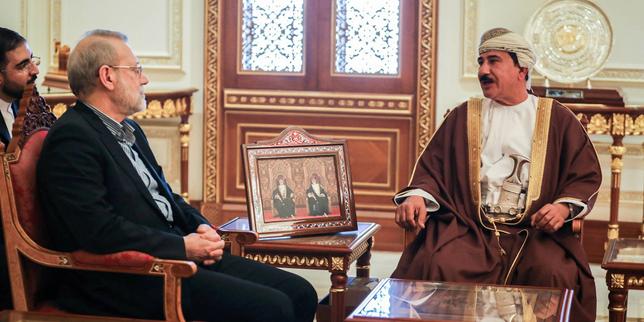
For months, back-channel communications in Oman and Qatar had been signaling a potential "freeze-for-freeze" agreement. The logic was simple. Iran would cap its uranium enrichment levels and allow increased oversight by the International Atomic Energy Agency (IAEA), and in exchange, the United States would signal a relaxed enforcement of certain oil sanctions. This wasn't a grand bargain, but it was a pressure valve. That valve has now been hammered shut.
The Mirage of Tactical Success
Military strategists often fall into the trap of measuring success by the number of centrifuges disabled or the square footage of a destroyed research wing. This is a narrow, dangerous metric. When a joint Israeli-American operation—whether through cyber-warfare or direct kinetic strikes—hits an Iranian site, it triggers a predictable and aggressive domestic reaction within the Islamic Republic.
The hardliners in Tehran, who have always viewed negotiations as a Western trap, now have the ultimate proof for their argument. They can point to the smoking ruins and tell the Supreme Leader that diplomacy is not just futile but a security risk. Every time a strike occurs, the leverage held by the Iranian Ministry of Foreign Affairs evaporates. The power shifts instantly to the Islamic Revolutionary Guard Corps (IRGC), whose mandate is not talking, but retaliating.
We have seen this cycle before, yet the current iteration feels final. The technical "breakout time"—the period Iran would need to produce enough weapons-grade uranium for a single nuclear device—has shrunk from months to mere days. In this high-stakes environment, physical sabotage acts as an accelerant rather than a deterrent.
The Death of the Reformist Mandate
Inside Iran, the political cost of these strikes is measured in the silence of the moderates. Any official suggesting a return to the negotiating table right now is effectively committing political suicide. The optics of talking to a country that is simultaneously bombing your soil are impossible to manage, even for the most seasoned diplomats.
The West often underestimates how these attacks consolidate power within the most radical elements of the Iranian state. The "gray zone" of diplomacy requires a certain level of plausible deniability and trust. When that is replaced by open hostility, the "security state" takes over every facet of governance.
- Enrichment Escalation: In response to the latest strikes, Iran has already signaled its intent to install more advanced centrifuges at the Fordow and Natanz facilities.
- Transparency Rollback: Cooperation with IAEA inspectors, which was already tenuous, has hit a new low. Cameras are being turned off and visas for inspectors are being denied.
- Regional Proxy Activation: The "Axis of Resistance" sees these strikes as a green light to increase pressure on Western assets in Iraq, Syria, and Lebanon.
This isn't just a setback. It is a fundamental shift in the regional order.
The Washington Disconnect
In Washington, the internal friction between the State Department and the Pentagon has reached a boiling point. Diplomats argue that the strikes have compromised years of intelligence gathering and relationship building. Meanwhile, the hawks argue that Iran only understands the language of force and that any progress made in Oman was an illusion designed to buy Tehran time.
The reality is that the U.S. is currently operating without a coherent long-term strategy. If the goal is to prevent a nuclear-armed Iran, the current path is failing. Military strikes can delay a program, but they cannot erase the scientific knowledge required to build a bomb. In fact, by driving the program further underground and into more hardened facilities, these strikes make future monitoring nearly impossible.
The Iranian nuclear program is no longer a collection of pipes and wires that can be dismantled with a well-placed missile. It is a decentralized, highly advanced technological endeavor. You cannot bomb an equation.
The Intelligence Vacuum
One of the most overlooked consequences of the recent military action is the sudden blindness of Western intelligence agencies. Diplomacy provided a framework for monitoring. Even the most flawed deal included verification protocols that gave the world a window into what was happening inside Isfahan and Natanz.
Without that window, we are left with guesswork. Satellite imagery can show us new construction, but it cannot tell us the enrichment level of the gas inside a specific centrifuge. It cannot tell us the intent of the leadership. When we lose the diplomatic track, we lose the ability to verify. This leads to "worst-case scenario" planning, which almost always ends in conflict.
The risk of a "warm" war turning into a "hot" one has never been higher. Miscalculation is the greatest threat. If an Iranian retaliatory strike kills a significant number of Western personnel, or if an Israeli strike hits a target that results in massive civilian casualties, the ladder of escalation becomes impossible to descend.
The Economic Equation
The failure of these negotiations also has a direct impact on global energy markets. A rehabilitated Iran could potentially bring millions of barrels of oil back to the legitimate market, stabilizing prices and weakening the influence of other volatile producers. By killing the negotiations, the West is ensuring that Iranian oil stays in the "black market," primarily flowing to China at a discount.
This strengthens the Tehran-Beijing-Moscow axis. Iran provides drones and energy; Russia provides diplomatic cover and military technology; China provides the economic lifeline. This trio is finding that they don't need the Western financial system as much as they once did. The "maximum pressure" campaign has reached a point of diminishing returns. You cannot further isolate a country that has already built a parallel economy with the world’s rising superpower.
The Technical Threshold
The physics of the situation are cold and unforgiving. According to current estimates, Iran possesses enough highly enriched uranium (HEU) to produce several nuclear warheads if they choose to make the final push to 90 percent.
$U_{235}$ enrichment follows a non-linear effort curve. The move from 0.7 percent (natural uranium) to 20 percent requires about 90 percent of the total work needed to reach weapons-grade. Once a nation has mastered 60 percent enrichment—as Iran has—the remaining jump to 90 percent is technically trivial. It is a political decision, not a scientific hurdle.
By removing the diplomatic incentives for Iran to stay below that threshold, the West is essentially daring them to cross it. It is a gamble of breathtaking proportions.
Beyond the Centrifuges
The focus on nuclear facilities often ignores the rapid advancements Iran has made in ballistic missile and drone technology. These systems are the delivery mechanisms for a potential payload, and they have been battle-tested in Ukraine and the Middle East.
The recent strikes were supposed to signal strength, but they may have inadvertently signaled desperation. If the only tool left in the box is a hammer, every problem starts to look like a nail. But the Iranian nuclear issue is a complex lock, and the hammer is more likely to break the mechanism entirely than to open it.
The diplomatic "carrots" are gone. The "sticks" are being used with increasing frequency and decreasing effectiveness. We are entering a phase where the only remaining question is how the inevitable confrontation will begin.
The Illusion of Containment
Western leaders often speak of "containing" Iran as if it were a static entity. It is not. The Iranian state is an adaptive, resilient actor that has spent forty years learning how to bypass sanctions and survive external pressure.
The recent military actions have proved to the Iranian leadership that their "strategic patience" was a mistake. They are now moving toward a doctrine of "strategic defiance." This shift is reflected in their rhetoric, their military posturing, and their refusal to engage with European intermediaries.
The bridge to a peaceful resolution hasn't just been burned; the pillars have been dynamited.
For the international community, the cost of this failure will be measured in decades of instability. The proliferation of nuclear weapons in the Middle East is no longer a distant nightmare; it is a looming reality. If Iran crosses the threshold, Saudi Arabia and Turkey will likely follow, ending the era of nuclear non-proliferation in one of the most volatile regions on Earth.
Every strike on a facility in Isfahan or a laboratory in Tehran is a vote for that future. The diplomats have been ordered out of the room, and the generals have taken their place. In the world of high-stakes geopolitics, once the talking stops, the clocks start ticking toward midnight.
The next move won't be made at a mahogany table in Geneva. It will be made in the bunkers and command centers where the final calculations for a nuclear state are being finalized. There are no more "minor" escalations. Every action now carries the weight of a total regional realignment.