Donald Trump isn't exactly known for staying the course when he thinks a better deal—or a bigger threat—is on the horizon. If you've been following his rhetoric since he first stepped onto the political stage, his stance on Iran has looked like a jagged mountain range. One day it's "maximum pressure" and pulling out of the nuclear deal; the next, he's suggesting he’d sit down for a chat with Tehran without any preconditions. But lately, something shifted. It wasn't just one thing. It was a series of intelligence briefings, failed back-channel diplomacies, and a changing regional map that turned a skeptical businessman into a hardline strategist.
Most people think he’s just being unpredictable. They're wrong. There’s a logic to the shift if you look at the specific events that forced his hand.
The intelligence reports that changed the game
You can’t talk about Trump’s current posture without talking about the hacking and the plots. In mid-2024, the U.S. intelligence community dropped a bombshell that wasn't just about regional influence or proxy wars. It was personal. Reports from the FBI and the Office of the Director of National Intelligence (ODNI) confirmed that Iranian hackers had successfully breached his campaign’s internal communications.
When a foreign power tries to tip the scales of an American election by stealing emails, it stops being a policy debate. It becomes a grudge. But it went deeper. Intelligence officials briefed the former president on credible, specific threats against his life and the lives of his former cabinet members. We’re talking about real-world assassination plots orchestrated by the Islamic Revolutionary Guard Corps (IRGC) as retaliation for the 2020 strike on Qasem Soleimani.
I’ve seen how these briefings work. They don't just hand you a folder; they show you the "how" and the "who." For a man who views the world through the lens of strength and respect, finding out a regime is actively trying to take you off the board changes the math. You don't negotiate with someone who’s trying to kill you. You squeeze them.
Failed back channels and the end of the grand bargain
For a long time, Trump held onto the idea that he could be the one to bridge the gap that every president since 1979 failed to cross. He genuinely believed his "Art of the Deal" style could result in a massive, historic treaty that would make the JCPOA look like a high school project. He wanted the photo op. He wanted the Nobel.
But Tehran didn't play along. While Trump was signaling an opening for talks, Supreme Leader Ali Khamenei was doubled down. The Iranians didn't just reject the overtures; they mocked them. In the world of high-stakes diplomacy, being ignored is often worse than being attacked. The realization that the Iranian leadership had no intention of giving him a "win" effectively killed the diplomatic track in his mind.
The strategy transitioned from "lure them to the table" to "break the table." This is why we've seen a return to the most aggressive version of economic warfare. The goal isn't just to stop a bomb anymore. It’s to ensure the regime doesn't have a spare cent to spend on anything beyond basic survival.
How the Abraham Accords created a new reality
The Middle East isn't what it was ten years ago. The Abraham Accords changed the floor plan of the entire region. Suddenly, Israel, the UAE, Bahrain, and Morocco were on the same team, and that team's primary common interest was containing Iran.
Trump saw that his previous "America First" instinct to pull out of the region entirely didn't have to mean leaving a vacuum. He could stay involved by proxy. By strengthening this new Arab-Israeli alliance, he realized he could keep Iran in a box without committing thousands of American boots to the ground. This regional buy-in gave him the confidence to be more aggressive. He isn't acting alone; he's acting as the chairman of a very powerful, very motivated board of regional directors.
The nuclear threshold and the ticking clock
We have to be honest about the math. Iran is closer to a nuclear weapon today than at any point in history. According to recent International Atomic Energy Agency (IAEA) data, they have enough highly enriched uranium to produce several weapons if they choose to "break out."
In the past, Trump thought he had time. He thought the sanctions would work fast enough to force a deal before the centrifuges spun too far. He was wrong about the timeline. The "new posture" reflects a sense of urgency. The window for "maximum pressure" to actually work is closing. This explains the shift toward more kinetic options—or at least the very public signaling that those options are back on the table. He's realized that "pressure" without a credible threat of force is just noise.
Why the old maximum pressure didn't finish the job
- The China Factor: Beijing kept buying Iranian oil through "dark fleets," providing a lifeline that the U.S. couldn't easily cut.
- Regional Fatigue: Some allies were worried that too much pressure would lead to a full-scale war they weren't ready for.
- Internal Resilience: The Iranian regime proved more capable of suppressing internal dissent than Washington anticipated.
The impact of the October 7 attacks
You can't ignore the ripple effect of the Hamas attacks on Israel. While there's no direct evidence that Iran micromanaged the specific timing of the October 7 massacre, their fingerprints are all over the funding and training. For Trump, this was a moment of clarity. It showed that the "Iranian Octopus"—with its tentacles in Gaza, Lebanon, Yemen, and Iraq—wasn't just a theoretical threat. It was a clear and present danger to the entire global order.
This event pushed him away from the "let the regional players sort it out" mentality. It convinced him that as long as the head of the octopus is intact in Tehran, the tentacles will keep striking. This is why his rhetoric has sharpened. He’s no longer just talking about a better deal; he’s talking about dismantling the infrastructure that allows these proxies to exist.
What this means for your wallet and your security
This isn't just a political chess game. It has real-world consequences for everyone. If this hardline posture leads to a confrontation in the Strait of Hormuz, oil prices will spike. We’re talking about 20% of the world’s oil passing through a narrow chokepoint.
But there’s also the security side. A more aggressive stance means a higher likelihood of cyberattacks on U.S. infrastructure. We've already seen what they can do to a campaign; imagine what they could do to a power grid or a water treatment plant. Trump’s bet is that the short-term risk of aggression is better than the long-term catastrophe of a nuclear-armed Iran.
What to watch for next
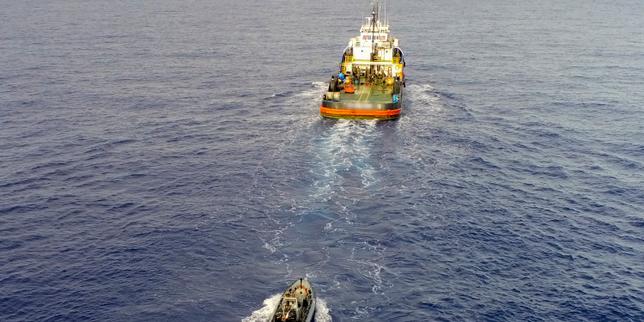
Keep an eye on the oil markets. If the U.S. starts targeting the "dark fleet" tankers heading to China, that's a sign the new posture is moving from words to action. Also, watch the rhetoric coming out of Riyadh. If Saudi Arabia moves closer to a formal defense pact with the U.S. or a normalization deal with Israel, the Iranian isolation will be complete.
The era of "maybe we can talk" is over for now. We're entering a phase where the only language being spoken is leverage. Trump isn't looking for a seat at the table anymore; he’s looking to own the room. Whether that leads to a breakthrough or a breakdown is the $50 trillion question.
If you want to stay ahead of this, start tracking the specific sanctions being leveled against third-party shipping firms in Southeast Asia. That’s where the real war is being fought right now—in the ledgers and on the high seas, far away from the cameras.