For most of human history, we have shared our dwellings with squatters we never truly knew.
They occupy the upper corners of our bedrooms, the dim recesses of our basements, and the spaces beneath our floorboards. They ask for nothing, make no noise, and weave intricate silk architecture that we sweep away with long-handled brooms whenever we feel like tidying up. We call them pests. We call them a nuisance. We rarely stop to think that every single one of them is a tiny, four-legged detective holding a localized census of our immediate environment. You might also find this similar coverage useful: Why This 324 Million Year Old Swimming Insect Changes Everything We Know.
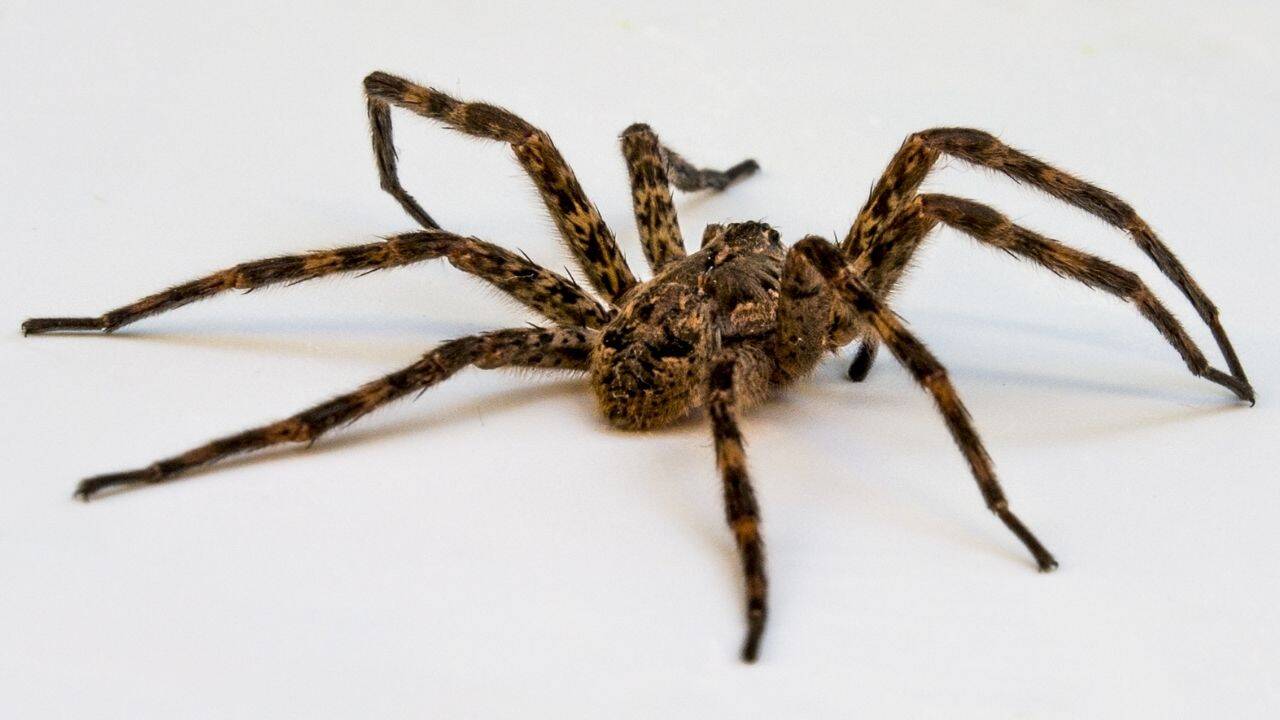
Consider a house spider resting quietly behind an old bookshelf. To the casual observer, it is simply an arthropod waiting out the afternoon. But to a modern ecologist, that same spider is something much more profound: a biological diary.
Every bug that crawls across the living room rug, every nocturnal moth that flutters too close to the baseboard, every stealthy beetle navigating the damp perimeter of the foundation—sooner or later, these creatures cross paths with the web. When they do, they become part of a record. The spider consumes them. The body is digested, but the genetic blueprint remains. As discussed in detailed reports by Live Science, the effects are worth noting.
For a long time, tracking local biodiversity meant long, tedious hours of fieldwork. Entomologists would set sticky traps, walk transects with clipboards, or spend sleepless nights shining flashlights into the brush, hoping to catch a glimpse of elusive nocturnal species. It was slow work. It was incomplete work. Nature is notoriously good at hiding, especially the microscopic and the midnight-frequenting populations that scurry the moment a floorboard creaks.
Then, scientists decided to look inside the eight-legged tenants.
By extracting the stomach contents of spiders and analyzing the environmental DNA left behind within their digestive tracts, researchers discovered something astonishing. These web-spinners are essentially vacuuming up the genetic signature of an entire ecosystem. When you sequence the DNA found in a common cellar spider, you are not just learning what it ate for breakfast. You are reading a comprehensive catalog of the insects, rodents, and microfauna sharing your exact postcode.
Let us step into a hypothetical scenario to understand the weight of this. Imagine Dr. Aris Thorne, an urban ecologist standing in a cramped apartment in the heart of a bustling metropolis. To the naked eye, the apartment is sterile, clean, and seemingly devoid of wild life aside from a houseplant in the corner and a stray fruit fly near the sink. Standard urban surveys would mark this zone as low-diversity—a concrete box largely disconnected from the natural world.
Dr. Thorne gently captures a few spiders tucked away in the bathroom and behind the radiator. He brings them back to the lab, cracks open their tiny abdomens metaphorically via molecular analysis, and runs the genetic sequences.
The results shock even him.
That sterile apartment is secretly hosting a complex biological network. The spider DNA reveals the presence of three distinct species of invasive beetles that burrow in the drywall, a rare nocturnal moth species thought to be extinct in that county for a decade, and microscopic traces of a woodland rodent that must have hitched a ride in a cardboard box from a rural warehouse three weeks prior. The apartment is not an isolated box. It is a bustling transit hub for invisible neighbors.
This is where the paradigm of how we view our homes begins to shift. We are never truly alone. We live surrounded by a sprawling, breathing tapestry of life that operates entirely outside our conscious awareness.
Why does this matter? Because conservation and urban planning have long suffered from a blind spot. We protect the grand, sweeping landscapes—the national parks, the deep forests, the coral reefs. Yet we understand shockingly little about the micro-ecosystems thriving right beneath our kitchen sinks. If an invasive species begins to take root in a neighborhood, or if a beneficial pollinator population collapses in a specific suburban block, standard surveillance methods might miss the warning signs until it is far too late.
Spiders bridge that gap. They are distributed everywhere humans live. They do not require expensive camera traps or complicated citizen science apps. They are already on the job, working twenty-four hours a day, filtering their surroundings through their own predatory habits.
To make this concrete, think of the spider web as a biological security camera that records everything that moves, but instead of saving video files, it stores genetic breadcrumbs.
Of course, looking at the natural world this way requires a certain shedding of our inherited discomforts. Most people recoil at the sight of an arachnid scuttling across the wall. It triggers an ancient, hardwired survival instinct. We are primates, after all, and things with too many legs have historically proven dangerous to touch. But that knee-jerk aversion has blinded us to their utility. We spend billions of dollars globally on chemical pest control, wiping out the very creatures that act as our primary line of defense against true nuisances like mosquitoes and disease-carrying flies, while simultaneously destroying our best biological informants.
When we learn to read the contents of a spider's stomach, we are essentially learning to listen to the whispers of the room we are sitting in.
Consider what happens next in the field of molecular ecology. Researchers are already scaling this technique up, gathering spiders from entire neighborhoods, parks, and agricultural belts to map out shifting biodiversity in real time. Climate change is driving species into new territories at a staggering rate. Pests are migrating northward; native insects are retreating. By sampling the arachnid population of a single town over a few summers, scientists can watch these migrations unfold with microscopic precision, long before the changes become obvious to the naked eye.
There is a quiet poetry in this. The creature we instinctively swat away with a rolled-up magazine is, in reality, the most dedicated historian of our immediate environment. It stays in the shadows. It does not demand applause. It simply spins its web, eats, digests, and waits for someone clever enough to ask it what is happening in the dark.
Next time you spot a slender, long-legged silhouette waiting motionlessly in the corner of your ceiling, pause for a moment before you reach for the broom. Do not see an intruder. See a librarian. See an archivist of the unseen world.
It holds the stories of every creeping, crawling, flying thing that wandered through your life while you were busy looking the other way. And the page is ready to be read.