A cold wind sweeps across the Kazakh steppe, whistling through the gleaming, futuristic towers of Astana. Thousands of miles away, a humid breeze rolls off Victoria Harbour, weaving between the dense concrete canyons of Hong Kong. On the surface, these two places share nothing. One is a vast, landlocked giant rich with minerals and history; the other is a crowded maritime rock built on finance and trade. Yet, global economics has a strange way of folding the map until opposites touch.
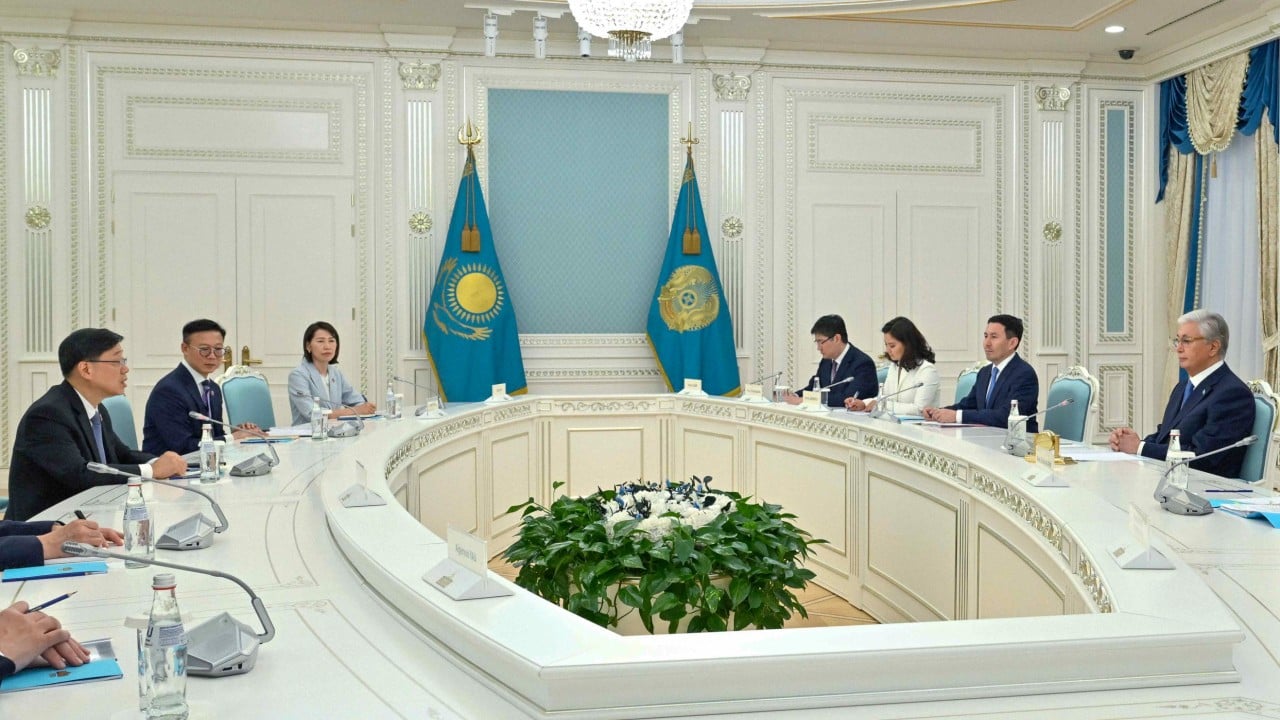
When Hong Kong’s Chief Executive John Lee stood before Kazakh business leaders, he wasn't just delivering a standard diplomatic pitch. He was trying to solve a puzzle. Kazakhstan possesses the raw materials the world craves. Hong Kong possesses the financial plumbing the world uses. The connection between them is invisible, but it is real.
To understand why this matters, look away from the press releases and focus on a hypothetical logistics manager we will call Almas. Almas sits in an office in Almaty, staring at a spreadsheet. He has premium Kazakh goods—perhaps agricultural products or specialized components—and he wants to sell them to the booming markets of Southeast Asia. He faces a mountain of friction. Currency conversions, unfamiliar legal frameworks, and a lack of direct investment capital stand in his way.
Almas does not need rhetoric. He needs a bridge.
The Financial Super-Connector
Hong Kong operates under a unique framework known as "one country, two systems." This arrangement gives the city a distinct advantage. It is part of China, yet it maintains its own legal system based on common law, its own currency pegged to the US dollar, and its own free-market economic policies.
For a Central Asian company, entering mainland China directly can feel daunting. The regulatory environment is complex. Capital controls are tight. Hong Kong functions as a legal and financial buffer zone. It is a place where international businesses feel safe because the rules are familiar, transparent, and strictly enforced.
Think of it as a financial translator. When Kazakhstan wants to talk to Asian markets, Hong Kong translates the risk, the currency, and the legal compliance into a language global investors understand.
The city boasts one of the deepest capital markets in the world. It is a leading hub for offshore Renminbi business. If Kazakhstani enterprises want to raise capital through initial public offerings or issue bonds—including green bonds to fund sustainable energy projects—Hong Kong offers an established, liquid marketplace. It connects Central Asian supply with East Asian demand.
Beyond the Oil Wells
Kazakhstan is famous for its vast natural resources. It is a major exporter of oil, uranium, and minerals. But relying solely on digging wealth out of the ground is a volatile strategy. Commodities rise and fall on the whims of global markets. The leadership in Astana knows this, which is why they are pushing hard to diversify their economy into technology, logistics, and advanced services.
This is where the partnership turns into something more interesting than a simple trade deal. Hong Kong is shifting its own economic focus toward innovation and technology, particularly within the Greater Bay Area—a mega-region that includes Shenzhen and Guangzhou.
Consider what happens when Kazakh ingenuity meets this ecosystem. Kazakhstan has a young, highly educated, tech-savvy population. By partnering with Hong Kong, Kazakh startups gain access to a massive venture capital pool and a launchpad into the wider Asian market. It moves the conversation from raw resources to intellectual property.
Trade facilitation is another friction point. John Lee’s recent push emphasized free trade agreements and investment promotion protection agreements. These legal frameworks sound dry, but they are the bedrock of commerce. They give businesses the confidence that their investments will not be arbitrarily seized or tangled in bureaucratic red tape.
The Human Geography of Trade
Economics is ultimately driven by people, not percentages. During the high-level meetings, the focus repeatedly returned to strengthening ties between chambers of commerce, cultural exchanges, and tourism.
Air connectivity is the lifeblood of this relationship. Without direct flights, business relationships wither. People need to see each other, shake hands, and tour facilities. Plans to increase flight frequencies and ease visa restrictions are designed to turn an exhausting multi-day journey into a routine business trip.
When a Kazakh entrepreneur can fly to Hong Kong, pitch to investors, and return home with a funding commitment, the distance between Central Asia and the Pacific shrinks.
The geographic reality is shifting. For centuries, the Silk Road was a dusty overland trek across harsh terrain. Today, that route is being digitized and financialized. Kazakhstan sits at the heart of the Eurasian landmass, acting as the ultimate dry port and transit corridor. Hong Kong sits at the edge of the South China Sea, acting as the ultimate maritime and financial gateway.
They are the two anchors of a modern trade route. One manages the physical movement of goods across continents; the other manages the digital flow of capital that makes that movement possible.
The skyscrapers of Hong Kong and the windy plains of Astana are being pulled closer together by a shared economic necessity. The success of this alliance will not be measured by the signatures on Memorandums of Understanding. It will be measured by the new trade routes carved across the map, the startups that find funding, and the quiet confidence of a logistics manager in Almaty who realizes the entire Asian market is suddenly within his reach.