The coffee in the terminal cup has gone completely cold, a dark, motionless pond reflecting the sterile white glare of the ceiling lights. Around you, hundreds of people sit in rows of molded plastic chairs, scrolling on phones, whispering to children, listening for the scratchy announcements of gate changes. Everyone believes they are on earth. Everyone believes they are safe.
Then the glass shivers.
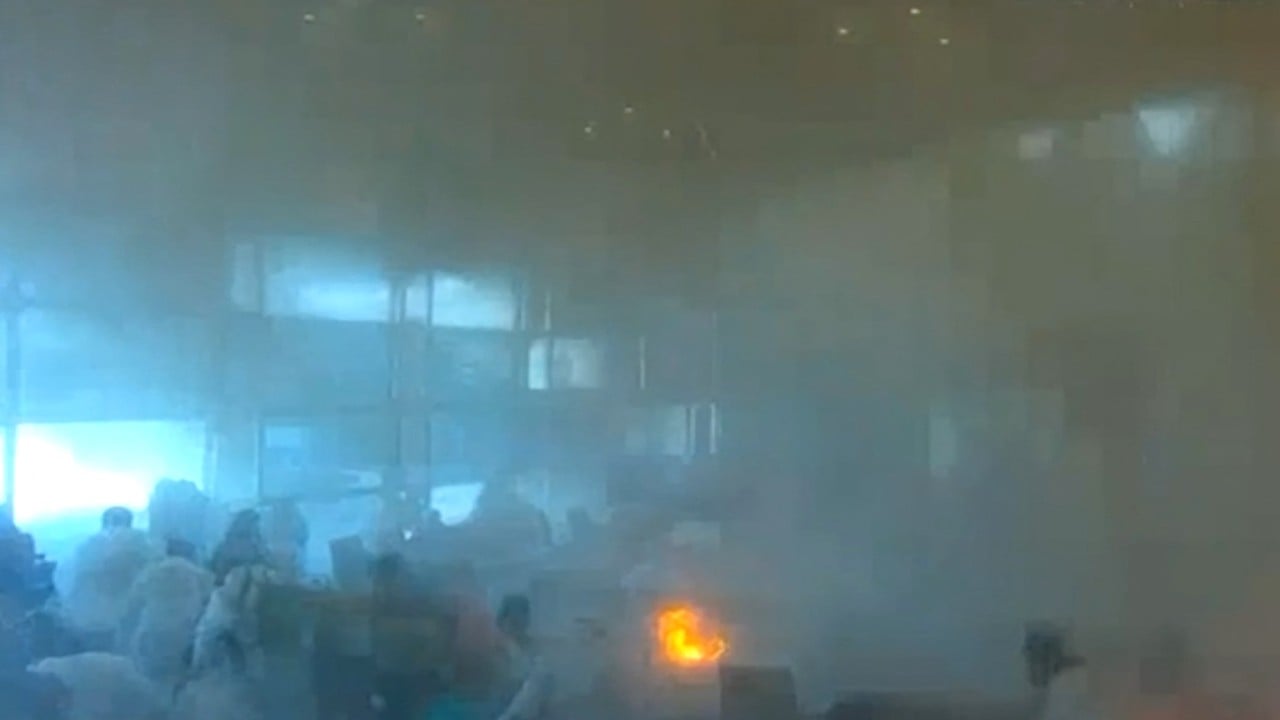
It is not a dramatic cinematic explosion at first. It is a deep, subterranean thrum that vibrates through the soles of your shoes before your ears even register the sound. A low growl tearing across the desert night. Outside, beyond the reinforced panes of the departure lounge, a streak of orange fire rips through the velvet blackness. The air pressure shifts. Someone drops a suitcase. A child starts to wail.
This is the reality etched into the tarmac of the Arabian Peninsula following a wave of fatal drone and missile attacks targeting civilian infrastructure, most notably hitting regional airports with devastating precision. The headlines call them security updates. They call them escalations. But out here, where the shrapnel hits the concrete and the smoke curls past the air traffic control towers, it is simply terror wearing the geometry of modern engineering.
To understand what is happening now, you have to look past the military briefings and the dry casualty counts. You have to trace the trajectory of a triangular delta-wing drone manufactured thousands of miles away, assembled in clandestine workshops, and programmed with GPS coordinates to find a crowded civilian runway in the dark.
Consider the anatomy of a strike.
It begins hours before impact, with a dull electric hum in a mountain province far across the border. A launch rail tilts toward the stars. A two-stroke engine catches, screaming into life with the sound of a lawnmower crossed with a chainsaw. Inside its plastic nose cone, a guidance chip bought off a commercial market locks onto a set of satellite coordinates. It does not know who is waiting at the arrival gates. It does not care. It only knows the math of the arc.
For years, the conflict involving Houthi forces and the Saudi-led coalition was framed as a distant border skirmish, a localized war fought in dusty wadis and forgotten mountain passes. The world grew comfortably numb to it. Analysts drew arrows on maps. Pundits debated geopolitical leverage over evening talk shows. But war has a gravity of its own. When stalemates harden on the ground, the battlefield inevitably reaches upward, stretching into the troposphere, seeking softer targets where the civilian heartbeat is loudest.
When the first fatal airport strike occurred, it shattered an illusion. Airports are modern cathedrals of movement, places where borders dissolve and humanity mingles in transit. They are supposed to be neutral ground, protected by the fragile social contracts of international law. By turning boarding gates into blast zones, the calculus of the entire region shifted overnight.
Panic is a contagious chemistry.
Step outside the terminal after the smoke clears, and the night air tastes of cordite and burnt jet fuel. Emergency vehicles strobe red and blue against the fuselage of a grounded airliner, throwing long, erratic shadows across the panic-stricken faces of ground crew and passengers alike. This is where the statistics live. Not in a spreadsheet, but in the white-knuckled grip of a father holding his daughter's hand behind a police barricade, watching rescue workers carry stretchers across the asphalt.
Subsequent drone and missile attacks did not merely test regional air defense systems; they tested human endurance. Every time a Patriot battery fires, screaming a counter-missile into the stratosphere to intercept a incoming threat, the night sky turns into a brilliant, terrifying theater of war. The flash is blinding. The thunderclap shatters windows for miles around. People wake up in their beds in Riyadh, in Khamis Mushait, in Abha, clutching their pillows, counting the seconds between the flash and the sound, calculating the distance between survival and catastrophe.
Yet, the most insidious part of this escalation is not the physical destruction. It is the normalization of fear.
We adapt to horrors with terrifying speed. Within days of a fatal strike, flights resume. Passengers queue up again, eyes hollow, shoulders tense, stepping through metal detectors with the heavy resignation of people walking a tightrope. They look up at the ceiling panels every time a loud noise echoes through the concourse. They glance nervously out the windows at the dark horizon. They have learned the new grammar of existence in the region: peace is only ever an intermission between sirens.
Behind the scenes, the military engineers and logistics officers work frantically to patch the holes in the sky. Sophisticated radar arrays sweep the horizon 24 hours a day, filtering through thousands of false alarms, migratory birds, and commercial traffic to find the tiny, lethal blips of loitering munitions. Billions of dollars in interceptor hardware are burned through the night sky like expensive fireworks, trading multi-million-dollar technology to blast apart cheap, consumer-grade carbon-fiber hulls packed with C4 explosives.
It is an asymmetric trap. The attackers do not need to win an air superiority campaign; they only need to puncture the psychological shield once in a while to cause maximum economic and emotional paralysis. Every delayed flight, every grounded carrier, every canceled cargo shipment is a victory for disruption.
And so the cycle deepens. More missiles follow the first. More defensive batteries are repositioned across the dunes and mountain ridges. The horizon grows busier with invisible threats and invisible shields, all converging on the lives of ordinary people who simply wanted to catch a flight home for the holidays, or open a shop, or sleep without wondering if the wind howling outside is a gale or an incoming engine.
There is no neat resolution to this story. No diplomatic magic wand will instantly silence the launch sites or erase the shrapnel scars from the tarmac. The smoke clears, but it leaves behind a permanent haze of uncertainty.
The next time you walk through a sprawling international airport, take a moment to look up at the massive glass panes framing the night sky. Listen to the hum of the air conditioning, the cheerful chime of boarding calls, the shuffling feet of travelers rushing toward their gates. Beneath that fragile veneer of normalcy runs a silent, humming tension—a reminder that the modern world is held together by paper-thin margins, and that the distance between peace and chaos is measured in the screaming seconds of a midnight sky.