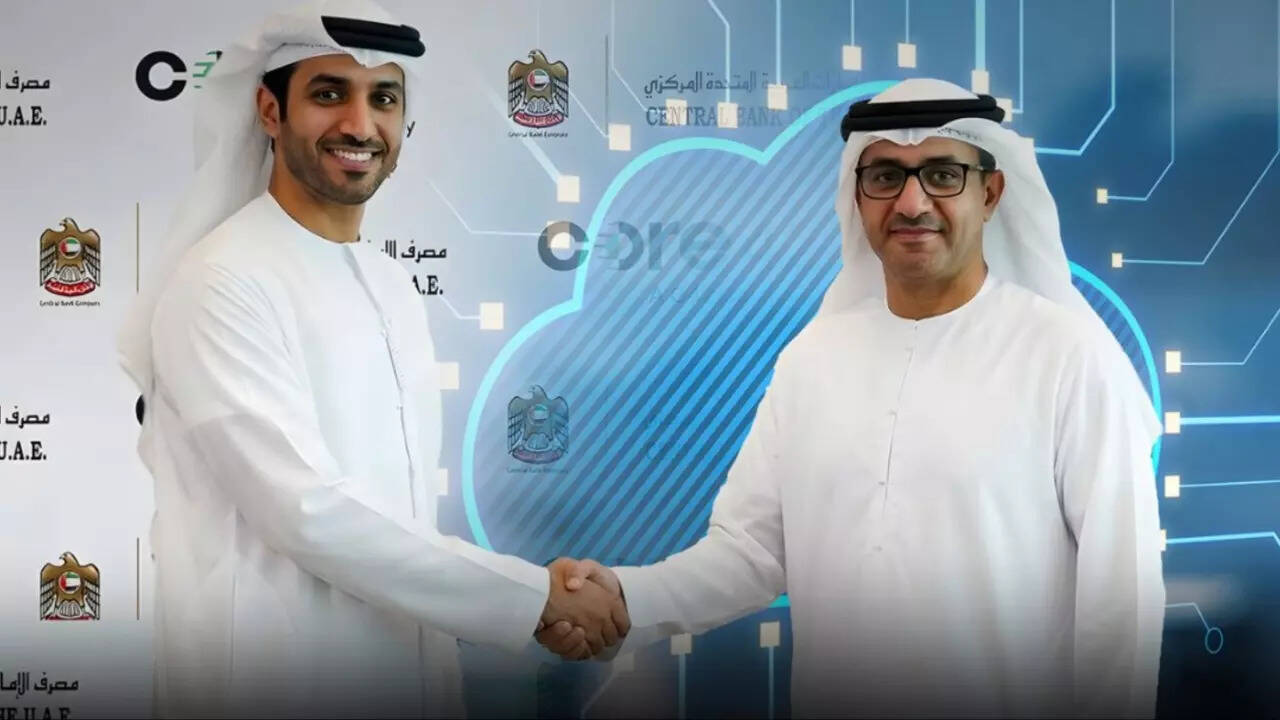
Central banks are finally admitting they are terrified. The UAE Central Bank’s announcement of a "world-first" sovereign financial cloud isn't the technological leap forward the press release wants you to believe. It is a digital moat. It is a desperate attempt to claw back control in a world where capital is increasingly bored by borders.
The industry is applauding the "secure digital finance" and the "AI-driven efficiency" because it sounds expensive and sophisticated. In reality, it is a signal that the era of open, globalized banking is being traded for a series of high-walled digital gardens. If you think this is about better banking for you, you are falling for the marketing. This is about data gravity and the death of the neutral internet.
The Myth of Secure Data Locality
The primary argument for a sovereign cloud is always "data sovereignty." The logic is simple: if the data sits on a server in Abu Dhabi rather than Virginia, it is safer.
This is a fundamental misunderstanding of how modern cybersecurity works. Security is a function of architecture and encryption, not geography. Hackers do not care about borders; they care about vulnerabilities. Moving data into a centralized, government-managed cloud creates a single, massive point of failure. It is the "Death Star" strategy of data management.
By forcing financial institutions to migrate to a state-sanctioned stack, the UAE is actually increasing systemic risk. In a decentralized world, a breach at one bank is a localized tragedy. In a sovereign cloud world, a single exploit in the underlying infrastructure could theoretically paralyze the entire nation’s financial system. We are trading agility for a false sense of territorial security.
AI is the New Justification for Total Surveillance
The "AI-powered" tag is the most cynical part of this rollout. What does AI actually do in a central bank cloud? It doesn't just "detect fraud." It builds a comprehensive, real-time map of every Dirham's movement, every credit score, and every investment pattern with a level of granularity that would make a 20th-century central planner weep with joy.
When a central bank controls the infrastructure (the cloud) and the intelligence (the AI), the line between "financial stability" and "social engineering" disappears.
- Scenario A: The AI identifies a liquidity crunch and automates a fix. (The press release version).
- Scenario B: The AI identifies "undesirable" capital flight and throttles transactions before the account holder even knows they’ve been flagged. (The reality of sovereign control).
This isn't just about efficiency. It’s about the "Programmability of Money." When the ledger lives in a government cloud, the government can set the rules for how that money is spent. That isn't a feature for the consumer; it is a leash.
Why the Global Tech Giants are Quietly Celebrating
You would think Microsoft, Amazon, and Google would be upset about a sovereign cloud stealing their thunder. They aren't. They are the ones building the plumbing.
These "sovereign" clouds are almost always built on the bones of existing Big Tech stacks—just with a localized sticker on the front. It is a brilliant business model for the providers: they get the massive government contracts without the headache of legal liability, as the sovereign entity takes the heat for data residency laws.
We are witnessing the "Franchising of Sovereignty." The UAE gets to claim independence, while the underlying hardware and software patents remain firmly in the hands of the same three or four companies that already control the world's data. It’s theater.
The Cost of the "Closed Loop" Economy
The hidden tax of this sovereign cloud is the death of competition.
Innovation thrives on friction and the ability to choose. When the Central Bank mandates a specific cloud environment for "security," they effectively kill the fintech startup that wants to build on a different, more agile stack. If your startup doesn't play well with the sovereign cloud’s API, you don't exist in the UAE market.
I have seen banks waste hundreds of millions trying to build "custom" internal platforms that are obsolete by the time the first line of code is deployed. Now, imagine that inefficiency scaled to an entire country. By the time this sovereign cloud is fully operational, the global DeFi (Decentralized Finance) space will have moved three generations ahead.
The UAE is building a magnificent, gold-plated fortress while the rest of the world is learning how to live without walls.
Real Talk: The Three Uncomfortable Truths
- It’s Not About Fraud: It’s about preventing capital flight. A sovereign cloud makes it much harder for wealth to exit the system without the state’s explicit permission.
- It’s Not About Speed: Localizing data often increases latency for global transactions. The "speed" mentioned in the news is administrative speed (how fast the government can audit you), not transactional speed for the user.
- It’s Not Voluntary: In three years, "using the cloud" will be a prerequisite for a banking license. Choice is being engineered out of the system.
The Decentralization Paradox
The UAE has spent years positioning itself as a hub for crypto and Web3. This sovereign cloud is the antithesis of those values.
You cannot claim to be the home of the decentralized future while building the world's most centralized financial infrastructure. One of these visions must die. If the sovereign cloud wins, the UAE becomes a very efficient, very modern version of an old-school command economy.
True financial innovation doesn't need a government-mandated cloud. It needs clear rules and the freedom to build on the best available technology, regardless of where the server is located.
Stop Asking if it’s "Secure" and Start Asking who has the Keys
The "People Also Ask" section of your brain is likely wondering: "Is my money safer in a sovereign cloud?"
The answer is: Yes, from hackers in a basement in Eastern Europe. No, from the whims of a policy shift in the capital.
When your financial existence is hosted on a single government-controlled stack, you are no longer a customer; you are a tenant. And as every tenant knows, the landlord can change the locks whenever they want.
This isn't a breakthrough. It's an ultimatum. Either join the state’s digital architecture or find yourself excluded from the future of finance. The "world’s first" sovereign cloud isn't a gift to the market—it's the end of the market as we knew it.
If you are a financial leader, stop nodding along to the "innovation" slides. Start looking for the exit ramps. The cloud is gathering, and it looks a lot more like a storm than a silver lining.