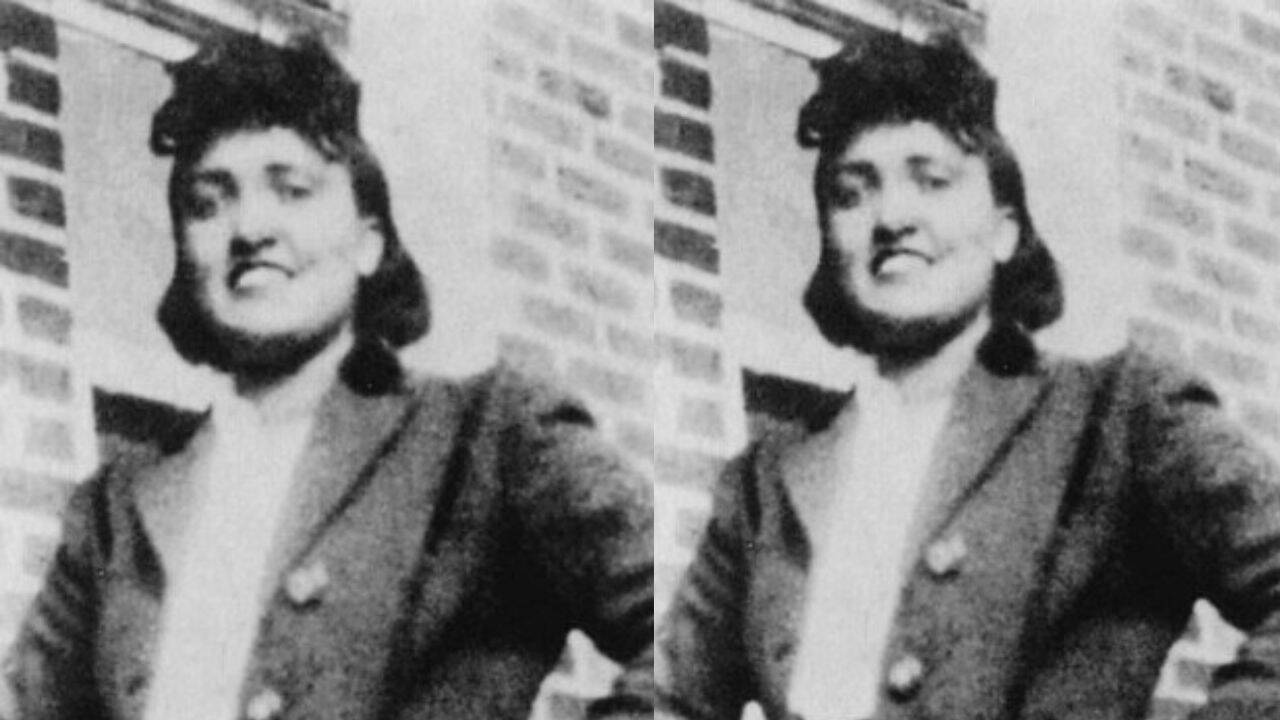
In 1951, a thirty-one-year-old mother of five walked into Johns Hopkins Hospital seeking relief from the agony of an aggressive cervical tumor. She left behind a legacy that would eventually touch almost every person on the planet, though she never gave permission for her body to be turned into a global commodity. Henrietta Lacks did not just die; she was harvested. Her cells, dubbed HeLa, became the first human cell line to survive and multiply outside the body indefinitely, fueling decades of scientific breakthroughs. While these cells helped create the polio vaccine and advanced cancer research, the reality remains that one of the most profitable assets in history was seized from a marginalized Black woman without her consent or knowledge.
The medical establishment often frames the HeLa saga as a foundational moment for bioethics. It is a convenient narrative. By treating the theft of her cells as a historical curiosity—a relic of a less sophisticated era—research institutions distance themselves from the fundamental inequality that allowed such an act to occur. This is not merely a story about the absence of paperwork; it is a story about the structural indifference that viewed Black bodies as raw material for white scientific advancement.
Consider the mechanics of this extraction. When doctors took those tissue samples, they weren’t just collecting data; they were initiating a commercial chain that would span generations. HeLa cells are not static; they are biological factories. They have traveled to space, survived nuclear explosions, and provided the bedrock for pharmaceutical empires. Throughout these decades of intense financial gain, the Lacks family lived in poverty, unable to afford the very medical treatments their mother’s cells had helped create. This disconnect reveals the true nature of the issue. When we talk about medical progress, we must ask who bears the cost and who gathers the harvest.
Modern defenders of clinical research argue that the field has evolved. They point to the Common Rule, Institutional Review Boards, and the implementation of informed consent as proof that we have moved past the era of exploitation. These protections are necessary. Yet, they are fundamentally reactive. They act as a dam built after the flood has already destroyed the town. Even today, the systems that govern the use of human biological material often obscure the role of the donor. We use terms like "de-identified tissue" to sanitize the process, stripping the human being of their identity to make the research feel cleaner, more objective, and easier to handle.
This sanitization has a direct impact on contemporary medical inequality. Because the history of medicine is littered with instances where marginalized communities were treated as test subjects rather than patients, a deep-seated distrust exists today. When medical organizations express surprise at low clinical trial participation rates in minority communities, they are ignoring the ghosts of these past practices. The legacy of Henrietta Lacks is not just a lesson in ethics; it is the reason why many families remain skeptical of a healthcare system that has proven itself capable of treating their bodies as property.
The struggle for acknowledgment was a multi-generational fight. The Lacks family did not receive a sudden apology; they spent decades forcing the hand of institutions that preferred the quiet status quo. Even when agreements were finally reached—such as the 2013 NIH arrangement to control access to the HeLa genome—these are essentially compromises. They do not reverse the original harm. They acknowledge it, categorize it, and attempt to manage it, but they cannot undo the fact that a woman’s life was reduced to a sequence of immortalized cells.
True accountability requires more than just plaques or symbolic settlements. It requires a hard shift in how we view ownership of our own biological data. In the current model, once a sample leaves your body, your legal rights over it effectively vanish. You become a non-entity in the subsequent journey of your own genetic code. If we are to address the systemic imbalances of the past, we need to move toward a model where patients maintain a permanent stake in their biological material. This would transform the donor from an object of research into a participant in the outcome.
Imagine a system where the usage of genetic material carries with it an inherent link to the donor’s lineage. This would be administratively heavy. It would disrupt the speed at which pharmaceutical companies currently churn out new therapies. But medicine is not solely an engineering problem. It is a social contract. When that contract is breached—as it was for Henrietta Lacks—it erodes the legitimacy of the entire endeavor.
We must stop viewing the Lacks story as a concluded chapter. It is the active, breathing foundation of modern biology. Every time a researcher orders a vial of HeLa cells, that transaction represents a decision to prioritize efficiency over equity. To honor Henrietta Lacks is not to celebrate her sacrifice, as if she had the autonomy to choose it. It is to recognize the stolen nature of her contribution and to demand that future advancements are not built upon the same broken ground. The cell line lives on, but the systems that birthed it are finally being forced to look in the mirror. The question is whether they will change, or merely find more efficient ways to keep taking.