The mainstream media loves a moral panic.
Every few months, a new "challenge" emerges on social media, sparking a wave of breathless articles, terrifying parental warnings, and corporate press releases. The "Benadryl Challenge" is the textbook example. The narrative is always identical: an algorithmic monster (TikTok) hypnotizes innocent teenagers into swallowing handfuls of diphenhydramine to hallucinate, leading to hospitalizations and tragic fatalities.
The lazy consensus blames the tech platform. Politicians hold hearings. App stores face pressure to ban things. Parents install tracking software.
Everyone feels vindicated. Nothing changes.
The entire premise of this panic is fundamentally flawed. Blaming social media for the abuse of over-the-counter medications is an exercise in cognitive dissonance. It ignores the pharmacology of the drug, the history of substance abuse, and the architecture of the modern American home.
We are asking the wrong question. The problem isn’t what kids are watching on their screens. The problem is what we are storing in our bathrooms.
The Pharmacology of a Cheap High
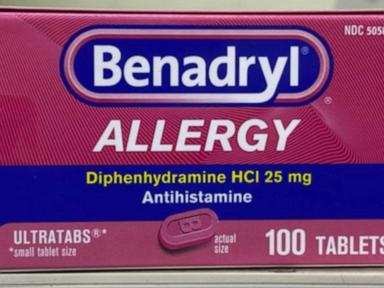
Let’s strip away the sensationalism and look at the actual science. Diphenhydramine (DHA) is a first-generation antihistamine. It has been sitting on pharmacy shelves since 1946.
It works by blocking histamine receptors to treat allergies. But it also crosses the blood-brain barrier, acting as a potent central nervous system anticholinergic. In normal doses (25 to 50 milligrams), it makes you drowsy. In massive doses, it induces a state of acute anticholinergic delirium.
This isn't a "trip" in the psychedelic sense. It is a toxic psychosis characterized by:
- Severe disorientation and memory loss.
- Vivid, often terrifying auditory and visual hallucinations.
- Tachycardia (dangerous acceleration of the heart rate).
- Seizures, hyperthermia, and prolonged QT intervals that lead to cardiac arrest.
I have spent years analyzing public health data and substance abuse trends. Here is the brutal truth that the clickbait articles miss: diphenhydramine abuse predates TikTok by decades. Ask any emergency room physician who practiced in the 1980s or 1990s. Long before smartphones existed, teenagers were abusing DHA. They called it "dime-tripping."
Social media didn't invent this behavior. It merely digitized the playground whisper.
The Myth of the Algorithmic Contagion
The standard narrative insists that algorithms actively push these deadly challenges into the feeds of unsuspecting children. This claim misunderstands how content discovery actually works on modern platforms.
In 2020, at the height of the initial Benadryl panic, researchers looked into the actual volume of this content. The reality? The "challenge" was largely a ghost. The vast majority of videos under the hashtag were not kids taking the drug; they were videos of people warning others not to do it, or users mocking the stupidity of the trend.
By hyper-focusing on the tech platforms, public health officials create a Streisand Effect.
Imagine a scenario where a small, isolated group of teenagers in a specific town discovers they can get high off a common household item. It’s a localized issue. Now, imagine a major news network runs a prime-time segment warning parents about this exact specific item, complete with the exact name, the dosage required, and the symptoms to watch for.
Who just did the marketing? The news network or the teenagers?
The FDA issued an official warning about the Benadryl Challenge in September 2020. While well-intentioned, the announcement codified a fringe internet rumor into an official national trend. It gave a name, a set of instructions, and a badge of rebellion to a dangerous activity.
The Open-Source Pharmacy in the Kitchen
The uncomfortable truth nobody wants to admit is that the American home is an unsecured pharmacy.
We live in a culture that medicates every minor inconvenience. We have a pill for sleeplessness, a pill for minor aches, a pill for seasonal allergies, and a pill for heartburn. Because these drugs are sold over-the-counter (OTC) at gas stations and grocery stores, we treat them as if they are as benign as candy.
We buy diphenhydramine in economy-sized bottles of 400 caplets and leave them sitting on the kitchen counter or in an unlocked bathroom cabinet.
+------------------------------------------------------------+
|                  THE ACCESSIBILITY PARADOX                 |
+------------------------------------------------------------+
| Illicit Substances           | Over-The-Counter Deliriants |
| ---------------------------- | --------------------------- |
| Requires illegal network     | Found in 90% of households  |
| Costs significant money      | Costs less than $5 a bottle |
| High barrier to entry        | Zero barrier to entry       |
| Constantly monitored         | Ignored in plain sight     |
+------------------------------------------------------------+
If a teenager wants to experiment with an illicit substance, they have to find a dealer, risk arrest, and spend money they likely don't have. If they want to experiment with diphenhydramine, they just have to walk into their parents' bathroom while everyone else is asleep.
The accessibility is the catalyst, not the video on a smartphone screen.
Why Education Campaigns Always Fail
The standard corporate response to these crises is always the same: launch an awareness campaign. Manufacturer Johnson & Johnson (now Kenvue) worked with social media platforms to remove hashtags and pin warning labels to search results. Public school districts sent letters home to parents.
These measures fail because they rely on the flawed logic that teenagers engage in substance abuse due to a lack of information.
Teenagers do not take 50 Benadryl caplets because they think it’s good for their health. They do it precisely because it is dangerous, transgressive, and extreme. It is a manifestation of risk-taking behavior, peer validation, or more frequently, deep-seated psychological distress and a lack of access to mental health support.
When you launch a massive public campaign telling teenagers "Do not eat this specific pill or you will hallucinate and your heart might stop," you are not deterring the high-risk demographic. You are providing them with a checklist.
Dismantling the Premise: The Real Solutions
If we want to stop teenage hospitalizations from over-the-counter drug abuse, we have to stop treating this as a tech regulation problem and start treating it as a public health reality. This requires structural, inconvenient changes that cut against the grain of consumer convenience.
1. Restrict the Point of Sale
We already have a template for this: pseudoephedrine. Under the Combat Methamphetamine Epidemic Act of 2005, products containing pseudoephedrine were moved behind the pharmacy counter. Buyers must show ID, and purchases are logged in a database.
If diphenhydramine is a recurring vector for teenage poisoning, it should not be available for self-service in massive quantities. Move it behind the counter. Limit the number of units a single consumer can buy.
Yes, this inconveniences adults who just want allergy relief. That is the price of actual harm reduction.
2. Redesign the Packaging
Selling 500 loose caplets in a single plastic jar makes mass consumption effortless. If you want to abuse a drug, you just tip the bottle into your hand.
Regulations should mandate blister packaging for high-risk OTC medications. Forcing a user to individually pop 30 or 40 pills out of a foil blister pack introduces friction. It slows down the impulsive process of ingestion. It provides a visual, physical representation of the massive quantity of chemicals being consumed.
Friction is the enemy of impulsive self-harm.
3. Secure the Home Environment
Parents love to audit their child’s digital footprint while completely ignoring their physical footprint. If you have prescription opioids, you lock them up. If you have alcohol, you lock it up.
Your OTC first-generation antihistamines, cough syrups containing dextromethorphan, and sleep aids need to be under lock and key. Period.
The Trade-Off of the Contrarian Stance
Adopting this perspective means giving up the easy scapegoat. It is incredibly comforting to blame a foreign-owned social media algorithm for the systemic failures of adolescent mental health and substance availability. It means parents don't have to look in the mirror, and regulators don't have to anger powerful pharmaceutical lobbies.
The downside to restricting OTC access is clear: it adds friction to the lives of millions of consumers who use these medications safely. It increases costs for manufacturers. It complicates the retail experience.
But if the goal is truly to save lives rather than to just score political points on cable news, we have to attack the root cause. The "Benadryl Challenge" is not a digital virus. It is a physical reality enabled by cheap manufacturing, careless storage, and a profound cultural denial about the dangers lurking in our own homes.
Stop looking at your kid's phone. Go clean out your medicine cabinet.