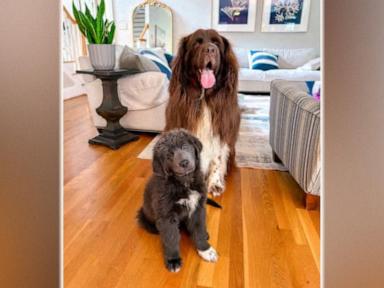
Viral videos ruin dogs. Every week, another piece of digital cotton candy surfaces showing a famously cute gardening dog miraculously bonding with a duckling, a kitten, or a rogue hedgehog. The internet coos. The comment section melts. Millions of soft-headed owners watch these clips and instantly decide their own living rooms require a multi-species menagerie.
It is a disaster of anthropogenic projection.
We look at an animal digging holes in the dirt alongside a golden retriever or a barnyard bird and assume we are witnessing an interspecies utopia. We see a social exchange where none exists. We crave narrative symmetry, so we invent harmony out of mutual, highly stressed tolerance.
I have spent two decades working alongside behaviourists, shelter directors, and canine cognition researchers. I have watched owners blow thousands of dollars on behavioural trainers trying to fix anxiety issues they accidentally manufactured themselves by forcing incompatible animals into forced roommate situations.
The lazy consensus says socialization means more friends. The reality is that forced companionship is a fast track to chronic cortisol spikes.
The Myth of the Universal Social Animal
Canis lupus familiaris is a social species, yes. But social does not mean promiscuously gregarious. Humans confuse pack dynamics with neighborhood block parties.
In nature, wolf packs and feral dog groups are closed units. They defend territory against outsiders. They form strict hierarchies and maintain strict boundaries. They do not wander through the woods looking to expand their social circle because a new stray wandered past the den.
When you bring home a second animal because your primary dog looks bored in the yard, you are violating basic ethological principles. You are introducing an intruder into a secure territory.
Behavioral biologists draw a sharp line between gregarious animals and territorial ones. Dogs are territorial opportunists. They tolerate strangers based on utility, mood, and early developmental windows. Once a dog reaches social maturity, which typically happens anywhere between one and three years of age, their tolerance for unpredictable interlopers drops off a cliff.
Pretending your dog needs a buddy is a human neurosis. You feel guilty about going to work for eight hours. You project your own loneliness onto an animal that spends half that time sleeping and the other half chewing a rubber bone in blissful, solitary peace.
Why Viral Animal Friendships Are Usually Red Flags
Let us look at the mechanics behind those viral garden videos.
When a dog is filmed peacefully coexisting with a smaller animal, professional trainers rarely see friendship. They see high-threshold desensitization or suppressed predatory drive.
Imagine a scenario where a high-prey-drive working dog is placed in a controlled environment with a baby duck. The dog remains motionless. The internet calls it gentle kindness. The reality? The dog is locked in a state of intense predatory hyper-focus, monitoring every twitch of potential prey under the watchful eye of a human handler holding a heavy-duty correction tool just out of frame.
That is not a friendship. That is a ticking clock.
When owners replicate this at home without professional oversight, disasters happen. Dogs communicate through subtle micro-signals: lip licking, stiffening posture, hard staring, whale eye. Humans miss every single one of these signals. They wait for a growl or a snap before realizing their pets hate each other. By then, the psychological damage is done. One animal lives in a state of perpetual hyper-vigilance, while the other learns that their home is a combat zone.
We need to stop anthropomorphizing animal relationships. A dog does not feel left out because it lacks a peer group. It feels secure when its boundaries are respected, its environment is predictable, and its human leader provides clear, unambiguous structure.
The Cost of Manufactured Harmony
I have seen owners bankrupt themselves trying to achieve the domestic bliss depicted on social media feeds. They buy bigger houses, hire expensive animal behaviorists, install baby gates across every doorway, and rotate their pets schedules like air traffic controllers just to keep two incompatible animals from tearing chunks out of each other.
The financial cost is steep, but the psychological toll on the animals is worse.
Constant micro-stress alters brain chemistry. Dogs forced into continuous proximity with rivals or unwanted companions exhibit elevated baseline cortisol levels. This leads to redirected aggression, immune suppression, digestive issues, and shortened lifespans.
The industry loves this. Pet product manufacturers sell millions of dollars worth of calming diffusers, anxiety wraps, and specialized crate systems designed to fix problems that should never have existed in the first place. Trainers bill hourly rates to untangle messiah complexes disguised as pet rescue missions.
The fix is free and requires zero equipment: stop adding animals to solve an emotional void.
Redefining Canine Enrichment
If your dog is digging holes in the garden, barking at passing cars, or chewing your baseboards, they are not lonely. They are under-stimulated, under-exercised, or lacking mental agency.
Giving them another living creature to deal with is the laziest form of enrichment available. It is outsourcing your job as an owner to another living organism.
Real enrichment requires actual work from you. It means structured physical exercise that targets the cardiovascular system, not just letting them pace around a postage-stamp backyard. It means nose work, tracking games, obedience training that builds impulse control, and puzzle solving that exhausts the cognitive centers of the brain.
A tired, mentally satisfied dog does not care if there is a duck standing on its head. A tired dog wants to sleep undisturbed on a cool floor.
When you respect a dog's need for solitude, you unlock a different tier of stability. You remove the pressure to perform social gymnastics in their own sanctuary.
The Solitude Advantage
There is a profound peace in letting a dog be an individual.
When you remove the expectation of constant interaction with other pets, your dog learns to self-regulate. They learn how to settle independently. They build emotional resilience because they aren't relying on a companion animal to validate their existence or keep them company every second of the day.
Independence is not neglect. True neglect is forcing two animals into a cage of proximity because you cannot bear the thought of an animal sitting quietly by itself.
Look at your own household setup with ruthless honesty. If you brought in a second pet primarily to entertain your first pet, check the data. Look at the veterinary behavioral journals detailing resource guarding, inter-household aggression, and chronic stress in multi-pet homes. The numbers do not lie. Most dogs prefer being the undisputed king of their castle to sharing territory with an uninvited roommate.
Delete the apps. Close the browser tabs of cute interspecies pairings. Turn off the videos.
Give your dog the greatest gift modern domestication can offer: absolute, uninterrupted peace. Leave them alone.