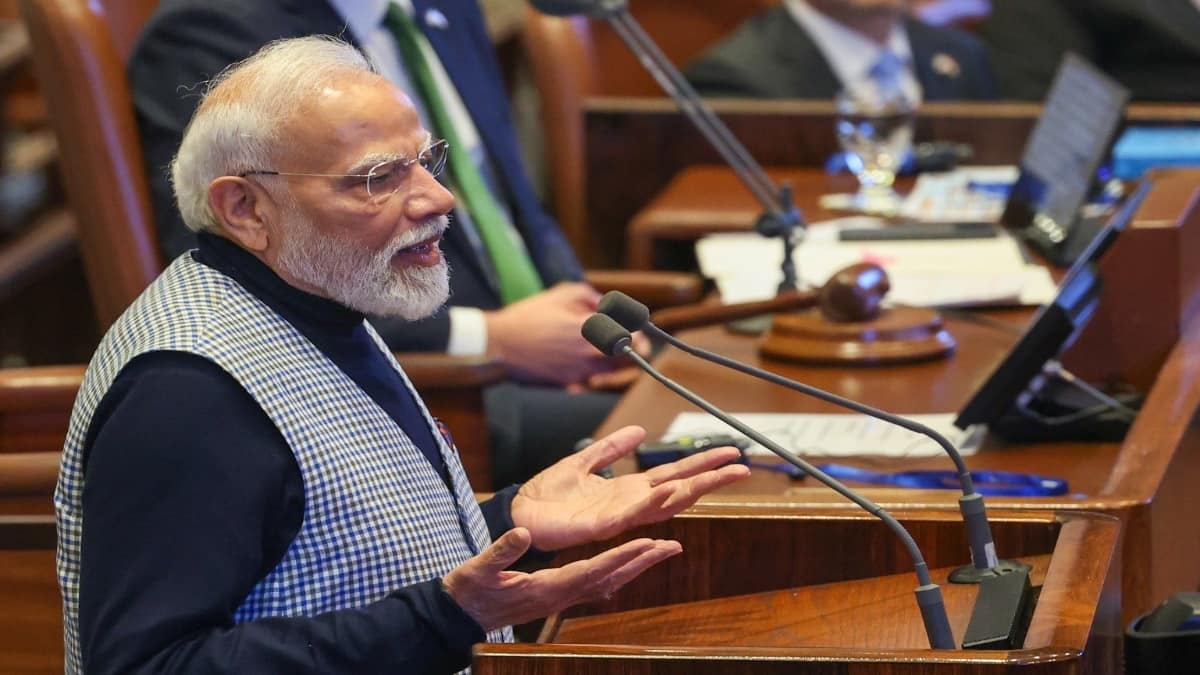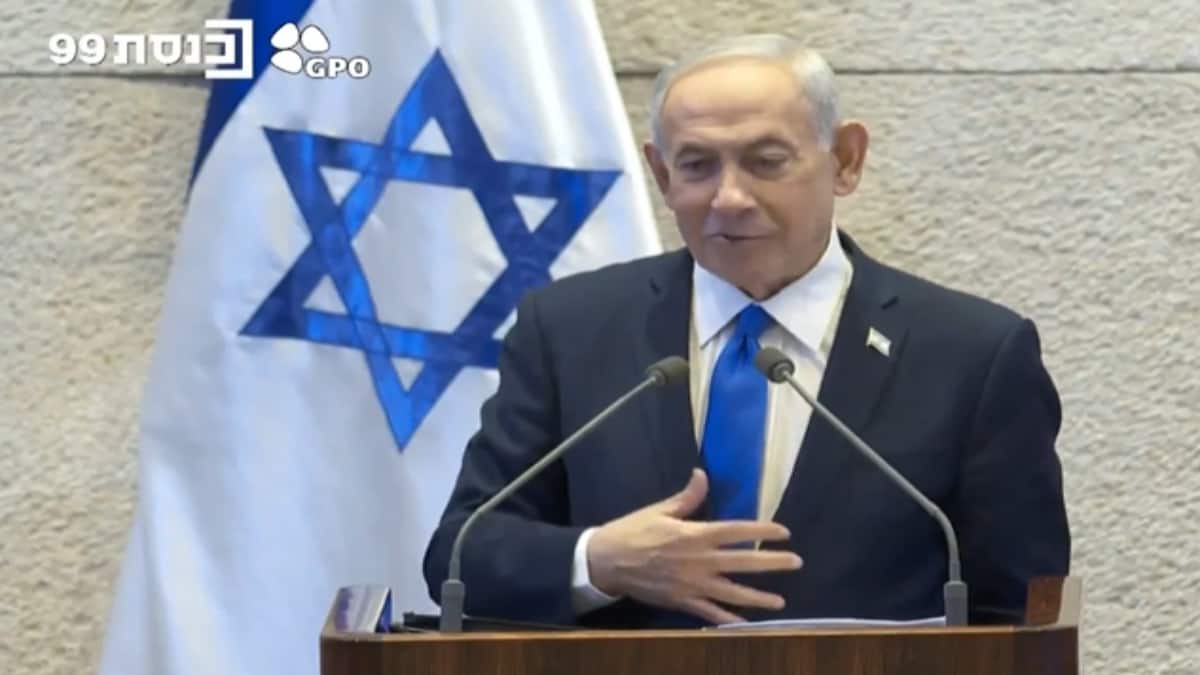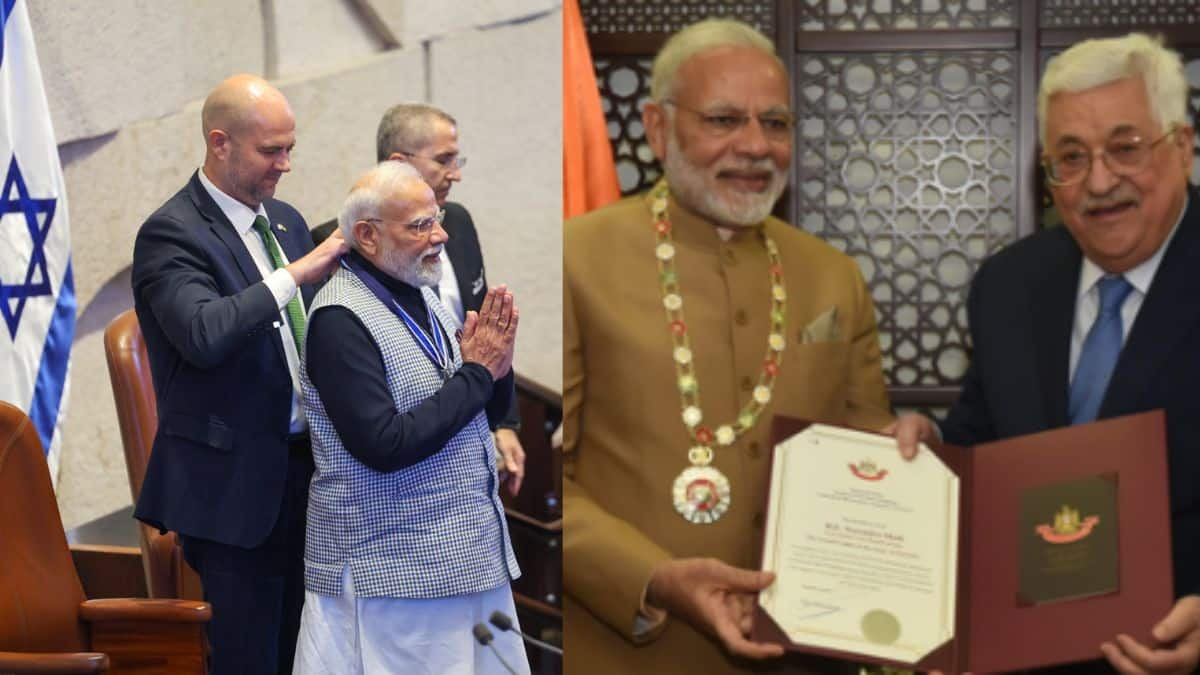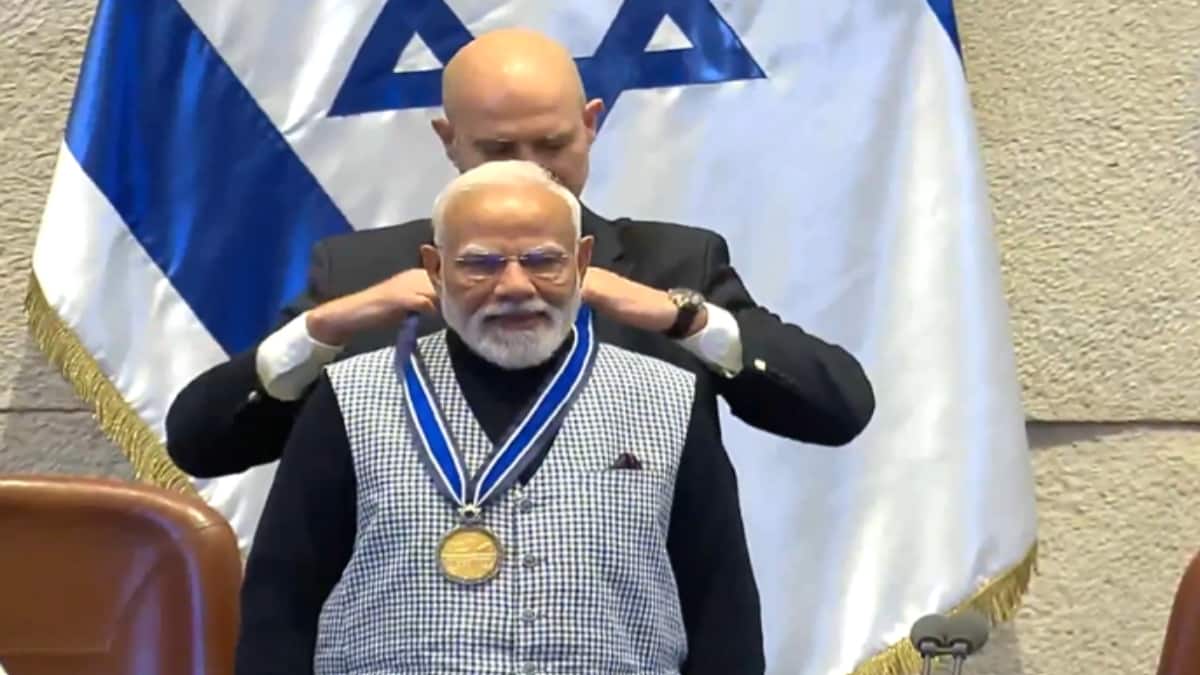
The conferral of the Speaker of the Knesset Medal upon Indian Prime Minister Narendra Modi serves as a formal validation of a structural shift in West Asian geopolitics, moving from transactional buyer-seller dynamics to a deep-integrated strategic partnership. This honor, the highest distinction bestowed by Israel’s legislative body, is not merely a symbolic gesture of "friendship" but a recognition of a synchronized defense-industrial complex and a shared technological roadmap. To understand the gravity of this award, one must deconstruct the bilateral relationship into its three functional pillars: the Defense-Industrial Nexus, the Water-Agri-Tech Corridor, and the Multipolar Alignment Strategy.
The Defense-Industrial Nexus: From Procurement to Co-Development
For decades, the India-Israel relationship was defined by a vertical supply chain where Israel acted as a critical secondary supplier of military hardware. The current era, punctuated by this legislative recognition, marks a transition toward horizontal integration.
The "Cost Function" of India’s defense strategy has historically been hampered by a lack of indigenous high-tech components. Israel has solved this bottleneck through a "Plug-and-Play" technology transfer model. Rather than simply selling finished goods, the relationship now focuses on:
- Joint Intellectual Property (IP) Creation: Collaborative projects like the Barak-8 Long Range Surface-to-Air Missile (LRSAM) represent a shared R&D ecosystem where both nations own the underlying technology.
- Maintenance, Repair, and Overhaul (MRO) Hubs: Establishing localized facilities in India for Israeli-origin platforms (UAVs, radar systems) reduces lifecycle costs and downtime for the Indian Armed Forces.
- Sub-system Integration: Indian private sector firms are now integrated into the global supply chains of Israeli defense majors, creating a feedback loop of manufacturing excellence and technological "know-how" versus mere "know-how-to-operate."
This integration creates a high switching cost for India. Once a nation’s primary defense sensors and communication protocols are built on Israeli architecture, the strategic bond becomes foundational rather than optional. The Knesset Medal recognizes this locked-in synergy.
The Water-Agri-Tech Corridor: Security Beyond Ballistics
While defense occupies the headlines, the most resilient aspect of the partnership—and a primary driver for the Knesset’s recognition—is the application of Israeli "Scarcity Engineering" to Indian demographics. Israel’s mastery of resource management in arid environments provides a blueprint for India’s food and water security.
The structural logic here follows a "Resilience Framework":
- Desalination and Wastewater Recycling: India faces a compounding water deficit. By adopting Israeli membrane technologies and decentralized recycling models, Indian municipalities are attempting to decouple economic growth from groundwater depletion.
- Precision Agriculture: The deployment of drip irrigation and sensor-based farming (Ag-Tech) targets the "yield gap" in Indian states. This is not philanthropy; it is a market-entry strategy for Israeli firms into one of the world’s largest agricultural labor forces.
- The Centers of Excellence (CoE) Model: There are over 30 Indo-Israeli Centers of Excellence across India. These act as "Proof of Concept" hubs where Israeli protocols are localized for Indian soil and climate conditions.
The Medal reflects the success of these non-military interventions which stabilize India's internal economy, making it a more reliable long-term partner for Israel's own economic diversification.
Multipolar Alignment and the I2U2 Framework
The Knesset’s decision to honor a foreign head of state is a calculated move within the broader context of the I2U2 Group (India, Israel, UAE, USA). This "West Asian Quad" redefines regional security by focusing on economic corridors rather than just military alliances.
The Connectivity Calculus
The logic of this alignment is rooted in the Middle East-Europe Economic Corridor (IMEC). By positioning itself as the eastern anchor of this corridor, India provides Israel with a massive, stable market that bypasses traditional regional friction points. For Israel, India is the "Strategic Depth" it lacks geographically.
Limitations and Strategic Friction
It is an analytical error to view this relationship as frictionless. Divergent interests exist, primarily in the following areas:
- Energy Dependencies: India’s massive requirements necessitate a balanced relationship with Iran and the Arab Gulf states, often leading to "Strategic Autonomy" votes in international forums that do not always align with Israeli preferences.
- Technology Export Controls: As India seeks more advanced dual-use technologies, it hits the ceiling of Israeli (and by extension, US) export control regimes designed to maintain a "Qualitative Military Edge" (QME) in the region.
The Quantification of "Enduring Friendship"
The phrase "enduring friendship" used by Prime Minister Modi is a diplomatic shorthand for a high-volume trade and intelligence-sharing coefficient. Between 1992 and 2024, bilateral trade (excluding defense) has grown from approximately 200 million USD to over 10 billion USD.
The Knesset Medal signals that the legislative branch in Jerusalem views India not as a swing state, but as a permanent fixture in Israel’s national security doctrine. The award serves as a signal to the Israeli bureaucracy to prioritize Indian procurement and diplomatic requests, effectively "greasing the wheels" of inter-governmental cooperation.
Operational Trajectory
The next phase of this partnership will move into the "Deep Tech" layer. We are seeing the early stages of a "Quantum and AI Corridor" where Israeli algorithmic expertise meets India’s massive datasets and engineering talent.
Strategic stakeholders should monitor the following markers for the next 24 months:
- The signing of a Comprehensive Free Trade Agreement (FTA): This will be the ultimate litmus test for the "economic pillar" of the partnership.
- Semiconductor Fabrication: Watch for Israeli design firms partnering with Indian manufacturing conglomerates under the "India Semiconductor Mission."
- Space Cooperation: Increased collaboration between ISRO and ISA on small satellite launches and lunar exploration data.
The Knesset Medal is the ceremonial capstone on a decade of rapid convergence. The strategic play for India is to leverage this "preferred partner" status to leapfrog generation-4 defense technology while Israeli firms utilize India as their primary scale-up engine for global markets.
The friendship is no longer a matter of sentiment; it is a matter of systemic necessity.