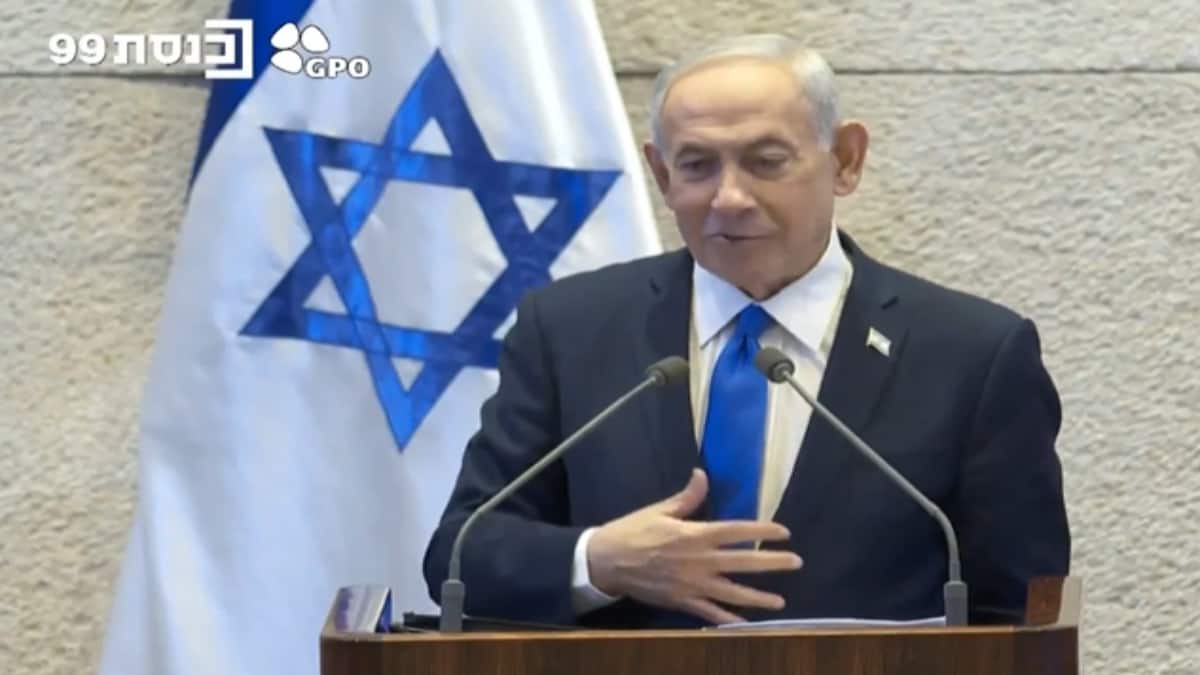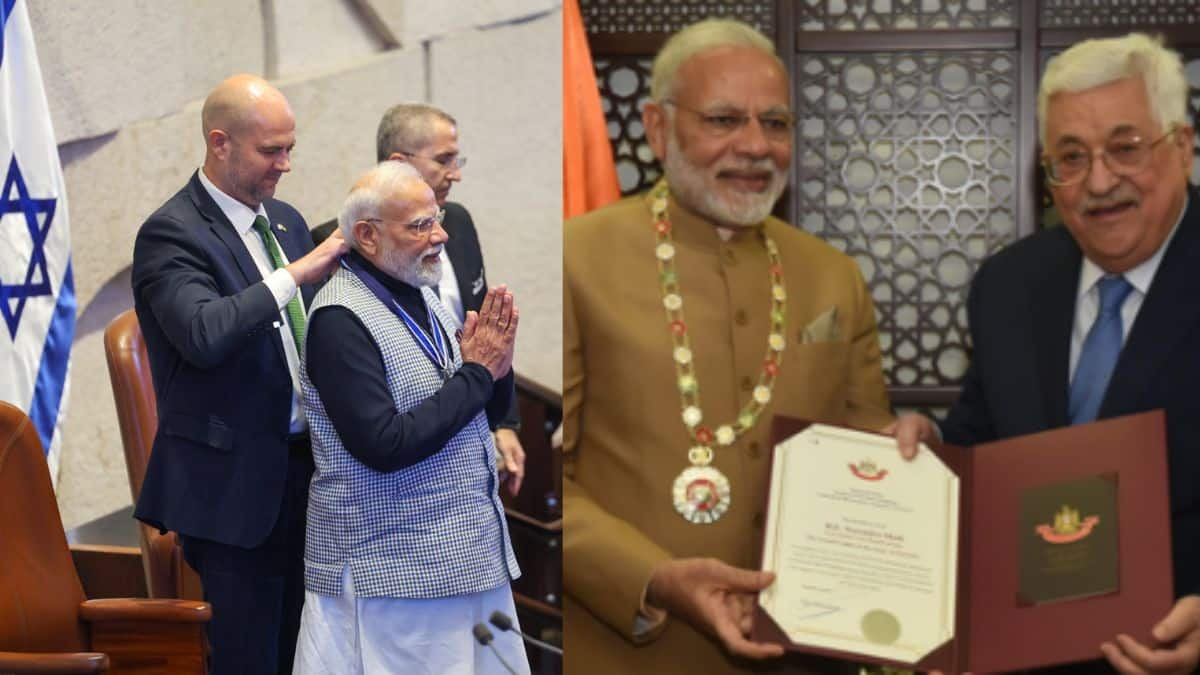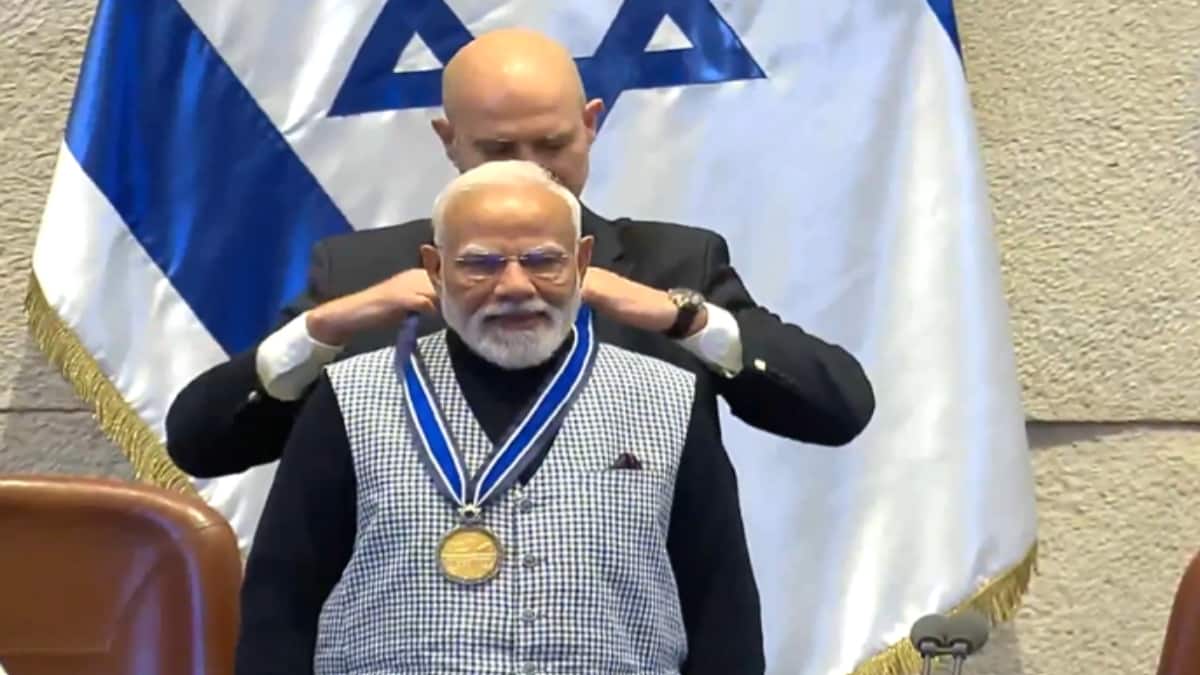
The screen of a smartphone in New Delhi glows with the same blue light as a screen in Tel Aviv, but the air around them could not be more different. In one city, the air smells of marigolds and monsoon-dampened asphalt. In the other, it tastes of cordite and the metallic tang of adrenaline. Yet, on a Saturday that shifted the axis of global geopolitics, those two worlds collapsed into one.
Prime Minister Narendra Modi did not wait for the polished drafts of a diplomatic white paper. He did not retreat into the sterile ambiguity of "concerned parties" or "calls for restraint." Instead, he picked up the digital equivalent of a megaphone. When he typed that India stood in solidarity with Israel, he wasn't just performing a duty of state. He was acknowledging a shared scar.
To understand why a leader five thousand kilometers away would use words like "grief" and "beyond," you have to look past the maps. You have to look at the memory of a hotel in Mumbai.
The Ghost of 26/11
History is a stubborn ghost. For many in India, the images coming out of the kibbutzim near the Gaza border didn't look like foreign news. They looked like a flashback. They saw the same cold methodology of terror that paralyzed Mumbai in 2008—the indiscriminate targeting of civilians, the breach of sanctity in homes, the chilling use of technology to broadcast trauma in real time.
When a nation has watched its own financial capital bleed for three days while the world watched on a delay, its empathy becomes a jagged thing. It is no longer theoretical. India’s immediate and visceral reaction was a reflex born of its own scar tissue. This wasn't about a "strategic partnership" or defense contracts, though those exist in abundance. This was about the fundamental shock to the human system when the front line of a war moves from a trench to a living room.
Consider a family in Ashkelon. They are huddled in a reinforced room, the walls vibrating with the thud of interceptions. They check their phones, seeking a sign that they haven't been swallowed by the dark. They see a message from the leader of the world’s most populous democracy. It doesn't stop the rockets, but it alters the atmosphere of their isolation.
The Architecture of a Relationship
For decades, India’s approach to the Middle East was a delicate dance of shadows. It was a policy of "de-hyphenation," a clumsy bureaucratic term for trying to be friends with everyone without getting caught in the middle. But under the current administration, the shadow-dancing ended.
The relationship between these two nations has moved from the basement to the balcony. It is built on three pillars that the average observer rarely notices until a crisis hits.
- The Agricultural Bind: In the arid stretches of Rajasthan, Indian farmers use Israeli drip irrigation to coax life from dust. When an Indian farmer sees Israel under fire, he isn't thinking about the Knesset; he’s thinking about the technology that keeps his children fed.
- The Intelligence Pulse: There is a silent, constant hum of data moving between New Delhi and Jerusalem. It is the invisible shield that monitors threats before they reach a crowded market or a metro station.
- The Shared Identity: Both nations are ancient civilizations that reinvented themselves as modern democracies in the mid-20th century. Both are surrounded by neighbors who have, at various points, questioned their right to exist.
The Human Cost of Diplomacy
Diplomacy is often described as a game of chess, but chess pieces don't bleed. When the Prime Minister spoke of "prayers with the innocent victims and their families," he was addressing the hundreds of Indian students living in Israel, the caregivers from Kerala who look after Israeli elderly, and the tech workers in Haifa.
Imagine a young woman from Kochi, working as a nurse in a small Israeli town. She speaks a mix of Malayalam and Hebrew. She is there to send money home, to build a house for her parents. When the sirens wail, she is the one who carries her elderly charge to the shelter. She is the human bridge. Her safety is the "beyond" that Modi mentioned.
The commitment isn't just for the duration of a news cycle. "In this moment and beyond" is a heavy phrase. It implies a long-term absorption of the consequences. It means that when the inevitable complexity of a counter-offensive begins, and the world’s opinion starts to fracture and gray, India has already placed its bet.
Beyond the Horizon
We often mistake silence for neutrality. In the past, India might have opted for a quiet, balanced statement designed to offend no one. But the world has grown too loud for silence to be an effective shield. By choosing a side in the immediate aftermath of a massacre, India signaled a shift in its own soul. It moved from a nation that seeks to avoid conflict to a nation that identifies the nature of the conflict and names it.
This isn't to say the path forward is simple. It is messy. It is fraught with the risk of escalating regional tensions and the delicate balance of energy security. But at that specific moment, the Prime Minister chose the language of the heart over the language of the bureaucrat.
The stakes are invisible until they aren't. They are found in the shared silence between two people who have both known the sound of an explosion where there should have been music. They are found in the realization that in a globalized world, a border breached in one place makes every door feel a little less secure everywhere else.
Night falls over the Ganges and the Mediterranean. The headlines will change, the casualty counts will rise, and the geopolitical analysts will begin their autopsy of the events. But the memory of a hand extended during the first hour of the dark remains. It is the only thing that actually matters when the lights go out.
The blue light of the smartphone continues to glow, a small, defiant spark against the encroaching shadows.