Middle Eastern skies aren't the playground they used to be for Western air power. You’ve probably heard the headlines about Iran downing American drones or intercepting fighter jets. Most people assume the US is untouchable in the air, but history—and some very expensive wreckage—proves otherwise. This isn't just about one lucky shot. It’s about a massive shift in how Tehran plays the game of cat and mouse with the Pentagon.
The most famous incident involves the RQ-4A Global Hawk, a massive, high-altitude surveillance drone that costs more than a small country’s annual GDP. Iran’s Revolutionary Guard (IRGC) didn't just track it; they swiped it right out of the sky using their own home-grown tech. If you think that was a fluke, you’re missing the bigger picture of how electronic warfare and localized missile systems are neutralizing the "stealth" advantage.
The Day the 3rd of Khordad Changed the Rules
On June 20, 2019, the world watched as a US Navy RQ-4A Global Hawk was turned into a fireball over the Strait of Hormuz. The US claimed it was over international waters. Iran claimed it violated their airspace. While the politicians argued about GPS coordinates, military analysts were looking at something much more alarming.
Iran didn't use a Russian S-300 or some imported Chinese system. They used the 3rd of Khordad, a domestically produced surface-to-air missile (SAM) system. This was a massive ego blow to the US defense establishment. It showed that Iran had developed the capability to track and engage high-altitude, low-observable targets without relying on foreign superpowers.
The Global Hawk isn't a nimble fighter jet, but it flies at altitudes that were previously thought to be a "safe zone." Iran proved that safe zone no longer exists. They didn't just hit a target; they sent a message that their radar tech can see through the noise. They effectively stripped away the "invisibility cloak" the US relies on for regional surveillance.
Why Stealth Isn't the Shield We Think It Is
We’ve been told for decades that stealth is king. If they can’t see you, they can’t hit you. That’s the theory. In practice, stealth is just a reduction in radar cross-section (RCS). It makes a jet look like a bird on a screen, but it doesn't make it disappear.
Iran has invested heavily in passive radar systems and multi-static radar arrays. These systems don't emit their own signals. Instead, they "listen" for the distortions in existing radio waves caused by an aircraft passing through. It’s like looking for the shadow of a ghost.
I’ve looked into the technical specs of the Raad and Khordad systems. They use high-frequency bands that are specifically designed to catch the "glint" off the tail fins and edges of American jets. When you combine this with the fact that US jets often have to fly predictable patterns during regional patrols, you get a recipe for disaster. Iran knows where the "bus routes" are. They just have to wait for the bus.
The Electronic Warfare Game No One Talks About
It’s not always about blowing things up. Sometimes, you just take the keys. In 2011, Iran famously captured a Lockheed Martin RQ-170 Sentinel. They didn't shoot it down. They hijacked it.
This was a "stealth" drone used for the most sensitive CIA missions. Iran used GPS spoofing to trick the drone into thinking it was landing at its home base in Afghanistan. Instead, it touched down gently inside Iran. The US tried to claim it was a "malfunction," but the photos of a perfectly intact drone on a Persian tarmac told a different story.
This wasn't just a win for Iran. It was a win for their allies. Russia and China almost certainly got a look at that hardware. This incident proved that the digital perimeter of a US jet is just as vulnerable as its physical hull. If you can jam the link between the pilot and the plane, the plane is just a very expensive paperweight.
Lessons from the Cold War That Still Apply
People often forget that the US has lost jets to "lesser" powers before. Think back to the 1999 downing of the F-117 Nighthawk over Serbia. A savvy commander used an old Soviet radar and some creative timing to hit a stealth bomber.
Iran has studied that playbook cover to cover. They don't try to out-tech the US in every category. They focus on asymmetric warfare. They know they can’t win a 500-on-500 dogfight. They don't have to. They just need to make the cost of flying in their backyard too high for the American public to stomach.
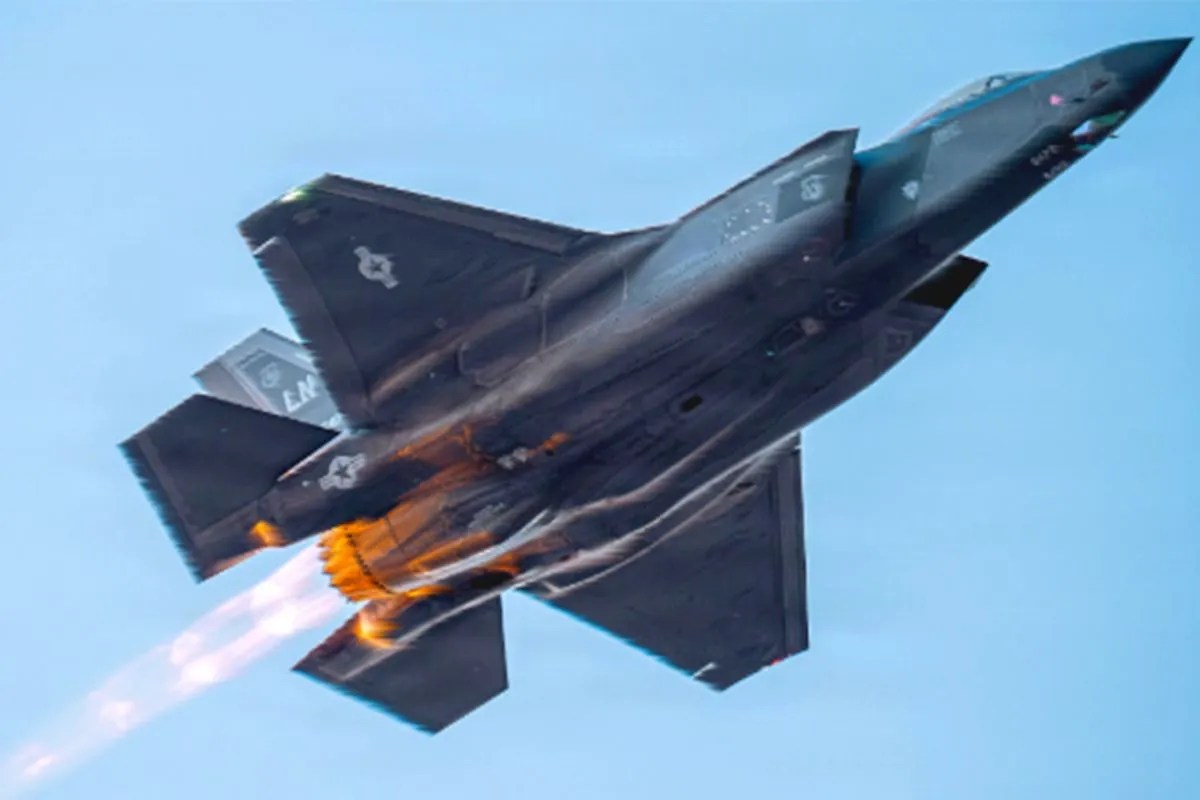
One downed F-35 or F-22 would be a PR nightmare for the US. It would tank defense stocks and force a complete rethink of global strategy. Iran knows this. Their "victory" isn't in destroying the US Air Force; it’s in proving that the US Air Force is fallible.
The Real Risk of Escaltion in the Persian Gulf
The danger right now is "accidental" engagement. When US pilots fly F-18s or F-15s near Iranian borders, they’re being painted by Iranian fire-control radars constantly. It’s a game of chicken.
The Iranians have become incredibly bold. They’ve moved their mobile SAM sites to the coast, creating an overlapping "umbrella" of coverage. If a US pilot makes a slight navigation error, or if an Iranian commander gets itchy fingers, we’re looking at a shoot-down that could trigger a full-scale war.
The tech is only half the battle. The other half is the human element. Iranian crews are trained to be aggressive. They want to prove they can stand up to the "Great Satan." This mindset makes every encounter in the Gulf a high-stakes gamble.
How the US is Rebuilding Its Playbook
Don't think the Pentagon is just sitting on its hands. They’re pivoting. The focus is shifting away from "stealth at all costs" to Electronic Counter-Countermeasures (ECCM). Basically, they’re trying to make their signals un-jammable.
They’re also looking at "Loyal Wingman" programs. This involves a manned jet like an F-35 flying with a swarm of cheap, expendable drones. The idea is that if Iran fires a missile, it hits a $2 million drone instead of a $100 million jet with a pilot inside.
The era of the lone, untouchable American pilot is over. Future missions in contested airspace will look like a digital swarm. It’s a brute-force approach to overcoming Iran’s localized radar advantages.
Watching the Skies for What's Next
Iran is currently eyeing Russian Su-35s to bolster their aging air force. If they combine those high-performance jets with their existing missile tech, the regional balance of power shifts even further.
The take-away is simple: Never underestimate a motivated adversary with a point to prove. The US still has the most powerful air force in the world, but "most powerful" doesn't mean "invincible."
If you're following these developments, stop looking at the shiny planes and start looking at the radar tech. That's where the real war is being fought. Watch for news on the Bavar-373 system—it’s Iran’s answer to the S-400, and it’s getting smarter every day. Keep an eye on how US naval patrols change their flight paths; those subtle shifts in patrol routes tell you more about the threat level than any press release ever will. The map of the Middle East is being redrawn, not with ink, but with radar beams and signal frequencies.