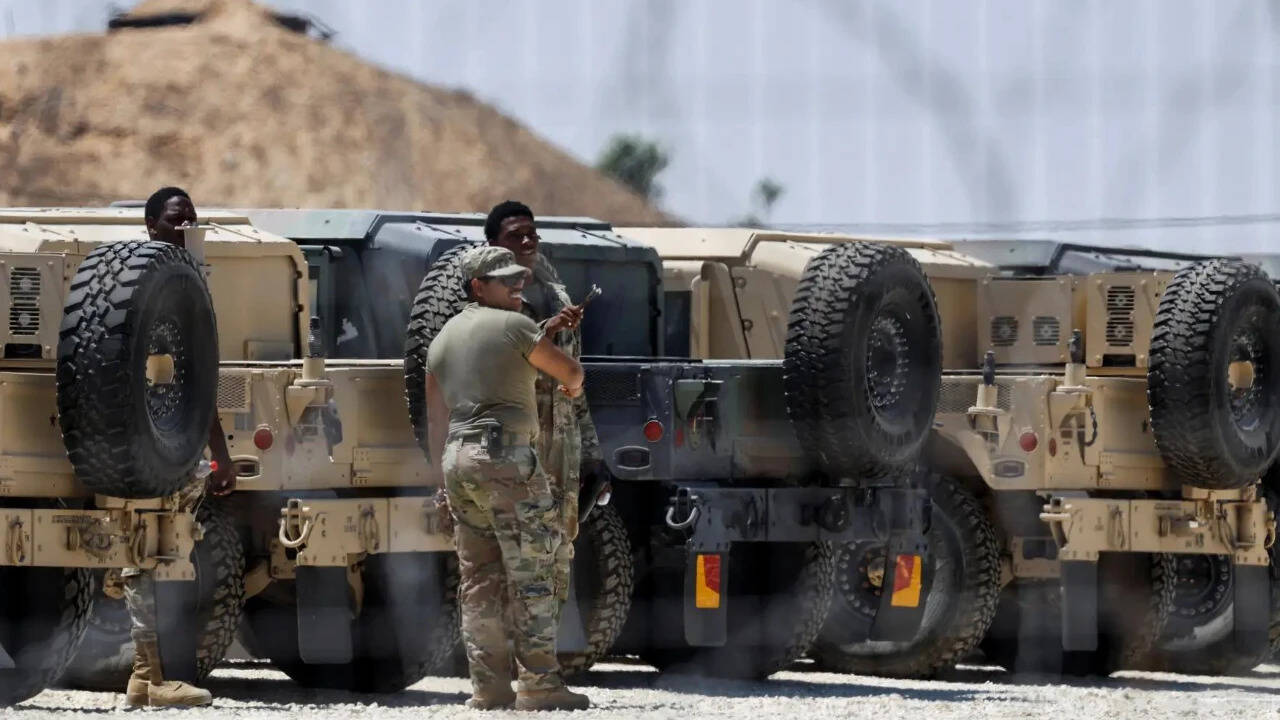
Two decades of American military footprints in Iraq are coming to a definitive close. By September 30, the last remaining United States troops will pack their gear and pull out, wrapping up a massive chapter of modern history that started way back in 2003.
If you think this is just another routine diplomatic adjustment, you're missing the entire plot. For an alternative view, check out: this related article.
This isn't just about troop counts or logistical schedules. It’s a massive geopolitical shift that leaves a massive vacuum in the Middle East. For twenty-three years, Washington treated Iraq as a primary staging ground for regional power, counter-terrorism operations, and containment strategies directed at Iran. Now, that era is evaporating. Baghdad wants its sovereignty back, and Washington is finally ready to hand over the keys.
Let's break down what this exit actually means, why it's happening right now, and how regional players are scrambling to adapt. Similar reporting regarding this has been provided by BBC News.
The Real Timeline of the Iraq Exit
Let's look at the actual trajectory. The US-led invasion of Iraq kicked off in March 2003, toppling Saddam Hussein's regime under the banner of eliminating weapons of mass destruction that ultimately didn't exist. That initial conventional war morphed into a brutal counter-insurgency, a total withdrawal in 2011, a hurried return in 2014 to crush the Islamic State, and years of a low-profile advisory mission.
The current announcement follows rounds of bilateral talks between Washington and Baghdad through the High Military Commission. Both governments agreed that the military mission against the Islamic State in Iraq needs to transition into bilateral security partnerships rather than an open-ended combat deployment.
The Pentagon is moving thousands of service members out of hubs like Ain al-Asad Airbase and Erbil. Some will head home. Others will reposition to regional allies like Qatar or Jordan to maintain a safety buffer.
Don't buy the narrative that the US is abandoning the region entirely. It's an evolution. But on-the-ground boots inside Iraqi borders? Those numbers are dropping to zero for traditional combat and advisory roles.
Why Washington and Baghdad Agreed to This Now
Pressure from Iraqi political factions has been building for years. Iran-aligned militias inside Iraq have made US bases regular targets for rocket and drone attacks, especially after regional tensions flared following the outbreak of the Gaza war in late 2023.
Every time a rocket hit a coalition base, the risk of a major regional escalation skyrocketed. Iraqi Prime Minister Mohammed Shia al-Sudani faced intense domestic political pressure to show voters that Iraq is a fully independent nation, not an occupied battleground for US-Iranian proxy conflicts.
For the White House, the math changed too. Pentagon priorities have shifted heavily toward great-power competition with China in the Indo-Pacific and managing ongoing security crises in Eastern Europe. Sinking endless resources and political capital into a low-intensity deployment in Iraq no longer serves top-tier national security goals.
The Security Vacuum Left Behind
Here is the uncomfortable truth nobody in Washington wants to say out loud: Iraqi security forces are better than they were ten years ago, but they aren't bulletproof.
The Iraqi army handles routine internal security well. They keep the peace in Baghdad and patrol major highways. But logistically? They still rely heavily on American contractors and air support for intelligence, surveillance, and reconnaissance.
Once the US pulls out its last logistics and maintenance personnel, the Iraqi air force will face massive hurdles keeping its advanced fighter jets and transport fleets in the air.
Then there is the threat of an Islamic State resurgence. While ISIS lost its territorial caliphate years ago, sleeper cells still operate in remote desert and mountainous regions between Iraq and Syria. Without American drone overwatch and intelligence sharing, those cells might find room to breathe and rebuild.
Regional Power Dynamics Shift Overnight
Iran stands to gain the most from this exit. Tehran has spent two decades building deep political, economic, and religious ties inside Iraq. With American soldiers gone, Iranian influence faces fewer friction points.
Gulf Arab states are watching this transition with extreme anxiety. Countries like Saudi Arabia and the United Arab Emirates spent years relying on the US military presence in Iraq as a stabilizing counterweight to Iranian expansionism. Now, they are forced to deal directly with Baghdad, investing heavily in Iraqi infrastructure and electricity grids to pull Iraq closer to the Arab fold and away from Tehran's orbit.
Turkey will also adjust its military calculus. Ankara routinely carries out cross-border strikes against Kurdish PKK militants inside northern Iraq. Without a US military footprint monitoring airspace in the north, Turkey might feel emboldened to expand its operational footprint.
What You Need to Know Moving Forward
This exit sets a hard precedent for future US foreign policy in the Middle East. The era of nation-building and permanent military footprints is officially dead.
If you follow international markets, oil prices, or global security, keep a close eye on how the Iraqi government manages its internal security over the next six months. Watch whether local militia groups respect the state monopoly on violence or if they try to fill the security vacuum left by American forces.
The US departure by September 30 closes a twenty-three-year book. But the story of modern Iraq is far from finished, and the next chapter is entirely up to Baghdad.