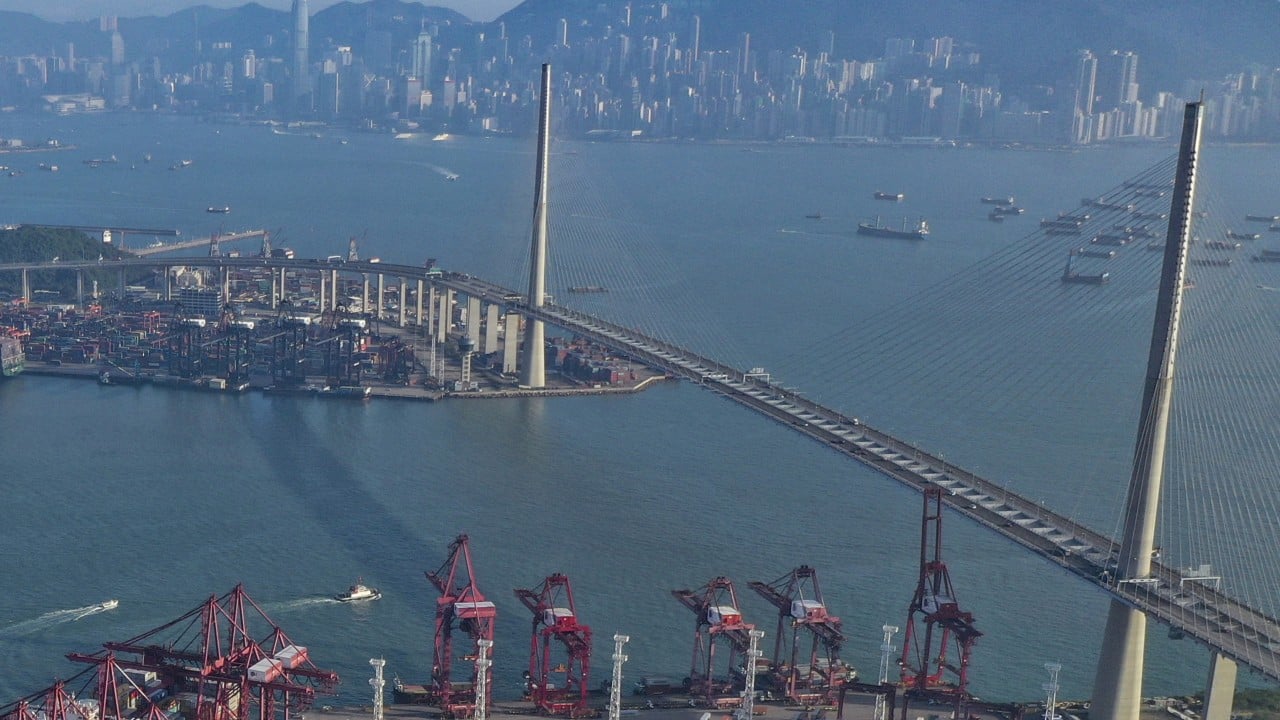
The sea around Stonecutters Island does not look like a graveyard. To the casual eye, watching from the towering spans of Hong Kong's highway bridges or the crowded decks of Victoria Harbour ferries, the water is simply a surface. It is a vast, shifting mirror of container cranes, grey skies, and the relentless pulse of global trade. But water holds secrets. Water remembers the sudden weight of a falling body, the brief struggle against the cold tide, and the terrifying quiet that follows when the air runs out.
On a quiet morning, the sea gave something back.
Emergency services received a call that no one wants to make. A body was spotted drifting in the waters off Stonecutters Island, an area heavily industrialized, defined by military history, massive port expansions, and the constant hum of maritime commerce. Marine police and rescue teams converged on the coordinates, cutting through the chop with sirens silenced. They pulled a man from the grey expanse. He was already gone.
Now, a probe is under way.
That is how the news arrives in a city of seven million souls. It is a dry sentence on a screen. A statistic added to an unfeeling ledger. We read it while sipping morning coffee, scrolling past on our phones between updates on stock markets and property prices. We compartmentalize. We assume the victim was someone distant, someone whose life intersected with tragedy by statistical anomaly.
Yet, every single one of those headlines represents an unraveling.
Consider what happens in the hours after a recovery like this. The cold mechanics of bureaucracy begin to spin. Detectives pore over missing persons reports. Forensic pathologists prepare cold stainless steel tables. Investigators search for identification cards, salt-ruined phones, or clues hidden in the lining of a jacket. Somewhere across the city, a family member is waking up to an ordinary day, unaware that the universe has already shifted on its axis.
Stonecutters Island is a strange place for a final resting place. Once an actual island, it was swallowed by reclamation projects, tied permanently to the Kowloon peninsula through the expansion of container terminals. It is a place of heavy metal, roaring diesel engines, and salt spray. It is where cargo from the far corners of the planet arrives and departs. To die here is to be swallowed by the machinery of the modern world.
Why do we look away from these stories?
Perhaps because they remind us of our own fragility. We build cities of glass and steel. We construct massive container ports, bridges that stretch across miles of open water, and transit systems that move millions of people with clockwork precision. We convince ourselves that we are safe inside this infrastructure. We forget that humanity remains terribly, beautifully vulnerable to the elements.
The police investigation will yield answers in time. They will determine identity. They will piece together the final movements through closed-circuit television footage, Octopus card records, and witness accounts. Was it an accident? Was it a desperate choice born of silent suffering? Or was there a darker hand at play?
Whatever the findings, the public will likely move on to the next breaking news alert. The news cycle demands fresh tragedy, fresh spectacle.
Do not let yourself grow numb to the silence.
When a life ends in the grey waters off Stonecutters Island, it echoes through the lives of everyone connected to that person. It leaves an empty chair at a dinner table. It leaves a text message that will never receive a reply. It leaves a hollow space in a city that rarely pauses to catch its breath.
Stand by the railing of the harbor sometime after midnight. Look out past the neon glow of the skyscrapers toward the dark silhouettes of the port cranes. Listen to the low groan of the cargo ships moving through the dark. Beneath that surface lies a depth we rarely acknowledge, and a vulnerability we share with every stranger who walks these streets.