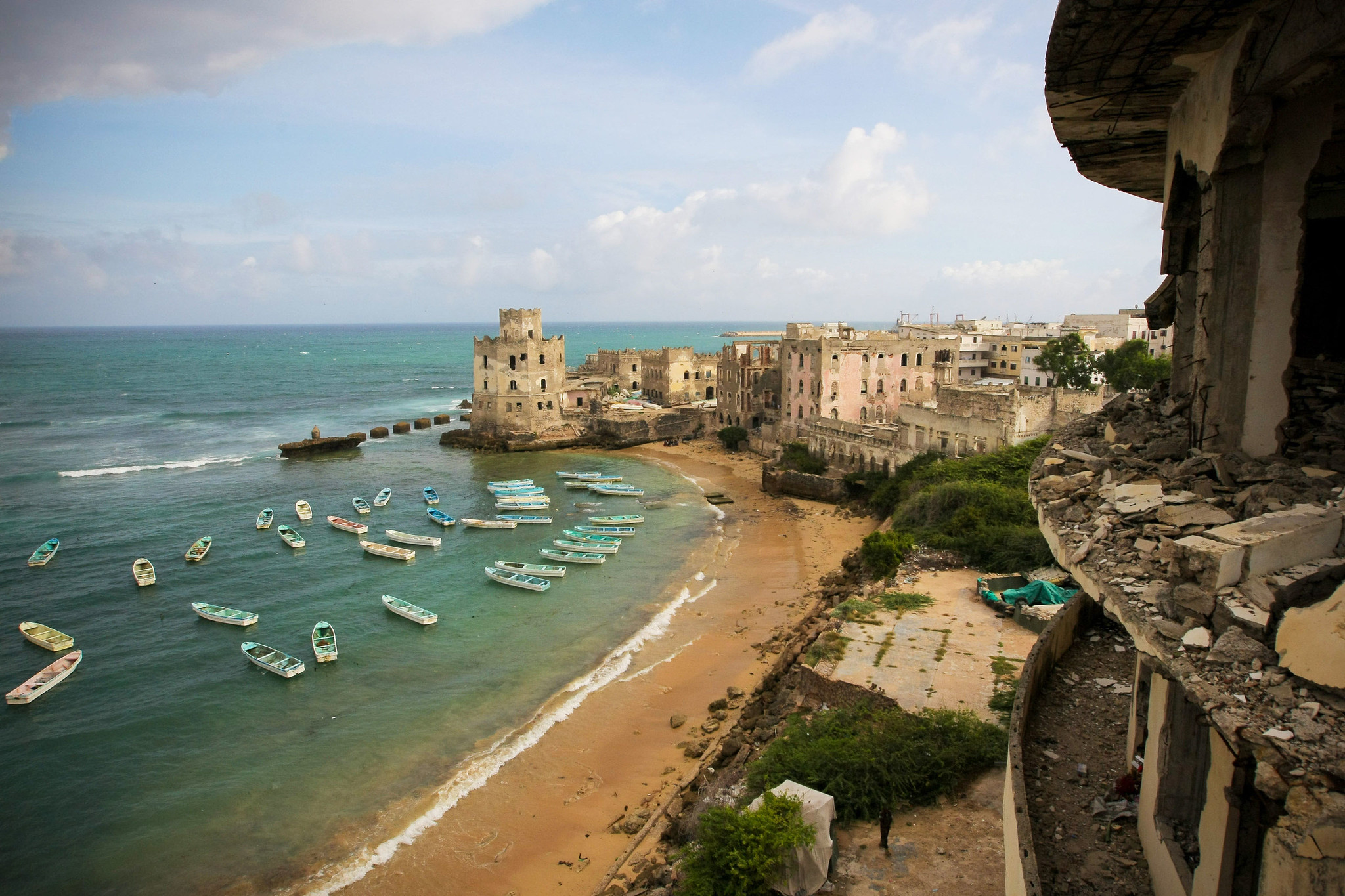
Salt crusts on the windshield of a battered Toyota Land Cruiser creeping along the dusty arterial roads of Mogadishu. The air smells of charred charcoal, warm sea spray, and the distinct, metallic tang of unspent ammunition. A young man named Omar adjusts the rearview mirror. His eyes are tired, worn down by decades of political crosswinds that sweep across the Horn of Africa as reliably as the monsoon. He is not a soldier, nor a diplomat. He is a logistics coordinator for a shipping firm, a man who watches cargo containers stacked high at the port and wonders whose flag will be painted on the next warship pulling into the harbor.
Thousands of miles to the north, in the marbled corridors of Islamabad, men in crisp suits lean over mahogany tables. They trace their fingers along shipping lanes inked in blue across high-resolution satellite maps. They see what Omar sees, but through an entirely different lens. They see a lifeline. They see a profound, desperate gamble.
Pakistan is looking west, then south, casting an anxious eye toward the narrow bottleneck where the Red Sea meets the Indian Ocean.
The Anatomy of a Desperate Geography
To understand why Islamabad is quietly deepening its footprint in Somalia, you have to look at a map through the eyes of a nation constantly running out of breathing room. Pakistan is a nuclear-armed state squeezed between historic rivalries, economic instability, and shifting maritime alliances. Its traditional trade corridors are choked with tension. Its western neighbor, Afghanistan, remains a volatile theater. Its eastern border is a frozen, heavily armed standoff.
So, where does a nation grow when its immediate horizons are blocked?
It looks out to sea.
Consider the Bab el-Mandeb strait. It is a watery throat, barely twenty miles wide at its narrowest point, through which a staggering volume of global commerce must pass to reach the Suez Canal. For decades, Pakistan treated the Indian Ocean as a backyard pond. But backyards get crowded. India has steadily expanded its naval reach, weaving security pacts across the Persian Gulf and the western Indian Ocean. China is anchoring its commercial empire in ports like Djibouti and Gwadar.
Islamabad feels the squeeze.
Somalia sits right at this geopolitical fulcrum. It is a nation scarred by decades of civil war, fractured governance, and the relentless shadow of Al-Shabaab. Yet, precisely because of its structural fragility, it has become a canvas for external powers seeking strategic footholds. Turkey has built military training bases and secured port management rights in Mogadishu. The Gulf states are vying for influence along the breakaway region of Somaliland and the wider coast.
Pakistan cannot afford to be left behind. The relationship is quietly evolving from distant diplomatic pleasantries into a tangible security and economic partnership. Defense agreements, counter-terrorism intelligence sharing, and maritime cooperation pacts are being drafted in backrooms.
Omar does not read the classified diplomatic cables, but he feels their weight. When a foreign naval vessel docks, the price of diesel fluctuates. When a bilateral security deal is signed, checkpoints shift.
The Economics of Survival
Let us strip away the high-minded rhetoric of strategic partnership and look at the raw ledger.
Pakistan’s economy is a patient on a perpetual intravenous drip of international bailouts and emergency loans. Inflation bites hard at the local markets in Lahore and Karachi. Currency depreciation has turned everyday survival into an exhausting arithmetic exercise for millions of households. In this climate, foreign markets are not a luxury; they are oxygen.
Somalia represents an untapped frontier for agricultural exports, textile trade, and infrastructural development. Pakistani rice, pharmaceuticals, and light manufactured goods find eager buyers in East African markets where trade networks are desperate for reliable, cost-effective alternatives to Western or distant Asian suppliers.
At the same time, Islamabad’s military industrial complex is maturing. Pakistan manufactures everything from armored personnel carriers to advanced trainer aircraft and small arms. Selling defense hardware to African nations expanding their security apparatuses provides a crucial injection of foreign exchange. It is a symbiotic dance born of necessity. Somalia needs affordable, battle-tested military hardware and training to combat insurgencies that domestic forces struggle to contain alone. Pakistan needs paying clients and strategic allies who will vote alongside it in international forums like the United Nations.
Yet, this dance carries immense peril.
Walking the streets of Mogadishu with Omar reveals the razor-thin margin between cooperation and catastrophe. The central government in Somalia is a fragile entity, holding onto power through a patchwork of clan alliances and foreign backing. When an external power wades into this fractured domestic landscape, it risks getting sucked into local feuds. If Islamabad aligns too closely with one faction, it alienates another. If its training camps or advisers become targets for extremist attacks, public opinion back home—already weary of foreign entanglements—could turn violently hostile.
The Invisible Stakes
History does not repeat itself, but it certainly rhymes in the dry heat of the Horn.
During the Cold War, African ports were pawned off to distant superpowers in exchange for grain and guns, leaving behind a trail of abandoned infrastructure and hardened civil conflicts when the empires lost interest. Somali elders remember those days well. They are fiercely proud, deeply suspicious of foreign uniforms on their soil, and acutely aware that every geopolitical embrace comes with hidden strings attached.
When Pakistani defense delegations touch down in Mogadishu, they are met with polite smiles and hard bargaining. The Somali leadership knows their strategic value has skyrocketed. They are not looking for masters; they are looking for leverage. They want security assistance, yes, but they also want hospital beds, scholarships for their youth, and trade agreements that actually benefit local markets rather than extracting raw resources for foreign gain.
This is where the human element breaks through the spreadsheets.
Imagine a young university student in Mogadishu named Safia, studying international law by the flickering light of a solar-powered lamp because the municipal grid has failed yet again. She watches foreign flags rise over military compounds and wonders if her country will ever be the architect of its own destiny. She wants trade, she wants education, she wants stability. But she does not want Somalia to become a chessboard for a proxy war between distant regional rivals.
Her anxieties are mirrored by a mother in Islamabad counting out rupee notes to buy cooking oil. Both women are caught in the downdraft of geopolitical decisions made by men who will never smell the salt air of the Indian Ocean or hear the rattle of corrugated iron roofs in a monsoon downpour.
The Horizon
The strategic frontier Islamabad is carving out in Somalia is neither a simple triumph of diplomacy nor a reckless misadventure. It is a desperate calculation. It is the footprint of a nation trying to punch above its economic weight class to secure trade routes and geopolitical relevance before the window slams shut.
Back in his Land Cruiser, Omar kills the engine as he reaches the port gates. A towering crane swings a container marked with international shipping codes through the humid evening air. Below it, armed guards in mismatched camouflage check papers with weary diligence.
The sun dips below the horizon, painting the Indian Ocean in deep shades of violet and bruised gray. The water churns against the concrete piers, indifferent to treaties, unconcerned with borders, carrying the weight of ships that link two distant shores in an uneasy embrace.
The horizon is dark. The stakes are invisible. And the game has only just begun.