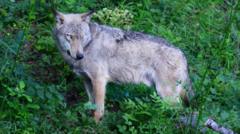
Eighteen wolves are dead in the Abruzzo, Lazio and Molise National Park. The headlines are screaming about "barbaric" poisoning and "malicious" farmers. It is a predictable script. We cast the wolf as the noble victim and the local shepherd as the medieval villain. But if you think this is just a story about a few vials of illegal pesticide, you have been sold a romanticized lie.
The death of these wolves is not a failure of law enforcement. It is the inevitable result of a conservation model that prioritizes predator aesthetics over the actual biology of a working landscape. We are loving these animals to death by refusing to manage them.
The Myth of the Peaceful Coexistence
The mainstream media wants you to believe that "coexistence" is a simple matter of better fences and more guard dogs. It isn't. I have spent years on the ground looking at the data from the Italian Apennines and the French Alps. When wolf populations reach a certain density, the pressure on local livestock becomes a constant, grinding friction.
Conservationists point to the Canis lupus recovery as a miracle of the 21st century. It is. But they forget that wolves are hyper-adaptable apex predators. They aren't staying in the deep woods. They are patrolling the edges of villages. They are killing hunting dogs. They are making the ancient practice of transhumance—the seasonal movement of livestock—economically impossible.
When the state tells a farmer that their livelihood is a "necessary sacrifice" for biodiversity, the state creates the poisoner. You cannot protect a species by making it a liability to the people who live alongside it.
Why Poison is the Weapon of the Disenfranchised
Let's be clear: poisoning is a blunt, horrific tool. It kills indiscriminately. It wipes out griffon vultures and golden eagles. It is an ecological disaster. But why is it happening in 2026?
- Bureaucratic Inertia: In Italy, compensation for a killed sheep can take months or years to process. The farmer loses the sheep, the future milk, and the breeding line. The check from the government—if it arrives—barely covers the carcass.
- The Legal Trap: The wolf is strictly protected under the Bern Convention and the EU Habitats Directive. There is no legal mechanism for "lethal control" of problem individuals in many regions.
- The Urban-Rural Schism: Policies are made in Rome and Brussels by people who see wolves on National Geographic. The people who find a mangled ewe at 5:00 AM are the ones expected to pay the price for that "natural beauty."
By making the wolf untouchable, we have made it a target. When there is no legal way to manage a population, people turn to the shadows. The 18 wolves in Abruzzo didn't die because of a lack of education. They died because the legal system gave the local community zero agency.
The Math of Saturation
We need to stop talking about "wolf sightings" and start talking about carrying capacity. The Abruzzo, Lazio and Molise National Park is roughly $50,000$ hectares. That is a finite space.
$$K = \frac{r \cdot P}{V}$$
In this simplified model of carrying capacity ($K$), where $r$ is the growth rate, $P$ is the prey base, and $V$ is the social tolerance variable, the "social tolerance" ($V$) in Italy is currently bottoming out.
When you exceed $K$, one of two things happens: the population self-corrects through disease and starvation, or it spills over into human settlements. In Italy, the "spillover" is constant. We are seeing wolves in the suburbs of Rome. This isn't "nature reclaiming its space." This is a population that has outgrown its habitat and is now competing directly with humans for resources.
The "Guard Dog" Delusion
The "lazy consensus" says that Maremma sheepdogs are the solution. Ask any actual shepherd about the cost of maintaining a pack of eight 100-pound dogs.
- Liability: These dogs are bred to be aggressive toward intruders. In a park full of hikers, a guard dog is a lawsuit waiting to happen.
- Maintenance: The cost of feeding and vetting a protective pack often exceeds the profit margin of the flock.
- Adaptation: Wolves aren't stupid. They learn to lure guard dogs away or attack in relays.
To suggest that a few dogs and a fence will solve a thousand-year-old predator-prey conflict is not just naive—it is insulting to the intelligence of the people on the land.
Stop Treating Conservation Like a Disney Movie
If we want to stop the poisoning, we have to stop the deification of the wolf.
We must move toward a Nordic Model of management. In Sweden and Norway, wolves are protected, but they are also managed. When a pack becomes too bold or a population exceeds a specific threshold, limited, legal culling is permitted. This does two things:
- It keeps the wolves wary of humans (the "fear factor" that is currently missing).
- It gives the local community a sense of control, which drastically reduces the incentive to use illegal poisons.
The current strategy of "absolute protection at all costs" is actually the greatest threat to the wolf's survival. It creates a vacuum of power that is being filled by strychnine and pesticides.
The Uncomfortable Truth About Biodiversity
True biodiversity includes the human element. The mountain pastures of the Apennines are not "wild" landscapes; they are cultural landscapes shaped by millennia of grazing. If the shepherds leave because the wolves make their lives impossible, those meadows will revert to scrub. You lose the orchids, you lose the butterflies, and you lose the historical fabric of the region.
We are trading an entire ecosystem’s complexity for the sake of a single charismatic megafauna.
The 18 dead wolves are a symptom of a systemic fever. We have created a world where the only way a farmer feels heard is by placing a laced piece of meat in the forest. You can double the park rangers, you can fly drones over the mountains, and you can give tearful interviews to the press. None of it will matter until we admit that the current conservation paradigm is a failure.
The poison isn't just in the meat. It’s in the policy that ignores the people who actually live in the woods. Until we allow for the active, lethal management of wolf populations, the illegal slaughter will continue. You don't save a species by turning it into a plague. You save it by making it a neighbor that people can afford to live with.
If you want fewer dead wolves, start by allowing the legal removal of the ones that shouldn't be there. Anything else is just sentimental performance art.