Silence.
Not the heavy, theatrical quiet of a cathedral, nor the crisp hush of snow falling across an empty field, but that sudden, electric pause inside a crowded arena when a word that does not belong on a public microphone drops into the air and bounces off concrete bleachers. In other updates, read about: Air Defense Bottlenecks By The Numbers What Most People Miss.
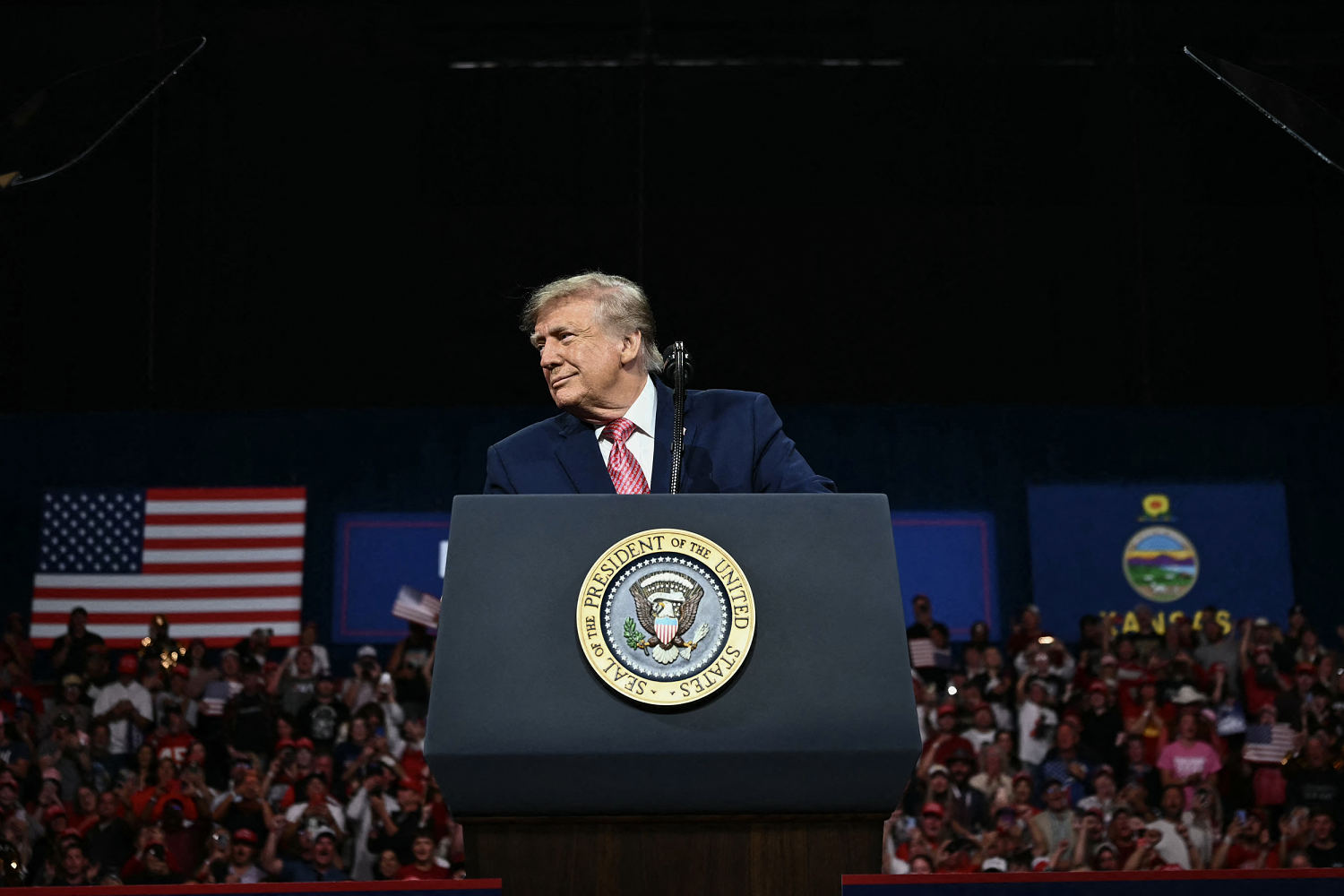
I have stood near enough to campaign stages over the years to feel the vibration of bass speakers in my teeth and smell the mix of stale popcorn, wool coats, and adrenaline. You watch faces in the crowd before you even listen to the speech. You see people leaning forward, looking for punchlines, looking for reassurance, looking for someone to stand up for their senator when the political weather turns rough. In Kansas, a state where wind bends tall grass in long, sweeping waves and neighbors know who planted which quarter-section of wheat, loyalty carries a distinct weight. Defending an ally—like Senator Roger Marshall at a rally—is standard political theater. Using an antisemitic slur while doing it is something else entirely.
Listen. Al Jazeera has analyzed this critical issue in extensive detail.
When Donald Trump reached for a derogatory trope about Jewish people to back up Senator Roger Marshall during a Kansas rally, the moment did not stay inside the arena. Sound travels. Clips travel faster. Within hours, a line spoken to thousands in the heartland became a test of memory, boundary, and consequence across the country.
Let me be clear right up front: what follows is a narrative essay grounded in verified public reporting and historical context, not a transcript or a legal brief. When I bring in composite scenes or hypothetical characters—clearly marked as such—I am doing it to trace how a single loaded phrase lands on ordinary lives far away from the podium. Sometimes I also use a metaphor to explain how language works like dye in clear water. You do not see the drop at first; then the whole glass changes shade.
The Rally Floor and the Ripple Effect
Imagine a hypothetical voter named Hannah, a small-business owner in Wichita who shows up to rallies because she wants to hear how Washington plans to help her keep good employees and pay down her shop's line of credit. She is not there looking for a history lesson. She is there for energy, for belonging, for the feeling that her corner of Kansas matters to the people holding the gavel.
In a hypothetical scenario like Hannah's, a speaker steps up to vouch for Roger Marshall. Instead of sticking to policy debates, vote counts, or shared grievances against opponents, the speaker slips into an old, ugly shorthand—an antisemitic slur tied to centuries-old stereotypes about money, manipulation, or disloyalty. Some in the crowd cheer out of reflex, caught in the momentum of applause. Others freeze, glances darting sideways, wondering if they heard what they thought they heard.
That split second is where politics stops being a game of scorecards and starts becoming a mirror.
Why do slurs sting even when a speaker claims they were joking, riffing, or just making a rough point in the heat of a speech? Because words carry history whether the person holding the microphone intends to pack it or not. An antisemitic slur is never a blank slate. It arrives pre-loaded with centuries of suspicion, scapegoating, and violence. When a prominent political figure uses one while defending a sitting senator, the defense itself gets tangled up in bigotry. Instead of shielding Marshall, the remark forces everyone watching—supporters, critics, journalists, neighbors—to decide what kind of defense they are willing to stand behind.
I have sat across tables from people who swear they have "nothing against Jewish folks" while repeating lines that treat Jewish people as a shadowy force or a convenient punchline. It is confusing. It is unsettling. Honestly, it can make you doubt your own ears for half a second before reality catches up. You ask yourself: Did he really say that? Did everyone else catch it? What happens tomorrow morning when my kids ask what that word means?
Why Old Tropes Keep Surfacing in Modern Speeches
History does not repeat itself like a clock ticking on the wall, yet certain patterns return with eerie familiarity. Across decades and across continents, demagogues and careless speakers alike have reached for antisemitic tropes during moments of political friction or perceived threat. Sometimes it is deliberate red meat meant to signal insider solidarity. Other times it is sloppy, unguarded speech born from living inside an echo chamber where boundaries have eroded bit by bit.
Think of a fault line underground. For months, maybe years, pressure builds quietly beneath rock that looks solid from above. Nothing moves on the surface. Cattle graze. Traffic hums along the highway. Then a tremor hits, and suddenly cracks open up where nobody expected them.
Public language works in much the same way. Norms around what is acceptable in civic life hold steady until figures with big megaphones test them—first with dog whistles, then with sharper barbs, and occasionally with outright slurs. When a slur is spoken at a rally in Kansas to defend Roger Marshall, the immediate news cycle focuses on the shock value, the reactions from political leaders, and whether the senator distances himself or brushes it past.
But the real problem lies elsewhere.
The deeper damage happens in what gets normalized. If a derogatory label against Jewish people is met with a shrug, a laugh, or a quick pivot to another subject, the standard of public discourse shifts downward. Younger listeners watching on their phones learn a quiet lesson: cruelty is acceptable if it comes wrapped in loyalty to your team. Jewish families in small towns and big cities alike feel a different lesson—a cold prickle along the back of the neck, a reminder that even when you feel settled and safe, old hostilities can flare up in front of thousands of cheering people.
Let us be honest about the tension here. Politics is rough. Rallies are loud, improvised, and combative. Supporters often argue that critics overanalyze every word spoken off the cuff in front of a crowd. I get why people push back against constant outrage; nobody wants every careless sentence turned into a national crisis.
Yet there is a wide gulf between a messy figure of speech and an antisemitic slur. Crossing that line is not a minor grammar mistake. It is a choice—conscious or reckless—to reach into a sewer of prejudice to score a point or back up an ally.
What Roger Marshall's Defense Reveals About Political Loyalty
When Trump defends Roger Marshall at a rally and deploys an antisemitic slur in the process, the spotlight falls on two figures at once: the man at the podium and the senator being defended.
In politics, endorsements and defenses are currency. A sitting U.S. senator from Kansas carries real institutional power—votes on legislation, committee influence, a voice in national debates. When a high-profile leader steps in to champion Marshall, the stated goal is usually to rally the base, project strength, and frame critics as enemies.
Consider what happens next:
Once the slur is out there, silence or deflection becomes a statement of its own. If an ally stands beside—or behind—a remark that demeans Jewish people without drawing a clear line, the association lingers. Even if the defended politician did not write the line or speak it himself, the political bond ties the moment to his name. Voters who care about basic decency, or who worry about rising antisemitism across the country, are forced to weigh that alliance.
Consider another composite character, David, a retired high school history teacher living in Lawrence, Kansas. David has spent forty years teaching students how small prejudices grow when respected voices treat them lightly. When news breaks that an antisemitic slur was used during a rally defending Senator Roger Marshall, David does not need a cable panel to explain the stakes. He thinks about his Jewish friends, his former students, and the slow erosion of shared civic standards.
For David, the question is not partisan trivia. It is practical. How do communities stay cohesive when public figures validate language that targets a minority group? How do you tell a teenager that words matter if the loudest voices in the country treat slurs as disposable ammunition?
There is no neat, painless answer to that. Democracies are messy, and public figures routinely say things that alienate part of the electorate while pleasing another. Still, drawing firm moral lines around bigotry is not partisan—it is basic maintenance for a pluralistic society.
The Invisible Stakes Beyond the Headlines
News cycles spin fast. By next week, another rally, another speech, another controversy will crowd the screen. Most people will move on to groceries, work, family schedules, and weekend plans.
That speed is part of the trap.
When shocking rhetoric happens frequently, shock dulls. A phrase that would have stopped a nation cold thirty years ago gets clipped into a thirty-second segment, argued over for a day or two, and buried under the next alert. Over time, callus forms over conscience.
I have seen this happen in workplaces, in school board meetings, and in neighborhood group chats. It starts small. Someone makes a crack about a group of people. Someone else laughs nervously so things do not get awkward. Nobody wants to be "that person" who ruins the mood. Before long, the room has changed without anyone formally voting on the new rules.
Using an antisemitic slur while defending Roger Marshall at a Kansas rally matters precisely because it tests whether we still notice when that line is crossed. It asks whether defending a political ally is worth trading away basic respect for Jewish neighbors. It asks whether we still have the spine to say, plainly and without hedging, that antisemitism has no place in a defense of anyone.
The wind still blows across Kansas, carrying the scent of earth and dry grass beneath a wide sky. A microphone clicks off. The crowd files out toward parked trucks and sedans. The words spoken on stage may fade from the arena walls within minutes, yet the echoes they leave behind—in trust broken, in boundaries shifted, in memories stirred—stay in the air long after the lights go out.