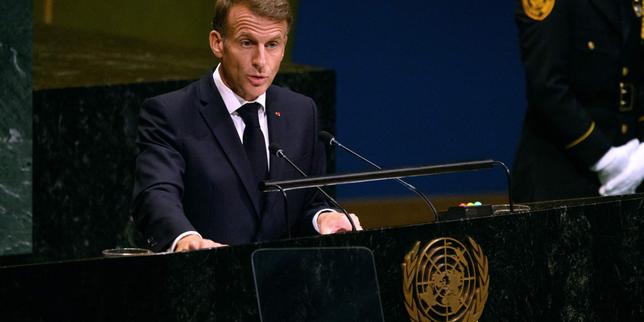
International institutions operate under a fundamental design flaw: they derive their legitimacy from cooperative consensus while sovereign actors maximize power within an anarchic system. When French President Emmanuel Macron addressed the United Nations General Assembly, his warning regarding the return of the law of the jungle diagnosed a structural symptom rather than a root cause. The decay of multilateral governance is not an accidental deviation from historical progress; it is the predictable systemic outcome of shifting power distributions among permanent Security Council members, asymmetric economic shocks, and the weaponization of interdependence. To understand why international law struggles to restrain unilateral coercion, one must analyze the incentive structures governing state behavior, the institutional friction of collective security, and the failure mechanics of normative deterrence.
The Structural Mechanics of the Veto Trap
The foundational architecture of the United Nations rests upon the Security Council, an entity designed in 1945 to reflect the victors of a specific global conflict. This institutional design embeds an inherent structural contradiction: the principal arbiters of international peace possess an absolute veto over enforcement actions directed against themselves or their strategic allies. You might also find this connected story insightful: The Signaling Economics of UN General Assembly Rhetoric.
- Structural asymmetry: Permanent members operate above binding judicial enforcement.
- Veto weaponization: Procedural paralysis replaces collective security during geopolitical friction.
- Incentive misalignment: Compliance costs fall disproportionately on mid-tier states while major powers capture rent.
When regional conflicts escalate, the Security Council does not merely experience gridlock; it transforms into an arena for diplomatic exhaustion. The structural inability to pass binding resolutions regarding European territorial integrity or Middle Eastern humanitarian crises exposes the limits of paper commitments. States calculate that the diplomatic cost of defiance is near zero if their strategic competitors lack the institutional mechanism to compel compliance. Consequently, diplomatic appeals to moral duty fail because they collide with cold calculations of national security and territorial aggrandizement.
The Cost Function of Multilateral Inertia
Security architectures depend entirely upon credible commitments and predictable enforcement. When deterrence fails in one geographic sector, the signal propagates across international markets and alliance networks, degrading deterrence globally. The ongoing conflicts in Eastern Europe and the Levant illustrate how institutional inertia imposes severe operational costs on global stability. As extensively documented in recent reports by The New York Times, the implications are notable.
- Deterrence degradation: Failure to enforce international boundaries invites opportunistic revisionism elsewhere.
- Humanitarian erosion: Protracted paralysis reduces international humanitarian law to voluntary guidelines.
- Credibility depreciation: Repeated unpunished violations devalue diplomatic communiques and joint declarations.
Mid-tier powers and non-aligned states observe these institutional failures and adjust their foreign policies accordingly. Instead of investing diplomatic capital in multilateral forums where outcomes are predetermined by great power vetoes, states pivot toward transactional bilateralism and minilateral defense pacts. This migration of diplomatic energy accelerates the hollowing out of universal bodies. The cost of maintaining normative frameworks without enforcement mechanisms exceeds the utility for rational actors, prompting a steady retreat into regional spheres of influence.
The Fallacy of Paper Sovereignty
Diplomatic rhetoric frequently conflates normative aspirations with physical reality. Declarations recognizing statehood or condemning human rights violations carry zero kinetic weight unless backed by coercive economic, financial, or military instruments. The persistence of symbolic diplomacy while structural atrocities continue on the ground creates a profound credibility crisis for Western states championing the rules-based order.
- Declarative diplomacy: Issuing unbacked statements substitutes for strategic action.
- Enforcement deficit: The widening gap between international legal obligations and state compliance capacity.
- Cynicism feedback loop: Repeated rhetorical interventions without tangible outcomes feed domestic and international cynicism.
In regions like Cisjordania and Gaza, or across contested maritime corridors, structural facts on the ground are established through physical coercion rather than legal adjudication. When regional actors ignore international rulings or bypass diplomatic mediation channels without facing systemic penalties, the signaling effect dismantles the normative framework entirely. Law without enforcement is merely advice, and in high-stakes geopolitical competition, advice carries no weight against military necessity.
Technological Acceleration and Regulatory Governance
Beyond traditional kinetic conflicts, global governance faces an unprecedented friction point: the rapid emergence of disruptive technologies that outpace institutional rule-making cycles. Artificial intelligence, autonomous systems, and cognitive infrastructure operate across borders with velocities that traditional bureaucratic diplomacy cannot match.
- Regulatory lag: Legislative timelines span years while technological deployment cycles span weeks.
- Algorithmic externalities: Unregulated digital platforms alter domestic political stability and cognitive sovereignty.
- Standardization vacuum: Absence of universal technical baselines invites technological fragmentation and digital balkanization.
Efforts to establish international oversight for algorithmic models or social media toxicity collide with divergent national interests and protectionist industrial policies. Authoritarian regimes view information controls as core security imperatives, while liberal democracies struggle to reconcile open markets with protection against cognitive warfare. This regulatory fracture ensures that the digital domain mirrors the kinetic domain: a fragmented arena governed by technological capacity rather than cooperative legal norms.
Strategic Realignment and Systemic Outcomes
The steady erosion of centralized multilateral arbitration forces a permanent transition toward multipolar balancing. States no longer look to universal organizations for conflict resolution or economic stabilization; they construct ad-hoc coalitions, diversify supply chains through friend-shoring, and rely on deterrence through denial.
The preservation of international stability requires acknowledging these structural realities rather than relying on moralistic appeals. If international organizations are to survive the current transition, reform must move beyond rhetorical defense of existing institutions toward functional adaptation. Without radical restructuring of enforcement mechanisms, decision-making thresholds, and accountability standards, multilateralism will remain a vestigial monument to a bygone era, yielding entirely to the unconstrained calculus of power.