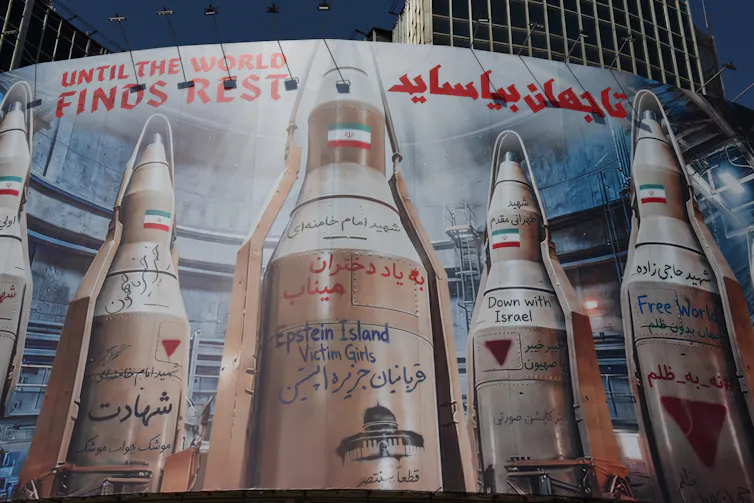
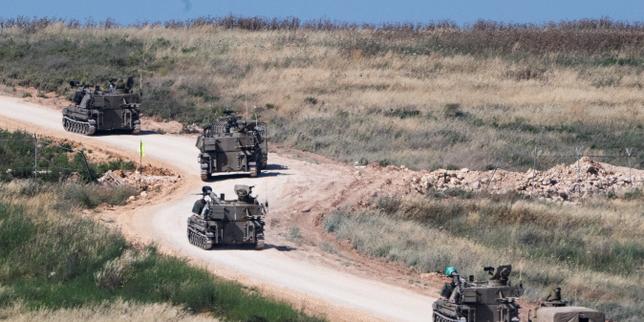
The concept of a "ceasefire" in asymmetric warfare is a structural illusion. When United States Central Command (CENTCOM) executed targeted strikes against Iranian military assets near Bandar Abbas and the Hormuzgan region, the kinetic action was framed as "self-defense" within an ongoing truce. In reality, the engagement exposes the underlying friction between tactical enforcement and strategic diplomacy.
The kinetic reality of the conflict cannot be understood through the lens of a binary war-or-peace state. Instead, it operates as a continuous calculus of deterrence, where physical strikes are leveraged to dictate terms at the negotiating table in Doha and Islamabad. By mapping the mechanical reality of these strikes, the engineering of maritime blockades, and the economic variables driving global energy markets, we can decode the actual structural friction underway in the 2026 Iran War.
The Strategic Cost Function of Maritime Interdiction
The Strait of Hormuz is a geographic bottleneck where 20 percent of the world's liquefied natural gas and petroleum transits. When Iran attempted to close the waterway following the initial campaigns of Operation Epic Fury, it initiated a high-stakes economic confrontation. The current operational environment is defined by two competing maritime strategies: the Iranian asymmetric closure model and the United States counter-blockade framework.
Iran’s approach relies on low-cost, high-deniability assets designed to maximize the risk profile for commercial shipping. This asymmetric model utilizes two primary operational mechanisms:
- Mine Laying via Fast Attack Craft: Deploying naval mines from small, highly maneuverable hulls to deny access to deep-water shipping lanes without engaging in direct ship-to-ship combat.
- Shore-to-Ship Vectoring: Utilizing mobile anti-aircraft missile systems and coastal ballistic missile batteries located near Bandar Abbas to establish a lethal envelope over the transit lanes.
The US counter-blockade, initiated under presidential directive, alters this economic equation by shifting the cost burden back onto the Iranian state. CENTCOM's operational matrix focuses strictly on intercepting vessels bound for or departing from Iranian ports, systematically strangling Iran’s remaining export capacity—estimated to cost the domestic economy $500 million daily.
The structural bottleneck for the US military is the requirement to maintain a high-density presence (exceeding 10,000 personnel and a dozen major surface combatants) while simultaneously enforcing a strict distinction between domestic Iranian traffic and international transits. This creates an operational paradox: the US must apply maximum economic pressure via interdiction while avoiding a full-scale kinetic escalatory loop that completely halts the remaining commercial traffic.
Kinetic Calculus: Deconstructing the "Self-Defense" Strike
The latest engagement in southern Iran demonstrates how tactical data feeds directly into strategic maneuvering. According to verified operational reports, the strike was triggered when Iranian Islamic Revolutionary Guard Corps (IRGC) naval units actively moved to lay mines and engaged US aircraft with anti-aircraft systems.
[Iranian Air Defense Engagement]
       │
       ▼
[Active Fire on US Aircraft]
       │
       ▼
[CENTCOM Target Acquisition (Bandar Abbas)]
       │
       ▼
[Kinetic Suppression: 2 IRGC Boats & 1 SAM Site Destroyed]
This sequence represents a textbook execution of Suppression of Enemy Air Defenses (SEAD) and counter-mining operations under restricted rules of engagement. The mechanical objective was not territorial acquisition or broad infrastructure destruction, but the immediate neutralization of tactical threats to preserve the status quo of the naval blockade.
The distinction between offensive operations and defensive escalation in this theater depends entirely on target selection. By restricting weapon releases to active missile launchers, mine-laying speedboats, and the immediate air defense radar signatures firing upon US assets, CENTCOM limits the political fallout. This targeted approach allows the diplomatic track to continue functioning in parallel, proving that tactical violence can be calibrated to serve as an explicit communication tool between adversarial states.
The Abraham Accords Expansion: Diplomatic Friction Points
While the physical conflict plays out across the Hormuzgan littoral, the diplomatic framework intended to resolve the 2026 Iran War has run into structural complications. A significant shift occurred when the US executive branch tied a permanent cessation of hostilities to a mandatory expansion of the Abraham Accords.
The diplomatic friction stems from a misalignment of core geopolitical incentives across the negotiating parties:
- The United States Metric for Success: Washington seeks a comprehensive regional realignment that forces major neutral or semi-hostile regional powers—specifically Saudi Arabia, Qatar, Pakistan, Turkey, Egypt, and Jordan—to simultaneously normalize diplomatic relations with Israel.
- The Saudi-Pakistani Position: Riyadh and Islamabad face rigid domestic and geopolitical constraints. For Saudi Arabia, official normalization remains structurally impossible without an explicit, verifiable path toward Palestinian statehood. Pakistan faces a similar domestic political paradigm, rendering immediate, unconditional signatures on the Accords a high-risk internal security liability.
- The Iranian Counter-Strategy: Iran leverages its remaining regional proxy networks and its capacity to disrupt the global energy supply to fracture this emerging coalition. By demonstrating that it can spike global oil prices at will, Tehran signals to regional neighbors that aligning with the US-led security framework carries an immediate economic penalty.
This diplomatic gridlock creates a highly volatile bargaining environment. The introduction of broad, non-theater objectives (like regional normalization deals) into what was initially a conflict centered on nuclear ambitions and maritime access significantly lowers the probability of a swift diplomatic resolution.
Market Volatility and Macroeconomic Transmission Channels
The immediate consequence of the friction in the Strait of Hormuz is the rapid repricing of global energy risk. Following the confirmation of the strikes near Bandar Abbas, Brent crude surged approximately 3 percent to $98.91 per barrel. This price action is not driven by an actual, sustained physical shortage of oil, but by the structural mechanisms of the maritime insurance and logistics industries.
The economic transmission channel operates through three distinct phases:
| Phase | Transmission Mechanism | Macroeconomic Impact |
|---|---|---|
| 1. War Risk Premium Escalation | Maritime insurance underwriters recalculate hull and cargo risk profiles for the Persian Gulf, raising premiums exponentially. | Shipping lines restrict transit to older, un-insured or self-insured tonnage, reducing available fleet capacity. |
| 2. Volume Contraction | Pre-conflict transit volume of 125 to 140 commercial vessels per day drops to a marginal fraction (a few dozen ships). | Alternative pipelines (such as the East-West Pipeline across Saudi Arabia) operate at maximum capacity, creating a logistical bottleneck. |
| 3. Global Supply Chain Surcharges | Extended voyage routing around the Cape of Good Hope increases transit times by 10 to 14 days for European destinations. | Increased bunker fuel consumption and container tying-up costs accelerate global inflationary pressures. |
The fundamental limitation of utilizing military strikes to enforce maritime security is the hypersensitivity of commercial markets. Even when a strike is cleanly executed with zero collateral damage, the mere reality of kinetic activity within the strait triggers algorithmic trading models and structural risk re-evaluations, causing immediate macroeconomic disruption regardless of the tactical outcome.
The Strategic Path Forward
The situation in the Strait of Hormuz has reached a point of tactical equilibrium that cannot be sustained indefinitely. To break the deadlock without triggering an escalatory spiral into total regional war, policymakers and military commanders must decouple localized maritime security from broader regional normalization agendas.
The immediate operational priority must focus on establishing a clear, functional mechanism for de-escalation inside the transit lanes. This requires a three-part execution strategy:
- Isolate Maritime Access from the Abraham Accords: The requirement for immediate, multi-nation normalization signatures must be separated from the baseline maritime ceasefire terms. Demanding wholesale structural realignment from states like Saudi Arabia and Pakistan as a prerequisite for opening a global shipping lane introduces too many variables, guaranteeing prolonged disruption.
- Establish Verified Transit Corridors: Utilizing the Pakistani-mediated channel in Islamabad, a technical framework must be negotiated where commercial vessels not bound for Iranian ports are granted explicitly monitored, unhindered passage. This must be backed by a clear operational rule: any deployment of assets capable of mine-laying or shore-to-ship targeting within these corridors will trigger immediate, automated counter-battery suppression by CENTCOM forces.
- Transition to a Multi-National Maritime Security Framework: The unilateral US naval blockade should gradually transition into an international coalition format, distributing the operational and political costs of enforcement. This reduces Iran’s ability to frame the confrontation as a bilateral war against the United States, raising the diplomatic and military cost for Tehran if it chooses to resume asymmetric interdiction efforts.
If these adjustments are not integrated into the Doha negotiation track within the coming days, the current pattern of "defensive strikes" will eventually suffer a statistical failure—either through an Iranian missile penetrating naval air defenses or a US strike causing unintended escalation. In either scenario, the structural result will be the complete, indefinite closure of the world’s most critical energy artery.