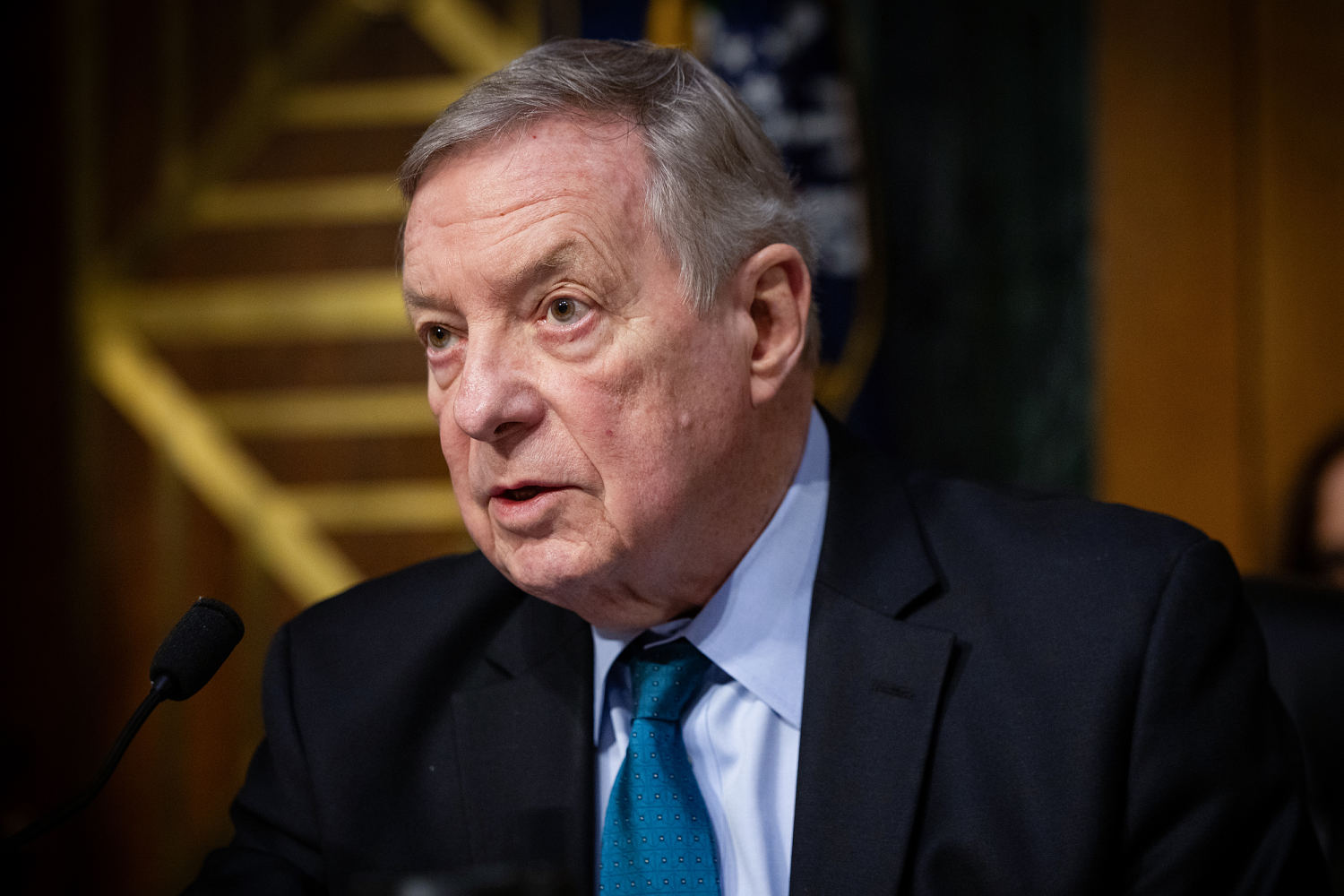
Capitol Hill is currently operating in a state of synthetic panic. Senator Dick Durbin, flanked by an indignant chorus of establishment legislators, is out with a brand-new warning to the Department of Justice: do not dare dole out taxpayer compensation to January 6 rioters via Donald Trump’s administrative channels. They have introduced the No Rewards for January 6 Rioters Act. They are shouting about the rule of law. They are clutching their pearls over the Treasury.
It makes for magnificent political theater. It is also completely missing the structural mechanics of how federal money actually changes hands in Washington. For another view, read: this related article.
The lazy consensus dominating the mainstream media cycle is straightforward: an authoritarian executive branch is about to illegally open the federal vault, treat a group of pardoned criminal defendants like victims of a national tragedy, and hand them a nine-figure windfall out of sheer political favoritism. The corporate press repeats Durbin’s talking points verbatim, treating the proposed compensation fund as an unprecedented, illegal breach of constitutional norms that can only be blocked by desperate, emergency legislation.
The consensus is wrong. It focuses entirely on the partisan optics while ignoring the cold, operational reality of federal tort law, executive settlement powers, and the perverse incentives created by the mass weaponization of prosecutorial discretion. Durbin is not defending the Constitution; he is running a pre-emptive public relations campaign to obscure how the legislative branch has systematically forfeited its power of the purse to executive agencies over the last seven decades. Similar coverage regarding this has been published by The New York Times.
If you want to understand what is actually happening behind closed doors at the DOJ, you have to look past the partisan screaming and analyze the actual machinery of the Federal Tort Claims Act (FTCA) and the federal Judgment Fund.
The Myth of the Unilateral Executive Slush Fund
Let us dismantle the primary piece of misinformation holding up the establishment narrative: the idea that the Trump administration is simply going to invent a "9/11-style compensation fund" out of thin air by executive fiat.
Durbin and his colleagues are technically correct when they state that the executive branch does not have the unilateral authority to establish an independent, statutory victim compensation fund. The original September 11th Victim Compensation Fund was explicitly created by an act of Congress under Public Law 107-42. Congress holds the power of the purse under Article I, Section 9 of the Constitution. The White House cannot pass a law creating a standalone, appropriated administrative fund to distribute cash rewards.
But that is not how this money will actually be paid out. The administration does not need to pass a new law because Congress already built a permanent, automated mechanism for this exact scenario back in 1956: the Judgment Fund.
The Judgment Fund is a permanent, indefinite appropriation used to pay judgments and compromise settlements against the United States. It is not subject to the annual congressional appropriations process. It has no fiscal year caps. It is a financial black box. When a federal agency settles a claim brought under the FTCA, the money does not come out of that agency's operational budget; it is automatically drawn from the Judgment Fund.
Imagine a scenario where 400 individuals, whose criminal convictions have been entirely wiped clean by presidential pardons, file administrative tort claims against the federal government. They allege malicious prosecution, institutional abuse, and severe violations of due process during their detention. If the DOJ chooses to enter into a administrative "sue and settle" agreement with these claimants, the Attorney General does not need Durbin’s permission. The executive branch has the statutory authority to settle litigation. Once a settlement is signed, the Judgment Fund automatically pays the bill.
I have spent years watching federal agencies exploit this exact loophole. When an administration wants to advance a policy objective or reward an allied group without congressional approval, they do not ask for a budget allocation. They invite a friendly lawsuit, decline to mount a rigorous defense, enter into a comprehensive settlement agreement, and let the Judgment Fund foot the bill. To pretend that the Trump administration is blocked by the absence of a specific congressional statute is an exercise in profound legal ignorance. The executive branch has all the funding architecture it needs already sitting in the basement of the Treasury.
The Pardon Paradox: Erasing the Conviction, Creating the Liability
The second structural flaw in the mainstream narrative is the failure to comprehend the legal status of a pardoned individual under federal tort law. The establishment platform relies on a simplistic moral argument: These people committed crimes, therefore compensating them is a perversion of justice.
Morality is irrelevant in an FTCA deposition. The legal mechanics are what matter.
When a President issues a full, unconditional pardon, it does not merely commute a sentence; it completely vacates the legal disabilities flowing from the conviction. In the eyes of the civil court system, a vacated conviction changes the geometry of a malicious prosecution claim.
To win a civil suit for malicious prosecution against federal agents, a plaintiff must typically demonstrate that the underlying criminal proceeding terminated in their favor. A standard criminal conviction makes an FTCA claim nearly impossible to win due to the Heck v. Humphrey doctrine, which bars civil rights actions that would necessarily imply the invalidity of an outstanding criminal conviction.
But what happens when the conviction is no longer outstanding? What happens when a blanket executive pardon wipes the slate clean?
The Heck bar drops. Suddenly, the civil courts are wide open. The 400 claimants currently seeking between $1 million and $10 million each are not operating on a delusional whim; they are executing a calculated legal strategy engineered by sophisticated tort lawyers. They are arguing that the original prosecutions were driven by political animus rather than objective probable cause—an argument that gains immense traction when the sitting administration openly agrees with that premise.
Consider the baseline elements of an FTCA claim for malicious prosecution:
- The initiation or continuation of a criminal proceeding against the plaintiff.
- Legal termination of the proceeding in the plaintiff's favor.
- Lack of probable cause for the proceeding.
- Malice, or a purpose other than bringing the offender to justice.
By issuing blanket pardons, the executive branch has systematically fulfilled the second criteria for hundreds of potential litigants at a single stroke. If the Department of Justice chooses to stipulate in civil depositions that the previous administration's prosecutions lacked standard institutional safeguards, the federal government's legal defense crumbles. Durbin’s warnings are completely toothless because they attempt to use legislative rhetoric to solve a civil liability problem that the executive branch has already engineered.
The Real Risk of the "Sue and Settle" Strategy
The true danger to the American taxpayer is not an open, transparent line item in an appropriations bill. The danger is the hyper-discretionary, low-visibility settlement process that takes place within the Department of Justice's civil division.
If you want to understand how Washington actually functions, you have to look at how federal litigation is managed. In a standard civil lawsuit against the government, the DOJ’s job is to fiercely protect the public treasury. They assert sovereign immunity, raise statute of limitations defenses, and file endless motions to dismiss.
But when the political leadership of the DOJ is aligned with the plaintiffs, the institutional posture shifts from defense to complicity. The defense becomes a formality. The government's lawyers can choose not to raise the two-year statute of limitations defense under 28 U.S.C. § 2401(b). They can choose to waive standard procedural objections. They can engage in private mediation, agree to a massive cash settlement, and wrap the entire package in a non-disclosure agreement.
This is the exact mechanism that the No Rewards for January 6 Rioters Act is trying to block, but the legislation is fundamentally flawed. It attempts to prohibit the use of "federal funds" to compensate individuals prosecuted for their involvement in the Capitol riot. However, because the Judgment Fund operates under a permanent, non-discretionary statutory appropriation, a generic funding restriction in a standard appropriations bill or a standalone act may fail to override the specific, underlying statutory mandate of the Judgment Fund unless it explicitly amends 31 U.S.C. § 1304.
Furthermore, any law passed by Congress that retroactively strips a specific, named class of individuals of their right to seek civil remedies under the FTCA faces a massive constitutional hurdle: it runs directly into the Bill of Attainder Clause and the Equal Protection component of the Fifth Amendment. You cannot pass a law that says "the courts are open to everyone except this specific group of political dissidents we dislike."
By turning this into a highly publicized legislative battle, Durbin and his colleagues are actually providing the administration with the perfect cover story. The White House can claim they are being bullied by an activist Congress trying to unconstitutionally strip citizens of their legal rights, all while quietly using standard administrative settlement procedures to achieve the exact financial outcomes they want.
The Structural Hypocrisy of Federal Prosecutorial Payouts
The most frustrating element of this entire public debate is the profound hypocrisy surrounding the use of executive settlements to correct alleged judicial overreach. The establishment is acting as though the concept of using federal funds to compensate individuals impacted by politically charged prosecutions is a terrifying new innovation.
It is a routine practice. The federal government regularly settles civil claims brought by individuals who allege that federal law enforcement overstepped its bounds. The only variable that changes is which party happens to control the executive branch at the time of the settlement.
| Administration Era | Target of Settlement / Fund | Primary Funding Source | Operational Mechanism |
|---|---|---|---|
| Historical Precedent | Civil Rights Violations / Wrongful Convictions | Judgment Fund | FTCA Administrative Settlement |
| Proposed Trump Framework | "Anti-Weaponization" Claimants / Pardoned Litigants | Judgment Fund / IRS-Treasury Settlement | Sue-and-Settle / Administrative Tort Claims |
The structural reality is that the Department of Justice has been transformed into a self-correcting financial pendulum. When the pendulum swings left, the government settles claims with progressive activists who allege law enforcement overreach during civil unrest. When the pendulum swings right, the government prepares to settle claims with conservative activists who allege institutional weaponization by a deep-state bureaucracy.
To ask "Should we compensate these individuals?" is to ask the wrong question entirely. The correct question is: "Why does the American legal system allow the executive branch to use the Judgment Fund as a private insurance policy for its own changing political agendas?"
The modern state has decoupled financial accountability from legislative oversight. If a private corporation operated this way—using a hidden, bottomless corporate account to settle internal disputes and reward former allies while publicly claiming its hands were tied by the board of directors—the executives would be wearing orange jumpsuits before the end of the fiscal quarter.
The Actionable Reality for the Taxpayer
If you are waiting for Congress to step in and save the day with a bold new piece of legislation, you are going to be waiting a very long time. The bills being introduced by Whitehouse, Padilla, and Durbin are political vaporware designed to generate fundraising emails and prime-time cable news segments. They will either die in committee, face a certain presidential veto, or be struck down by a conservative-leaning federal judiciary as an unconstitutional infringement on executive settlement authority and the presidential pardon power.
The administrative state cannot be reformed by passing more laws that the administrative state itself is responsible for enforcing. The machinery is too complex, the loopholes are too well-insulated, and the financial incentives are too powerful.
The proposed $1.776 billion "anti-weaponization" fund—structured as a settlement of Trump's personal and political litigation against the IRS and Treasury Department—is a classic example of this modern structural shift. It is an administrative fortress built entirely out of existing statutory materials, designed specifically to bypass the legislative branch.
Stop looking at this as a localized fight over the events of a single afternoon five years ago. This is a cold, calculated case study in the permanent expansion of executive privilege. The executive branch now possesses the absolute power to pardon criminal conduct, the absolute power to define civil liability through administrative stipulations, and the absolute power to draw billions of dollars from an un-capped federal fund to settle the bill.
Short of a comprehensive, structural overhaul of the Judgment Fund itself—which would require Congress to claw back the permanent appropriation it surrendered in 1956—the executive branch holds all the cards. Durbin knows this. Trump knows this. The tort lawyers filing the claims certainly know this. The only people left in the dark are the American taxpayers, who are currently being treated to a loud, expensive piece of political theater designed to distract them from the fact that their pockets have already been picked.