The media is choking on its own outrage cycle again.
On Wednesday, nine West African migrants landed in Freetown, Sierra Leone, on a chartered flight from the United States. Instantly, the mainstream press ran its predictable play. Headlines blasted the Trump administration's "third-country agreements" as human rights crises. Activists screamed about international law violations. Journalists wrung their hands over the "secretive" cash-for-deportees pipeline.
They are looking at the chessboard and mistaking the pawns for the kings.
The standard narrative paints these African nations as victims or desperate pawns of American geopolitical bullying. That take is lazy, patronizing, and fundamentally misreads the cold mechanics of modern statecraft.
I have spent years analyzing how developing states leverage Western policy desperation. What happened in Freetown is not a tragedy of American coercion. It is a masterclass in asymmetrical financial engineering by Sierra Leone's government.
The $1.5 Million Disappearing Act
Let us look at the actual math, not the emotional theater.
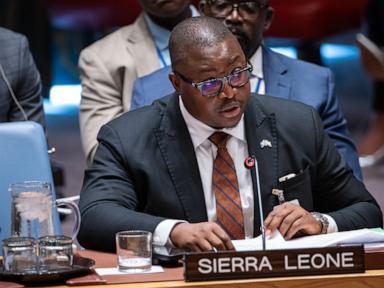
Sierra Leone Foreign Minister Timothy Kabba confirmed the government signed a Third Country National Agreement to accept up to 300 Economic Community of West African States (ECOWAS) citizens per year, capped at 25 per month. In return, Washington handed Freetown a $1.5 million grant.
The legacy media views $1.5 million as a pittance, a token payment to a poor nation. They lack the institutional memory to understand how the real game is played.
Go back to 2017. The first Trump administration placed severe visa sanctions on Sierra Leonean officials because Freetown refused to accept its own citizens being deported from America. For nearly a decade, Washington used the stick.
Now, Freetown has forced Washington to use the carrot.
By agreeing to take in non-citizens—specifically nationals from Ghana, Guinea, Senegal, and Nigeria—Sierra Leone did not bend the knee. It transformed an immigration headache into a high-yield, low-risk revenue center.
Consider the operational reality. The Sierra Leonean Ministry of Information outsourced the entire logistics operation to a private contractor called Kenvah Solutions. This company handles the housing, feeding, and healthcare of the arrivals. The contract mandates that these individuals are processed and moved out—either sent back to their home countries or transferred elsewhere—within 14 to 30 days.
This is a processing mill, not a permanent resettlement project. Freetown is acting as a transit lounge with a massive premium markup.
The Myth of the Imperial Overlord
The human rights lobby operates on a flawed premise: that Washington dictates these terms unconditionally.
If the United States held all the cards, twenty-four deportees would have stepped off that plane on Wednesday. Instead, only nine arrived. Why? Because the U.S. legal system and foreign resistance constantly choke the pipeline. U.S. Federal judges are already halting deportations under the Convention Against Torture, such as the recent block on a Colombian woman deported to the Democratic Republic of Congo who had to be flown back on the American taxpayer's dime.
Foreign governments know exactly how fragile this U.S. deportation apparatus is. They know Washington is desperate for optics that show its hardline border policies are working.
When a superpower is desperate for a specific metric, smart developing nations charge a premium.
Look at the Senate Foreign Relations Committee report dropped earlier this year. Washington funneled over $32 million to just five nations—including Rwanda, Equatorial Guinea, and Eswatini—to accept third-country deportees. In specific instances, the transaction costs ballooned to over $1.1 million per migrant.
That is not colonial exploitation. That is an extortionate vendor fee.
African states are treating Western immigration enforcement the same way corporate consultants treat a desperate legacy enterprise: they are charging exorbitant consulting and implementation fees for a temporary fix that they know will not scale.
The Regional Bloc Arbitrage
The real stroke of genius in the Sierra Leone deal is the ECOWAS clause.
Minister Kabba explicitly noted that Sierra Leone only accepts West African nationals. By limiting the intake to ECOWAS citizens, Freetown insulates itself from the massive logistical nightmare that ruined Panama’s recent agreement. Last year, Panama agreed to hold deportees flying in from Asian countries, resulting in a chaotic bottleneck near the Darien jungle because they could not easily repatriate people across continents.
Sierra Leone settled on an ecosystem it already understands. Under ECOWAS protocols, regional movement and diplomatic channels between member states like Nigeria, Ghana, and Guinea are already established. Freetown is not trying to build a global immigration hub; it is running a regional arbitrage scheme.
They take American capital, use a fraction of it to pay local contractors like Kenvah Solutions for two weeks of hospitality, and use existing regional frameworks to pass the individuals along. The rest of the U.S. grant stays in the state treasury.
The Downside of the Grift
To be absolutely clear, this strategy has a brutal shelf life.
The downside of turning human capital deportation into a high-margin business model is the inevitable domestic blowback. The Sierra Leonean populace is not blind. When local citizens see a private contractor providing guaranteed housing and healthcare to foreign nationals while the domestic economy struggles, resentment builds.
Furthermore, relying on transactional grants from an unpredictable Washington administration is bad fiscal policy. The moment a new administration takes the White House, these executive-led third-country agreements can be wiped out with a single memo, just as the Biden administration paused the Central American asylum cooperation agreements back in 2021.
But evaluating this move based on long-term stability misses the point of modern political survival in developing economies. It is about immediate liquidity and diplomatic leverage. Freetown wiped away its old visa sanctions, secured a fresh seven-figure injection of American cash, and established itself as an indispensable logistical node for the global north's political theater.
Stop reading the bleeding-heart op-eds that treat West African states as helpless victims of Western whims. Freetown just weaponized Washington’s domestic political desperation and turned a profit on it.