The air inside the J. Edgar Hoover Building has a specific, heavy quality. It smells of floor wax, old paper, and the unspoken weight of three letters that carry more historical baggage than almost any other institution in the American experiment. When a new name is floated to lead the FBI, the headlines usually focus on resumes, Senate confirmation hearings, and partisan bickering. But the true story of the Bureau isn't found in a CV. It is found in the friction between the person in the big office and the ten thousand souls who believe they serve an idea, not a man.
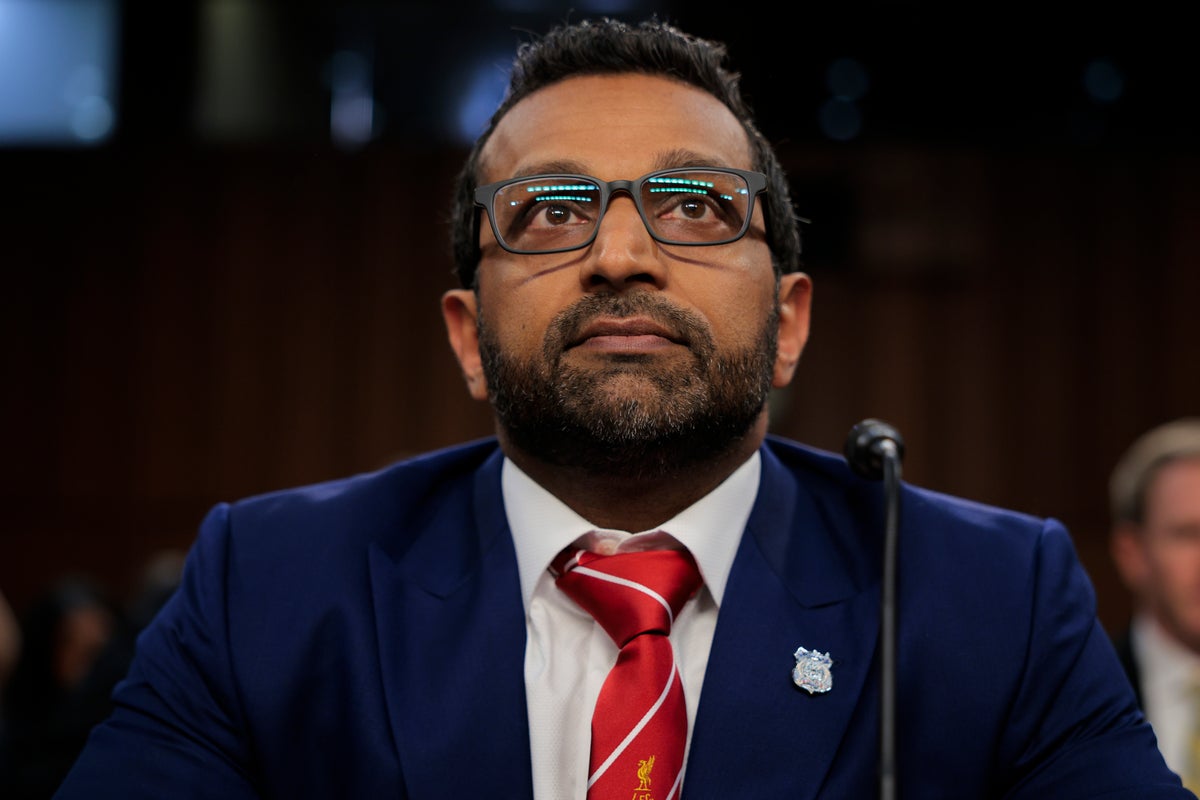
Lately, the name Kash Patel has sent a rhythmic shudder through those halls. Critics point to his lack of traditional law enforcement experience, his sharp-edged loyalty to a single political figure, and a scorched-earth rhetoric that suggests he views the Bureau not as a shield, but as a weapon to be recalibrated. They say he is in over his head. They say he is a radical departure from the norm. Meanwhile, you can find other stories here: The Calculated Silence Behind the June Strikes on Iran.
The history of the FBI suggests that the "norm" is a ghost.
To understand the stakes of a controversial appointment today, you have to look back at the times the keys were handed to men who didn't fit the mold, or worse, men who fit it so well they became the mold itself. The Bureau has always been a mirror of our national anxieties. Sometimes, the person reflecting back is exactly who we feared they would be. To understand the full picture, check out the excellent report by NPR.
The Architect of Shadows
If you want to talk about "questionable" directors, you have to start with the man whose name is literally bolted to the front of the building. J. Edgar Hoover didn't just lead the FBI; he birthed it in his own image. For forty-eight years, he stayed in power because he understood a fundamental human truth: everyone has a secret.
Hoover was the ultimate insider, yet he operated like a rogue state. He used the tools of federal law enforcement to keep "secret files" on presidents, civil rights leaders, and cultural icons. He didn't just investigate crimes; he curated lives. Under his watch, the COINTELPRO initiative systematically worked to "expose, disrupt, misdirect, discredit, or otherwise neutralize" organizations he deemed subversive. This wasn't just law enforcement. It was social engineering backed by a badge.
When people worry about a director using the FBI for personal or political vendettas, they are essentially worrying about a return to the Hoover era. He was the most "qualified" man to ever hold the job, and yet he was perhaps the most dangerous. He proves that technical competence is no substitute for a moral compass. The fear today isn't just about a lack of experience—it’s about the presence of a specific kind of intent.
The Brief and Bitter Reign of L. Patrick Gray
The 1970s offered a different kind of cautionary tale. After Hoover finally passed away, Richard Nixon needed someone he could trust—someone who wouldn't let pesky things like "criminal investigations" get in the way of the White House's interests. He chose L. Patrick Gray.
Gray was an Acting Director who became the embodiment of what happens when a leader forgets that their loyalty belongs to the Constitution, not the person who appointed them. During the height of the Watergate scandal, Gray did the unthinkable: he took files from the safe of E. Howard Hunt, one of the Watergate burglars, and burned them at his home.
He didn't do it because he was a master criminal. He did it because he was a loyalist who had been told the documents were "political dynamite" that "should not see the light of day."
Gray’s tenure lasted less than a year. He resigned in disgrace, a man broken by the very loyalty he thought was his greatest strength. His story is a chilling reminder for the modern era. When a director sees themselves as an extension of the Executive Branch rather than an independent arbiter of justice, the institution doesn't just bend. It breaks. The damage Gray did to the Bureau’s credibility took a generation to repair.
The Technicality of William Sessions
Sometimes the problem isn't a grand conspiracy or a political firestorm. Sometimes, it’s a slow erosion of standards.
William Sessions, appointed by Ronald Reagan, seemed like a safe, traditional choice. He was a former federal judge. He had the "look" of a director. But his tenure ended in 1993 with a whimper that was just as damaging as a bang. A Department of Justice report accused him of using FBI planes for personal trips, using government funds to install a security system at his private home, and other ethical lapses that suggested a profound sense of entitlement.
Sessions was the first—and so far only—FBI director to be fired by a president. Bill Clinton had to do the honors after Sessions refused to resign. His story matters because it highlights the "invisible stakes" of the office. The FBI Director must be Caesar’s wife: above suspicion. When the person at the top treats the Bureau as a personal fiefdom, the rank-and-file agents—the ones working the cold cases and the human trafficking stings—lose their morale. Why follow the rules when the boss doesn't?
The Friction of the Modern Era
This brings us back to the present, to the quiet hum of the cubicles in D.C. and the field offices in Omaha and El Paso.
The argument for someone like Kash Patel is often framed as "disruption." The idea is that the Bureau has become a "Deep State" monolith that needs an outsider to smash the windows and let in the light. Proponents argue that the "questionable" directors of the past were those who were too embedded in the system, not those who sought to challenge it.
But disruption in law enforcement isn't like disruption in Silicon Valley. If you "break things" at the FBI, those things are often people’s lives, civil liberties, and the fragile trust that allows a society to function without constant fear of its own protectors.
Consider a hypothetical agent named Sarah. She has spent twelve years in the Bureau. She has missed her daughter’s birthdays to sit in a van wiretapping a fentanyl distributor. She doesn't care about the 24-hour news cycle. She cares about the chain of custody. She cares about the fact that when she walks into a courtroom, her word is supposed to be gold because the institution behind her is supposed to be iron-clad.
When a director is perceived as a political operative, Sarah’s job changes. Every warrant she signs, every interview she conducts, and every piece of evidence she gathers is suddenly viewed through a partisan lens by the public and the courts. The "human element" of this political drama isn't just about the person in the wood-paneled office. It is about the loss of utility for every single person wearing the windbreaker with the yellow letters on the back.
The Weight of the Badge
The history of the FBI is a history of tension between the need for security and the hunger for power. Every director sits on a throne made of secrets.
James Comey’s tenure showed how even a director who believed he was acting on the highest principles could end up alienating both sides of the aisle and plunging the Bureau into a vortex of controversy. Robert Mueller’s tenure showed how a "steady hand" could become a lightning rod for an entire nation’s political grievances.
The question isn't just whether Kash Patel is "in over his head." The question is whether the office itself has become a role that no human can occupy without being consumed by the fires of our current polarization.
If we look at the ghosts of Hoover, Gray, and Sessions, a pattern emerges. The directors who failed—or who succeeded in ways that shamed the nation—were those who forgot that the FBI is a conservative institution in the literal sense: it is meant to conserve the rule of law. When it becomes a tool for "transformation," whether that transformation is cultural engineering or political retribution, it ceases to be a law enforcement agency and becomes a secret police.
We often talk about the FBI as a machine. We talk about its budget, its databases, and its jurisdictional reach. But the Bureau is a collection of humans. And humans need to believe that the person leading them is serving something larger than a campaign cycle.
As the debate over the next director rages on, the most important voices aren't the ones on the Sunday morning talk shows. They are the ones in the hallways of the Hoover building, whispering in the breakrooms, wondering if the next person to take the oath will be a shield for them, or a storm that washes everything away.
The silence in those halls is never truly empty. It is filled with the echoes of every director who came before, a reminder that in Washington, the most dangerous thing you can be is the person who thinks the rules don't apply to them because they are on the "right" side.
Justice is supposed to be blind. But history has its eyes wide open.
Would you like me to analyze the specific legislative hurdles a controversial FBI director faces during the Senate confirmation process?