The Sound of Loose Change
Morning arrives in Melbourne with a distinct, metallic clatter. It is the sound of a coin dropping into a collection box, or more accurately, the silent, digital ping of a higher fare registering on a Myki card as commuters rush through the turnstiles at Flinders Street. Most people do not check the receipt. They tap, they walk, they board.
Money slips away in increments too small to trigger an immediate protest. A few cents here, a dollar there, stretched across millions of daily journeys.
(Note: For the sake of illustration, imagine a typical commuter named Sarah, boarding the 7:42 train from Box Hill every weekday, watching her weekly transport budget quietly swell without a single announcement from the balcony of Parliament.)
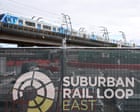
Behind this subtle financial creep lies a massive ambition. The Suburban Rail Loop. It is a concrete promise drawn across the map of Melbourne, a multibillion-dollar ribbon designed to connect the outer suburbs without forcing everyone to travel through the city center. The vision is grand. The maps look impressive, splashed across morning newspapers with bold lines and glowing terminal dots.
Yet concrete does not pour itself. Steel does not materialize from thin air. Every tunnel bored beneath the earth demands a sacrifice, and when the public purse runs thin, the government looks for alternative ways to balance the ledger.
The Anatomy of a Secret Increase
Governments rarely announce bad news with a brass band. They prefer the midnight whisper.
Reports emerged revealing that public transport fares quietly ticked upward, engineered to generate extra revenue. This unexpected hike arrived not as a bold policy reform, but as an administrative adjustment, slipping past the public eye while attention remained fixed on rising grocery bills and electricity costs. The objective was transparent to anyone looking closely enough. Money was needed to feed the ever-expanding financial appetite of the Suburban Rail Loop construction.
Consider what happens next: the everyday commuter, the student traveling to a suburban campus, and the retail worker heading to a shift across town suddenly find themselves subsidizing a mega-project that may not benefit their neighborhood for decades.
It feels like an invisible tax. A tax levied not by a legislative vote, but by the sheer cost of movement.
When infrastructure spending outstrips initial estimates—as massive transport projects almost universally do—the shortfall has to land somewhere. Economists call it budget reallocation. Regular citizens call it a squeeze.
The Weight of Concrete Promises
Mega-projects possess a magnetic allure for politicians. They are tangible. They offer ribbon-cutting ceremonies, legacy-building photo opportunities, and the promise of a modernized future.
(Note: Think of a mega-project as an enormous engine built in the middle of a town; it demands vast amounts of fuel every single day, regardless of whether the village is thriving or struggling to pay for groceries.)
The Suburban Rail Loop carries a staggering price tag, projected to reach tens of billions of dollars. Independent watchdogs and budget offices have repeatedly warned about the fiscal risks, pointing out that the initial estimates rarely capture the true, final cost of tunneling through decades-old subterranean layers beneath homes and businesses.
When the bill balloons, the government faces a harsh arithmetic. They can borrow more, cut services elsewhere, or find stealthy revenue streams. Raising public transport fares sits right at the top of that convenient list. It is reliable. People must get to work. People must visit their doctors. The daily commute is not an optional luxury subscription that can be canceled on a whim.
Walking the Line Between Vision and Reality
Progress requires ambition. No one denies that Melbourne’s sprawling outer suburbs need better connectivity. Spending hours sitting in traffic on the Monash or the Eastern Freeway drains the vitality from communities. The foundational idea behind the rail loop addresses a real, breathing problem.
The fracture appears in the execution and the funding model.
When a government asks daily commuters to carry the weight of a generational infrastructure debt through higher ticket prices, the social contract bends. Public transport is supposed to be an equalizer. It is meant to be the affordable lifeline for those who cannot afford the high costs of vehicle ownership, parking, and tolls. By squeezing these very users to fund a long-term capital work, the policy creates a perverse inversion.
The people who can least afford it end up paying the greatest proportional share.
The Lingering Question at the Turnstile
The trains continue to run. The tunnel boring machines grind relentlessly through the dark earth miles beneath the surface. Engineers calculate soil density and stress loads with microscopic precision, ensuring that the physical structures will hold for a century.
Yet the human structure requires maintenance too.
Every time a commuter taps their card and notices the slightly higher deduction, a small fracture forms in public trust. It reminds them that grand visions cooked up in boardrooms and parliamentary offices are ultimately paid for by real people living real, constrained lives.
The project will likely finish someday. The stations will open, the doors will slide back, and passengers will step onto clean, modern platforms. But as the echoes of the construction fade into the hum of daily operation, we are left to wonder whether the true cost was measured correctly from the very beginning, or if we simply charged it to the people least equipped to carry the debt.