Soil is never just dirt.
To the agronomist, it is a matrix of minerals, organic matter, and microorganisms. To the economist, it is an asset class, a unit of yield per hectare. But to the person who wakes before dawn to press their palms against the crust of the earth, soil is a living archive. It holds the memory of every spilled drop of sweat, every unseasonal frost, and every season of stubborn hope.
In the eastern reaches of the Gaza Strip, near the perimeter fence where the concrete meets the furrow, that archive is written in a language of calculated survival.
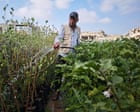
Consider a hypothetical farmer we will call Abu Ahmed. He is sixty-two years old, though his hands suggest an antiquity that predates calendars. Every morning, long before the city stirs, Abu Ahmed walks toward his two hectares of land. This is not a casual stroll. It is a calculated negotiation with hazard. His fields sit within the access-restricted areas, the narrow strip of territory where farming is an act of quiet defiance against a horizon defined by steel guard towers and surveillance aerostats.
Statistically, the agricultural sector accounts for a vital fraction of domestic food production and employment in the region, yet it operates under conditions that defy the basic laws of agronomy. Crops do not negotiate with buffer zones. Wheat and olives do not care about geopolitical coordinates. They only need water, sun, and peace. None of which are guaranteed.
Abu Ahmed remembers when his father farmed these exact plots. Then, the horizons felt wider. The soil yielded heavy clusters of olives that tasted of sharp stone and brine, and strawberries that found their way across borders to distant markets. Today, the strawberries are mostly gone, replaced by resilient, low-water staples like barley and thyme. Why? Because irrigation infrastructure is fragile. Wells require electricity to pump, and electricity in Gaza is a phantom guest, present for a few hours, absent for days.
When the power cuts, the pump dies. When the pump dies, the roots thirst.
(Note: All figures regarding water salinity and arable land loss referenced here align with documented humanitarian assessments from agricultural agencies operating within the territory.)
Listen closely to the sound of modern farming here. It is not the steady, mechanical drone of a diesel tractor. It is the rhythmic scrape of a hand-hoe against dry clay. It is the whistle of wind through plastic greenhouse sheeting patched together with twine and prayer.
We talk about supply chains in boardrooms as if they are abstract circuits of silicon and cargo ships. But look closer. A supply chain here is a rusted wheelbarrow pushed by a grandfather whose grandchildren have never seen the sea, even though it lies just a few miles to the west. It is the daily commute past the skeletal remains of poultry farms and crushed orchards, flattened by past incursions and left to bleach in the sun.
Why do they keep planting?
It is a question outsiders ask with a tilt of the head, as if persistence in the face of futility is a psychological anomaly. But to ask that is to misunderstand the fundamental grammar of agriculture. To plant a seed is to make a bet on a future you may not be allowed to harvest. It is an assertion of tomorrow against an overwhelmingly present danger. If you stop planting, you concede the ground twice: first physically, then spiritually.
Consider the olive tree. It is the ultimate stubborn optimist. An olive tree can survive fire, neglect, and brute trauma, sending up new shoots from a blackened stump. During harvest season, families gather in these borderlands not just for the oil, but for the ritual of gathering. It is communal armor. When forty people stand beneath the branches of a century-old tree, blankets spread out beneath them to catch the falling green fruit, the space transforms. For a few hours, the perimeter fence blurs into the background. The drone overhead becomes mere background noise to the laughter of children shaking the lower limbs.
Yet, that illusion of safety is brutally fragile.
Agricultural statistics tell us that a significant portion of arable land in the strip suffers from restricted access, high soil salinity, and unexploded remnants of conflict. Behind every percentage point in those reports is an afternoon like the one Abu Ahmed experienced three winters ago. A sudden burst of warning fire from an automated position. The frantic scramble behind an earthen berm. The bitter realization that half a row of mature wheat would remain unharvested because the line had shifted just ten meters inward overnight.
We must confront the mechanics of this erosion. It is not just about lost revenue or depleted gross domestic product. It is the systematic dismantling of a rural identity. When a population is divorced from the earth that feeds them, they lose more than calories. They lose the intergenerational transfer of ecological wisdom—the exact lunar phase to prune, the subtle scent of approaching rain in the desert wind, the local name for a specific strain of pest-resistant wheat.
Yet, resilience persists in the most microscopic forms.
In small courtyards shielded from view, urban agriculture takes root in discarded containers, plastic pipes, and vertical frames. Women grow mint, tomatoes, and leafy greens in spaces no wider than a doorway. It is micro-farming born of desperation, but executed with masterclass precision. Every drop of greywater is conserved. Every ounce of kitchen scrap is composted into black gold. It is a masterclass in circular sustainability taught not by consultants in conference rooms, but by necessity in concrete alleys.
There is a terrifying beauty to this endurance.
When you sit with farmers like Abu Ahmed, they do not offer grand political speeches. They offer you tea brewed over a small fire of dried olive twigs, bitter and hot, and they talk about the weather. They talk about the delayed rains this year. They talk about the price of imported fertilizer, which has tripled because borders are sealed tight. They speak of these things with the weary calm of people who have lived through every iteration of crisis and realized that panic does not water the crops.
The sun dips lower toward the Mediterranean, casting long, bruised shadows across the furrows. The dust settles on the leaves of the barley plants, grey and thick.
Abu Ahmed bends down, scoops a handful of the dry earth, and lets it slip slowly through his fingers. It doesn't look like much. To a casual observer, it is just dust in a conflict zone. But watch the way his eyes track the falling grains, measuring the weight, testing the moisture retained just beneath the surface crust.
The soil remembers. It remembers the orchards that stood here fifty years ago, and it holds the quiet, stubborn promise of the seeds waiting just beneath the surface for a rain that may or may not arrive on time. The border fence stands tall against the fading light, indifferent and cold, but down here in the dark, tangled roots are already reaching out toward one another, quietly rewriting the map.