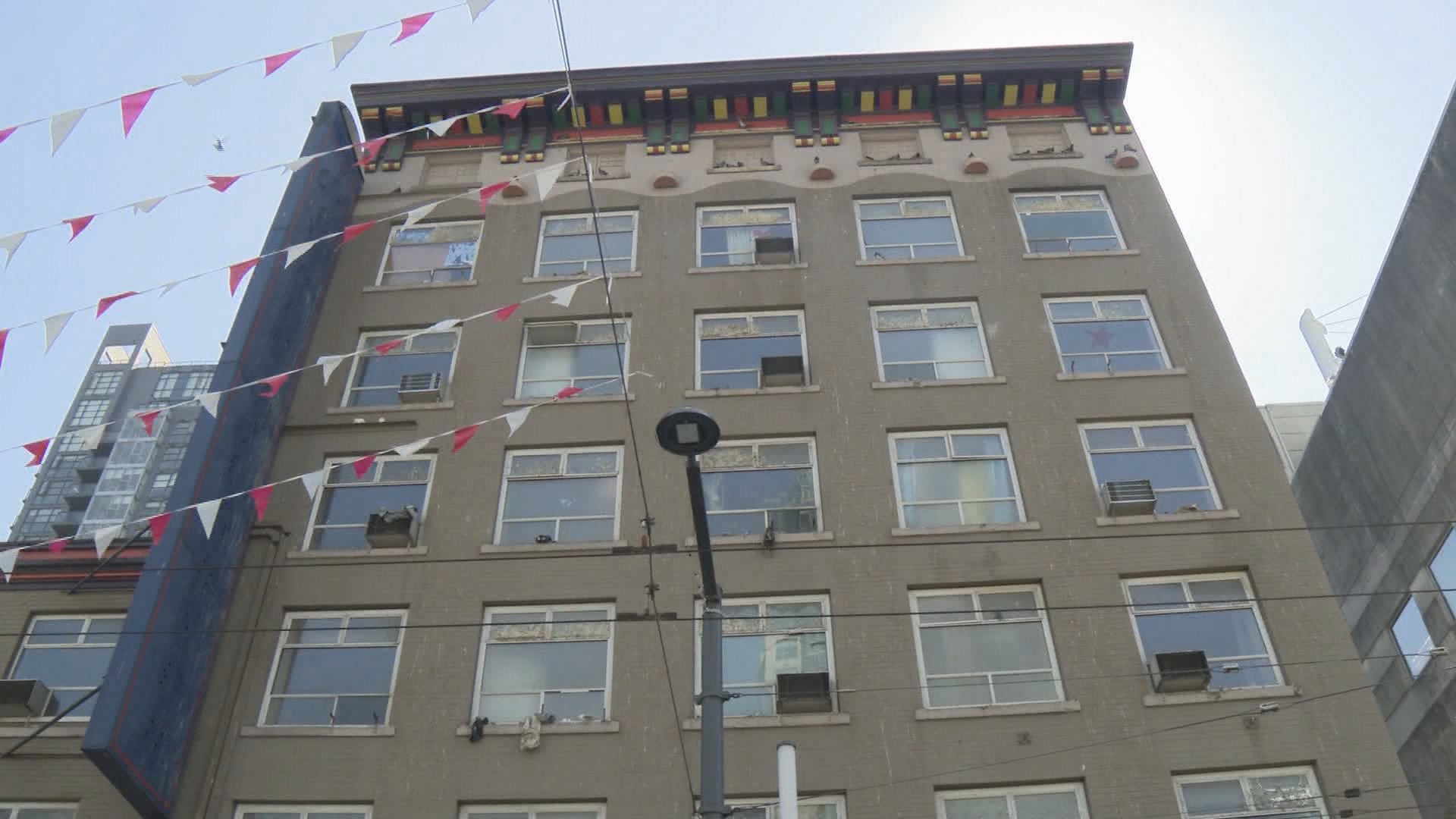
The final tenant has finally checked out of the Luugat, the former Howard Johnson hotel turned single-room occupancy hotel on Vancouver's Granville Street, after lingering months past the provincial government's hard deadline. This dragged-out departure left taxpayers footing a staggering 101,000 dollar bill for the month of July alone just to keep the lights on for one remaining resident. The Ministry of Housing and Municipal Affairs confirmed the relocation, bringing a temporary halt to an operational chapter that has become a masterclass in bureaucratic failure. Yet, the closure of this single facility exposes deeper systemic rot in how municipal and provincial authorities handle emergency housing conversions, leaving local businesses and taxpayers to pick up the pieces.
When the province dropped 55 million dollars in 2020 to acquire the property, the pitch was straightforward. Rapid housing acquisition would stabilize vulnerable populations during a compounding public health emergency. Theory clashed violently with reality. Former residents and neighborhood watchdogs paint a picture of a facility that degraded rapidly into an unlivable environment characterized by rampant drug contamination and structural neglect. What was meant to be a lifeline morphed into a flashpoint for public disorder, drawing sharp rebukes from Vancouver Mayor Ken Sim and community stakeholders who watched the surrounding entertainment district absorb the shockwaves.
The Anatomy of a SRO Conversion Failure
Converting commercial hospitality assets into low-barrier social housing sounds progressive on paper. Executing it without adequate operational frameworks, clinical support, or structural hardening is a recipe for disaster. Hotels built in the mid-century lack the plumbing, ventilation, and spatial layouts required to support high-needs residents dealing with complex addictions and mental health challenges.
Within months of opening, maintenance costs skyrocketed. Elevators failed. Common areas suffered catastrophic wear. Previous occupants noted that oversight evaporated almost as quickly as the ink dried on the acquisition contracts. Instead of a managed environment, the building operated with minimal effective intervention, turning hallways into functional hazard zones.
This is not an isolated incident of administrative oversight. It reflects a broader institutional reluctance to audit social housing assets honestly. When politicians prioritize the velocity of housing announcements over the long-term sustainability of operations, the fallout lands squarely on front-line service providers and neighborhood residents.
The Cost of Secrecy
BC Housing has consistently blocked media access to the interior of the Luugat, citing active tenancies as the primary legal barrier. Now that the building is completely vacant, that excuse has evaporated. Organizations like the Canadian Taxpayers Federation are demanding a full, unvarnished financial accounting. The public deserves to know the cumulative total of operational subsidies, emergency repairs, security contracts, and property taxes poured into the facility since 2020.
Transparency is the only antidote to public cynicism. When governments spend tens of millions of public dollars on real estate acquisitions, shield the results behind privacy walls, and miss self-imposed closure deadlines by months, public trust erodes. The transition of the Community Builders Group from active housing operator to a security-focused holding model for a vacant building means the financial bleeding has merely shifted form, not stopped.
The Road Ahead for Downtown Vancouver
Clearing the Luugat does not solve Granville Street's systemic housing crisis. Two other provincially owned single-room occupancy hotels in the immediate entertainment district—St. Helen's Hotel and the Granville Villa—remain open with no definitive closure timelines. Jane Talbot and other local business advocates have emphasized that the government must honor its underlying commitments without dragging out the process over successive fiscal quarters.
If the province applies the lessons learned from this multi-million-dollar debacle, future conversions must feature smaller cohorts, robust on-site clinical staffing, and strict facility maintenance covenants from day one. Repeating the mistakes of Granville Street will only guarantee more abandoned properties, inflated taxpayer invoices, and broken promises.
The building sits empty now, guarded by private security while bureaucrats debate its next life. The millions are gone. The community is left counting the cost.