Bureaucrats lie when they are cornered. Right now, seven transport ministry officials in South Korea are learning that the price for falsifying official documents is up to seven years behind bars.
Police just moved to indict these individuals for pushing false public statements regarding the fatal Jeju Air Flight 2216 disaster. That crash claimed 179 lives back in late 2024 at Muan International Airport. It remains the country's worst aviation tragedy in decades, and the fallout is proving that institutional dishonesty runs deeper than anyone expected. Meanwhile, you can explore other developments here: Why Blaming Mother Nature For Nepal Mudslides Is Pure Cowardice.
The Concrete Trap Nobody Wants to Own
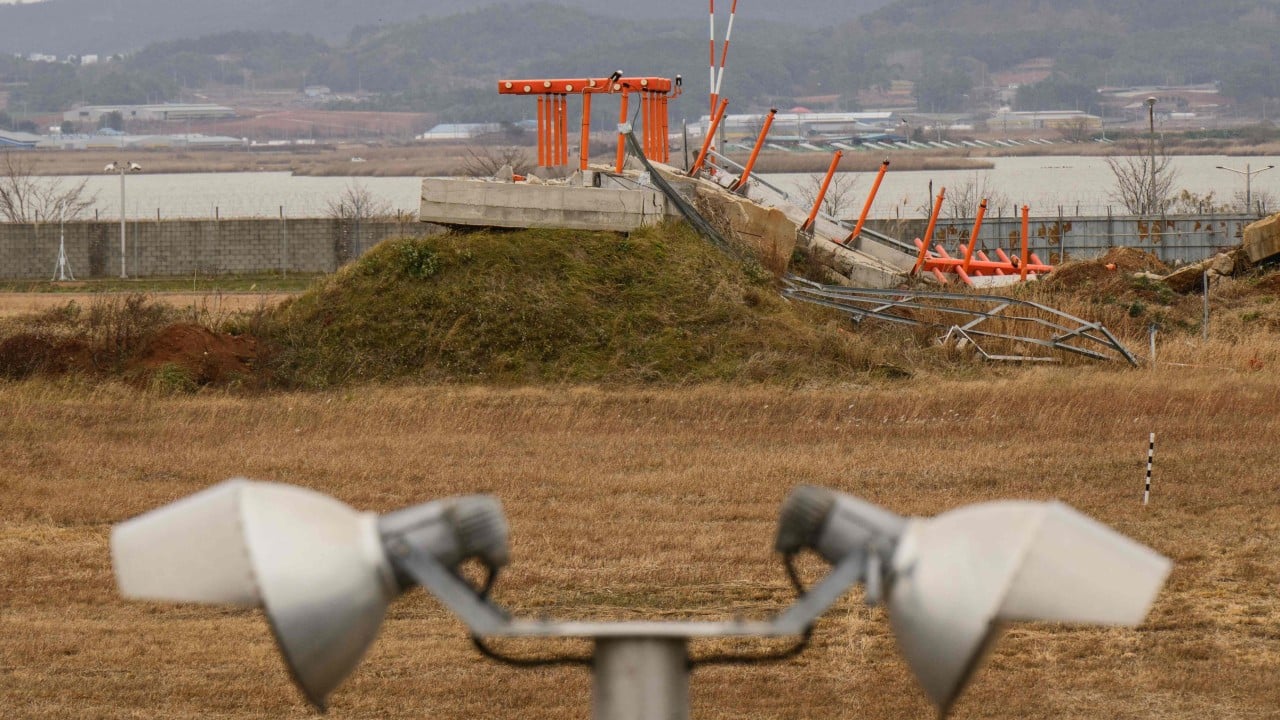
Let's cut through the official spin. When the Boeing 737-800 suffered a mechanical failure and skidded off the runway, it didn't just slide onto soft grass. It slammed directly into a rigid, elevated concrete structure housing a localizer antenna.
Aviation rules are clear on this. Equipment near runways must be built from breakable, frangible materials. They are supposed to collapse instantly on impact. Instead, Muan airport featured a solid concrete block that turned a survivable belly-landing into a catastrophic fireball. To see the bigger picture, check out the recent article by Associated Press.
The transport ministry knew this layout was indefensible. Instead of admitting fault, officials drafted and distributed media statements claiming the localizer equipment strictly complied with international and domestic safety guidelines.
They lied. Police caught them. Now, forgery charges have been handed to prosecutors.
Shifting Blame to the Dead
The government's crisis management playbook has been ugly from day one. Investigators previously planned to pin the blame entirely on pilot error. They leaked early theories that the flight crew shut down the wrong engine after a bird strike.
Families of the victims didn't buy it. Pilots pushed back hard against the obvious scapegoating. They pointed out a glaring reality: a bird strike and a belly landing should not result in a massive explosion unless the aircraft hits an illegal, immovable wall.
The public anger reached a boiling point when search teams later discovered overlooked human remains and personal belongings in the leftover airport rubble. That discovery forced higher authorities to step in, leading to sweeping police raids on government offices and an expanding web of nearly 70 suspects under investigation.
What Comes Next for Aviation Accountability
Transparency cannot happen when ministries police themselves. When paperwork gets falsified to protect agency reputations, public trust evaporates permanently.
If you fly through regional airports across East Asia, you expect strict adherence to safety mandates. You assume the concrete barriers shouldn't be there. The ongoing prosecutions in Seoul signal a shifting tolerance for institutional corruption. Real accountability starts when officials realize that covering up a structural flaw carries a heavier penalty than fixing it in the first place.