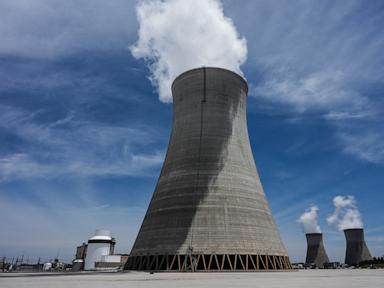
The quiet dismantling of American nuclear oversight is no longer happening behind closed doors. Federal regulators are actively moving to discard a half-century-old safety philosophy that dictates how commercial reactors manage radioactive exposure.
For fifty years, the ALARA principle—short for "as low as is reasonably achievable"—has served as the moral and operational anchor of civilian nuclear regulation. It forces plant operators, hospitals, and industrial facilities to go well beneath strict statutory dose ceilings. Now, pushed by an executive directive to accelerate domestic atomic energy production for data centers and artificial intelligence infrastructure, the Nuclear Regulatory Commission is rewriting the rulebook.
The core question driving this administrative shift is deceptively simple. How much safety is too much when an entire industry is racing against a power shortage?
The Mechanics of the Rollback
To understand why this regulatory pivot matters, one must look at how nuclear safety has historically functioned. Federal oversight has always relied on a two-tier mechanism. The first tier consists of hard legal limits: maximum annual radiation doses that workers and the general public cannot legally absorb. The second tier has been ALARA.
While legal limits draw a hard line, ALARA treats radiation safety as an active, continuous optimization problem. It demands that operators spend money, upgrade equipment, and modify procedures whenever further exposure reductions are economically and technologically feasible.
Critics of the current system argue that ALARA has transformed into a moving target. Regulators and plant designers point out that the standard creates immense administrative friction, leading to protracted licensing delays and inflated construction budgets for next-generation small modular reactors. By replacing this philosophy with a rigid, graded approach tied strictly to statutory caps, the Nuclear Regulatory Commission aims to clear the runway for rapid commercial deployment.
The Department of Energy has already abandoned the principle in its own operations. The commission’s current leadership insists that maximum exposure limits for workers and the public remain untouched, framing the overhaul as an exercise in removing regulatory ambiguity rather than weakening protection.
The Friction Between Speed and Precaution
This administrative streamlining exposes a deep philosophical split within the nuclear engineering community. Proponents of the rollback argue that fifty years of data prove the industry operates safely without pushing past sensible thresholds. They suggest that modern engineering controls make redundant safety margins unnecessary financial burdens.
Independent watchdogs view the situation through a starkly different lens. Safety researchers point out that removing the mandate to minimize exposure creates an opening for institutional complacency. When facility owners are no longer legally required to push radiation levels as low as practical, the economic incentive shifts toward doing just enough to stay clear of legal penalties.
Consider a hypothetical scenario at a commercial facility undergoing routine maintenance inside a containment building. Under the existing framework, plant operators routinely deploy extensive shielding, specialized ventilation, and additional personnel rotation to keep collective worker doses to an absolute minimum, even if those operations already fall safely below the annual legal limit. Under a purely graded approach focused only on avoiding the ceiling, the financial calculus shifts. The pressure to invest capital into marginal dose reductions disappears.
This tension is compounded by concurrent efforts to alter environmental review standards and adjust radionuclide emissions baselines. The administration's push to quadruple nuclear output is colliding directly with institutional safeguards built up over generations of trial and error.
The Broader Energy Bet
The urgency behind these regulatory changes is rooted in macroeconomic realities. Surging electricity demand from industrial manufacturing and hyper-scale data hubs has strained the grid. Nuclear energy is being repositioned as the primary baseload solution to satisfy this unyielding appetite for power.
Proponents of the nuclear renaissance argue that traditional oversight structures were designed for an era of slow, deliberate construction, not an era of emergency energy transition. If the United States intends to build out advanced reactor fleets at scale, the argument goes, the regulatory apparatus must shed its most conservative habits.
Yet, public trust in nuclear technology has always been fragile, tethered to the absolute certainty of containment and regulatory independence. When the boundary between watchdog and industry facilitator begins to blur, the long-term stability of the enterprise comes into question.
The upcoming finalization of these rules will test whether administrative efficiency can coexist with the absolute caution demanded by the atomic age. As the commission prepares to cement its new approach, the true cost of speed remains an open variable in an equation where errors carry generational consequences.